
2 Days in Bucharest: Itinerary, Where to Stay and Where to Eat
This is my third time in Bucharest, but if I’m honest, it feels like the first. My previous visits were quick and many years ago, when I came to Romania as part of a Youth European Forum, and I hardly remember anything from them. What I do know is that the city has changed a lot since then. Even with my patchy memories, the difference was obvious.
This time, I decided to stay for a couple of days as part of our Romania and Moldova road trip. What I loved most was seeing all the beautiful cafés and restaurants, so many of them cool and trendy, often hidden inside grand historical buildings. Bucharest surprised me as I did not remember at all all the beautiful buildings.
In this post, I share how to spend 2 days in Bucharest: a two day itinerary covering the main sights, plus where to stay, where to eat, and the coffee places I loved.


Please note that this post included affiliate links, when you decide to purchase anything through these links I get a small commission at NO extra cost to you, it helps me to keep running this blog! I only promote products and services I use or would use myself. All images are the property of Postcards from the World and cannot be used without permission.
Day 1 in Bucharest: the Old Town and Calea Victoriei
Bucharest can be explored by walking, mostly, but there were times when we needed a taxi. Spend your first day on foot as all the attractions are close to each other. The historic centre is compact, and everything on this day is within walking distance. If you stay at the Marmorosch, as we did, you start right in the middle of it.
The Old Town (Lipscani)
The Old Town takes its nickname from Lipscani Street, named after the merchants who once sold goods brought from Leipzig. For centuries, this was the commercial heart of Bucharest, a maze of streets organised by trade, with inns, shops and workshops. Today, it’s a small grid of pedestrian streets full of restaurants, bars and restored 19th century buildings, with a few still waiting for restoration next to them.
It gets very busy and loud at night, especially at weekends. Walk around in the morning if you want to see the architecture, and come back in the evening for the atmosphere. To be fair, I did not enjoy walking there at night- some people seemed shady and we witnessed some suspicious activity (and quckly walked away).
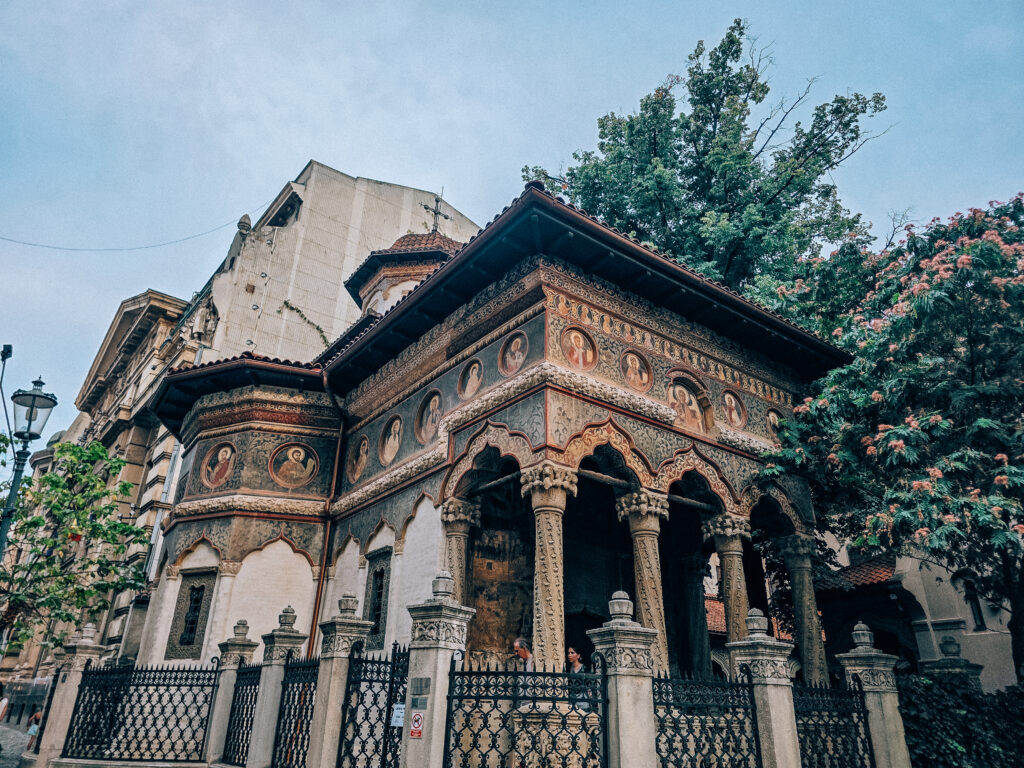
Stavropoleos Monastery
This tiny church is one of the most beautiful buildings in Bucharest, and one of the easiest to miss (which happened to us the first time we walked by). It was built in 1724 by a Greek monk, and it’s a good example of the Brâncovenesc style, a Romanian style that mixes local, Byzantine and Renaissance elements.
Look at the carved stone columns and the painted facade, then step into the small courtyard, which is lined with old gravestones. Apparently, the monastery is also known for its choir and its collection of Byzantine music manuscripts. Dress modestly if you want to go inside.
The Old Princely Court (Curtea Veche)
These are the remains of the royal court built in the 15th century, when Bucharest became one of the residences of the rulers of Wallachia. It’s associated with Vlad the Impaler, the ruler whose reputation inspired the Dracula legend, and there’s a bust of him on the site. Not much of the palace survives, only parts of walls, arches and cellars, but it’s right in the Old Town, and it shows how far back the city’s history goes. Next to it is the Old Court Church, which is considered the oldest church in Bucharest.
Lunch at Hanu’ lui Manuc
The Old Princely Court is right across from Hanu’ lui Manuc, so this is an easy lunch stop. More about it in the where to eat section.
Cărturești Carusel
This bookshop is in a restored 19th century building that once belonged to a banking family. It opened as a bookshop in 2015, after years of restoration. The white interior, with curved balconies over several floors, is one of the most photographed in the city. It’s worth going in even if you don’t plan to buy anything, and there’s a café at the top.
Macca Villacrosse Passage
This is a covered passage with a curved yellow glass roof, built at the end of the 19th century . It is shaped like a horseshoe and lined with cafés, restaurants and shisha bars. It connects the Old Town to Calea Victoriei and is a nice place for a drink when it’s hot or raining.
CEC Palace
This building, with its glass and metal dome, was built around 1900 for the Romanian savings bank, CEC. It’s one of the landmarks of Calea Victoriei, and it’s best admired from the outside.
National Museum of Romanian History (optional)
This museum is right across the road from CEC Palace. If you want to go inside one museum in the Old Town, this one holds the Romanian treasury, with gold objects from different periods of the country’s history. However, when we visited it was not open due to some renovations.
Calea Victoriei
This is Bucharest’s most famous avenue and one of its oldest. It was once the main road out of the city, and after the War of Independence it was renamed Calea Victoriei, meaning Victory Avenue. Walking along it is the best way to understand how the city grew. You pass palaces, churches, theatres and communist era buildings, often side by side. Some of the best cafés and restaurants in this post, including Palace Vernescu and Grand Café de Bucarest, are on this street.
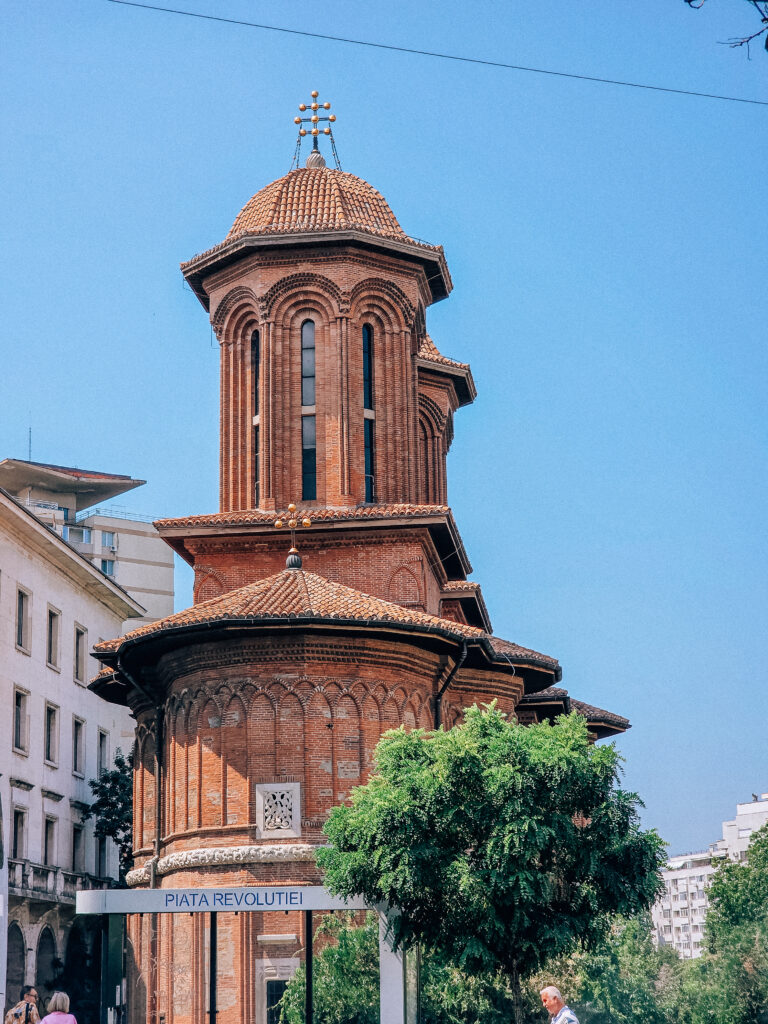
Revolution Square
This is where the 1989 Revolution came to a head. On 21 December 1989, Ceaușescu gave his last speech from the balcony of the Communist Party Central Committee building, and the crowd turned against him [verify date]. He fled by helicopter from the roof the next day. Today, the square has a memorial to the victims of the Revolution. On one side, the former Royal Palace now houses the National Museum of Art of Romania. The Central University Library is also nearby.
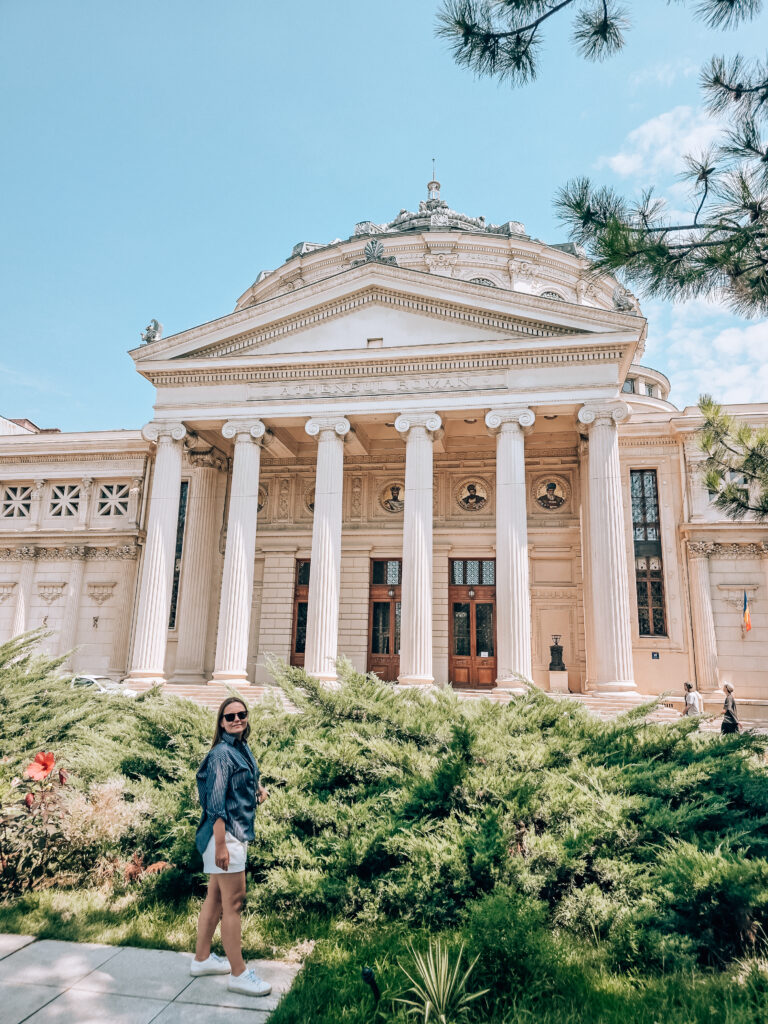
The Romanian Athenaeum
This concert hall, with its dome and columns, is one of the symbols of Bucharest. It opened in 1888 [verify] and was partly paid for by a public campaign that asked people to donate a coin, “give a leu for the Athenaeum”. It’s home to the George Enescu Philharmonic. Inside, there’s a large fresco showing scenes from Romanian history. Check the programme before your trip. Seeing a concert here is the best way to see the interior.
Dinner at Caru’ cu Bere and a drink in the Vault
End the day back in the Old Town with dinner at Caru’ cu Bere, which you need to book well in advance. After dinner, have a drink at the Vault bar in the Marmorosch hotel. More about both below.


Day 2 in Bucharest: the Palace of Parliament and the north of the city
Palace of Parliament
The Palace of Parliament, also called the People’s House, is the building most people associate with Bucharest. It was Ceaușescu’s project. In the 1980s, a large part of the historic city, including churches, monasteries and homes, was demolished to make space for it and for the boulevard leading up to it. It’s often described as the world’s second largest administrative building, after the Pentagon. It’s now home to the Romanian Parliament.
You can only visit on a guided tour. Take your physical passport or national ID card with you. Driving licences, photocopies and digital versions are not accepted, and everyone goes through airport style security screening. Booking ahead is the safest plan for a short trip, as same day availability isn’t reliable. If you have limited mobility, check the tour details before booking. At least one tour involves climbing around 200 steps, with no lift available. Tours run in the morning, so this is the best way to start your second day.
Palace Vernescu
From the Palace of Parliament, head north along Calea Victoriei to Palace Vernescu for lunch or a drink. More about it in the where to eat section.
Grand Café de Bucarest
Grand Café de Bucarest is a few minutes’ walk down Calea Victoriei from Palace Vernescu. It’s a good stop for a coffee or a drink on the terrace.
King Michael I Park (Herăstrău Park)
This is Bucharest’s largest park, built around Lake Herăstrău. It was renamed after King Michael I in 2017, but most people still call it Herăstrău. You can walk the path around the lake, rent a boat in summer, or just sit in the shade. It’s the best place to slow down after a morning of sightseeing, especially when it’s hot. STEAM Coffee Shop is nearby if you need a break.
The Village Museum
The Dimitrie Gusti National Village Museum is on the shore of the lake, inside the park. It opened in 1936. It’s an open air museum with more than 200 traditional houses, farms, windmills and wooden churches, brought from villages all over Romania and rebuilt here. You can walk from region to region and see how differently people lived in the mountains, the plains and the Danube Delta. If you don’t have time to travel around Romania, this is the best way to see rural architecture in one place. If you’re heading north, it’s a good preview of what you’ll see in and Bucovina.
Arch of Triumph
This arch stands at the southern edge of the park. It was modelled on the one in Paris. The current version dates from 1936 and replaced an earlier wooden arch built after the War of Independence. You can see it on your way to or from the park.
Optional: Therme București
If you prefer to relax instead, Therme is a large thermal spa complex just north of the city, near the airport, with indoor and outdoor pools, saunas and tropical gardens. It can easily take up half a day, so it replaces the park, not adds to it.
Where to stay in Bucharest: the Marmorosch hotel
We stayed at the Marmorosch hotel, and it was excellent. I loved it a lot and would recommend it without hesitation. The rooms are very nice, the breakfast is excellent, and the gym is amazing, if you’re into that.
The location is perfect. The hotel is in the Old Town, close to everywhere. We could walk to most of the sights, restaurants and cafés in this post. I would recommend staying in this area even if you choose a different hotel.
The hotel is inside an old bank. The building was the headquarters of the Marmorosch Blank Bank, one of the most influential banks in Romania, and its origins go back to 1848, when Iacob Marmorosch founded a banking house in Bucharest. The building itself dates from 1912.
The most unique part is the bar called the Vault. It’s inside the bank’s actual vault, and the original safes and the armoured vault door have been kept. The security deposit boxes are still on the walls. It’s pretty cool, and even if you’re not staying at the hotel, it’s worth going for a drink.

Where to eat in Bucharest
Caru’ cu Bere
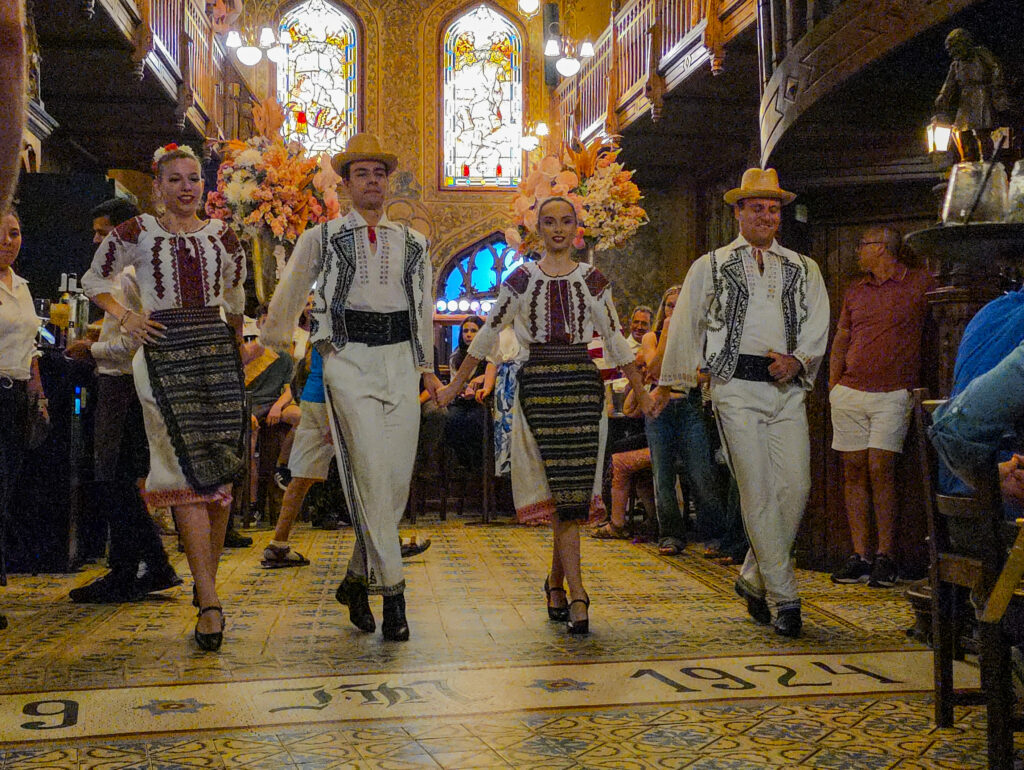
This is probably the most wanted restaurant in the whole of Romania. It has nearly 100,000 reviews with a 4.7 average rating. I think I’ve never seen so many reviews for one restaurant.
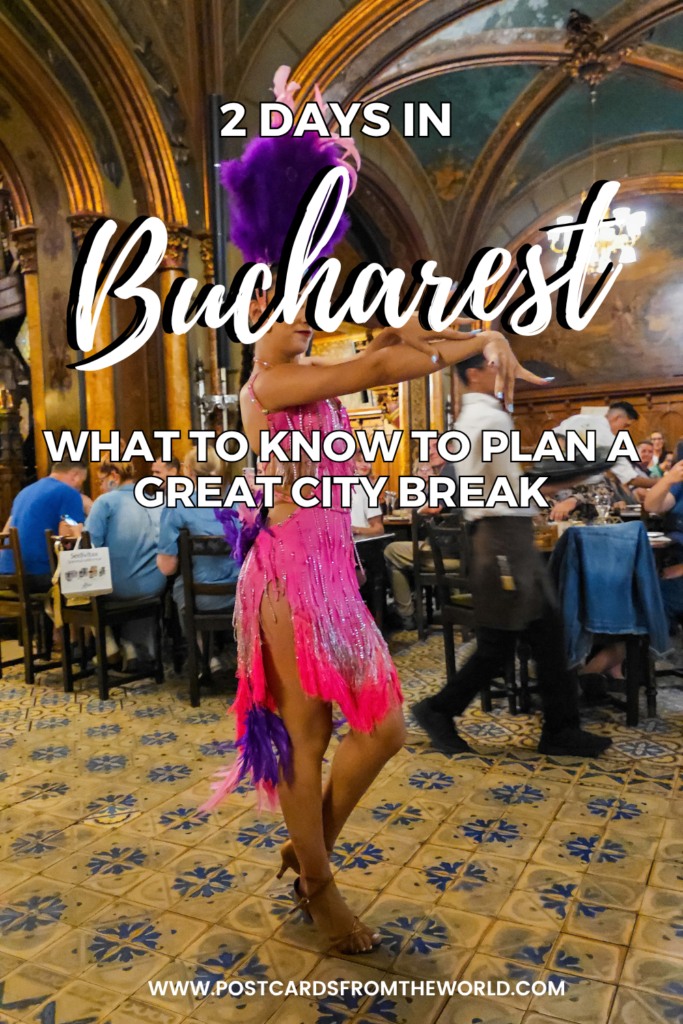
The restaurant started as a beer hall in 1879, and the current building, with its carved wood, stained glass and painted ceilings, dates from 1899. It’s a beautiful Romanian restaurant with live shows. Make sure to book weeks or even months in advance, we did our booking 2 or 3 months earlier and they already had limited time slots.
Hanu’ lui Manuc
This restaurant is located in a historical building, and it’s another option worth trying. The building is an old inn built in the early 19th century by an Armenian merchant, Manuc Bei. Talks for the 1812 Treaty of Bucharest between Russia and the Ottoman Empire were held here. The large wooden galleries around the courtyard give you an idea of what a merchants’ inn looked like.
Palace Vernescu
This is a newly opened restaurant in the building of an old casino, on Calea Victoriei. Even if you don’t eat there, it’s worth stopping by for a drink on the beautiful terrace or inside this beautiful historical building. I’ve been told they’ll soon open a museum in one of the rooms.
Grand Café de Bucarest
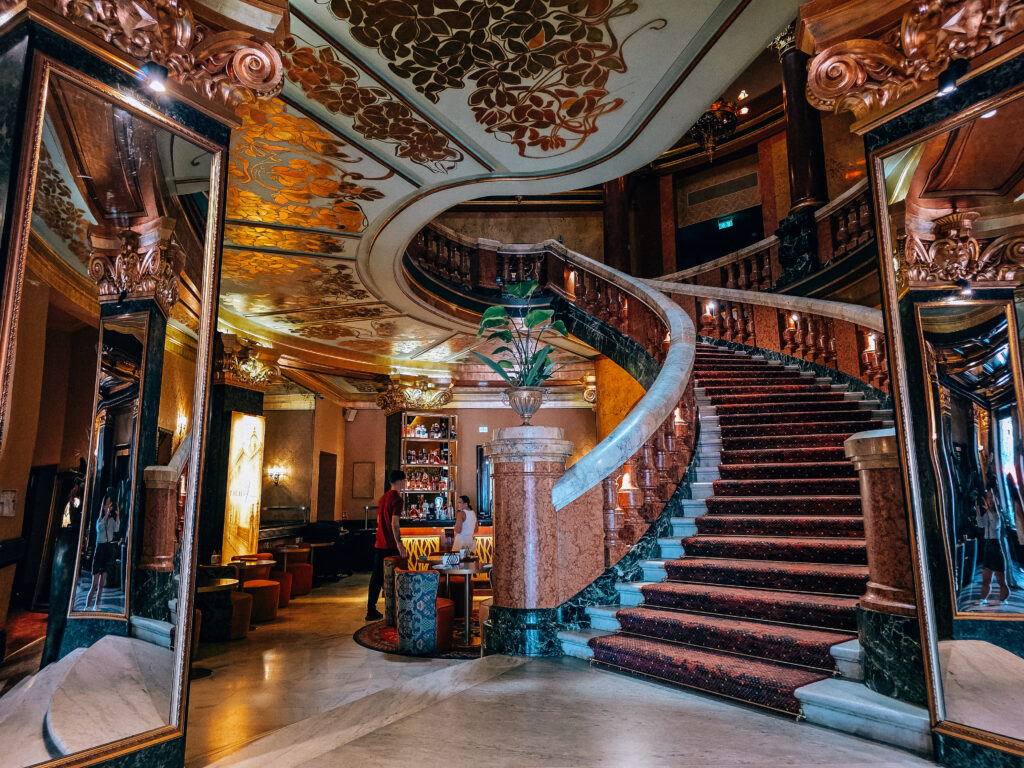
This is another restaurant in a historical building, on Calea Victoriei. The house was first built in the 1870s and later sold to Grigore Constantinescu Monteoru, a Greek Romanian landowner and politician. He had it renovated between 1887 and 1889 by the architects Ion Mincu and Nicolae Cuțarida. The restaurant opened in May 2026.
It has a beautiful interior and terrace. I didn’t eat there, so I can’t comment on the food, but it was full when we visited, and the online reviews are also really good.
Coffee places I loved in Bucharest
4coffee
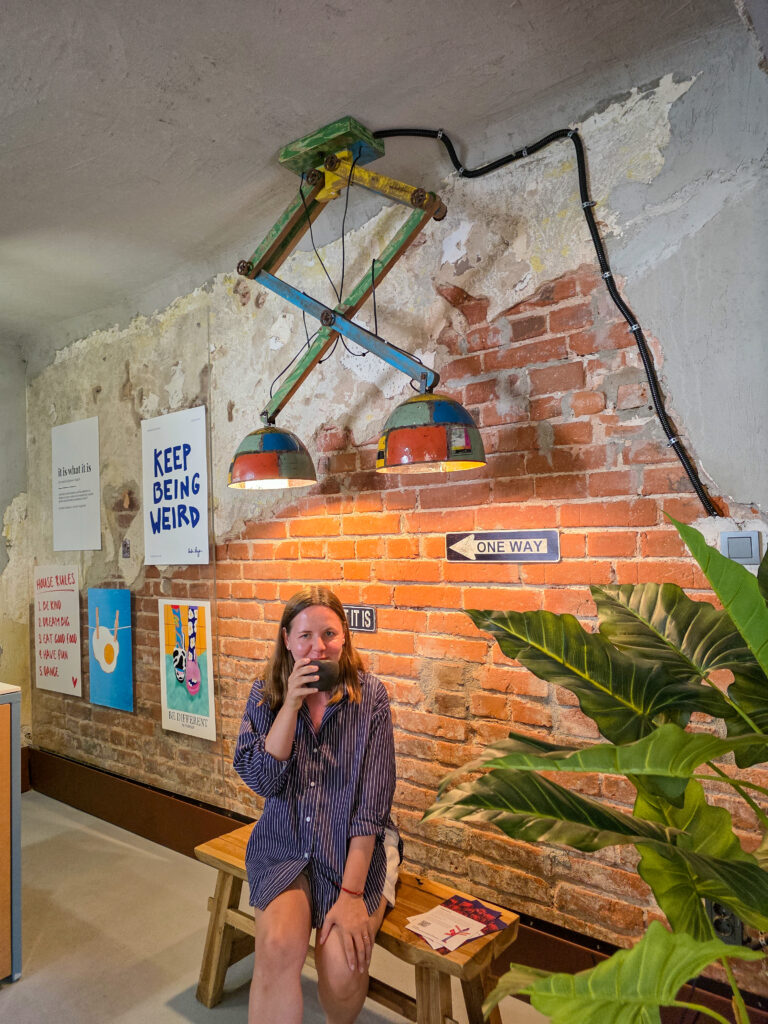
We walked around the Floreasca area, which is residential and not very touristy. That’s where we found 4coffee, a small, cute café run by two young sisters. The girls were very welcoming and accommodating, and the coffee was delicious. It’s also a great spot to work on your laptop for a bit.
STEAM Coffee Shop
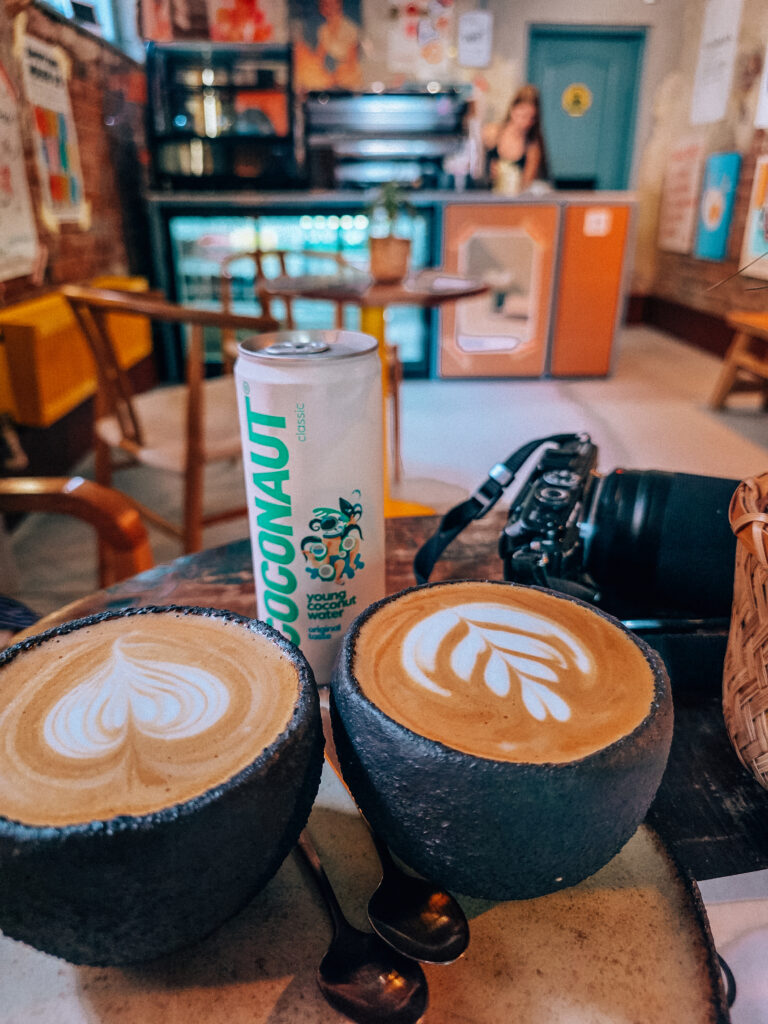
This is a modern coffee place near Herăstrău Park, perfect for resting when it’s hot. I loved that they have some original drinks, like coffee brew with tonic and ginger lemonade. The first time I tried coffee with tonic was in Chisinau, and I loved the flavour.
See also:
- Renting a Car in Romania: What Went Wrong (and Driving to Moldova)
- One Day in Sibiu: Houses With Eyes, Red Roofs and a Bear in Town
- 1 Day in Brasov: Transylvania’s Prettiest Old Town on Foot
- A Maramures and Bucovina road trip Itinerary: Painted Monasteries and Wooden Churches.
- Sighisoara Medieval Festival: A Weekend in Romania’s Living Citadel
- Sinaia and Peleș Castle: Why One Night Beats a Day Trip
- Chisinau City Break: Wine, Food and Why Moldova’s Capital Deserves a Long Weekend
- Old Orhei, Moldova: Cave Monastery by Day, Luxury Weekend escape by Night
Getting around Bucharest
The Old Town and Calea Victoriei are best explored on foot. For longer distances, such as getting to the Palace of Parliament or up to Herăstrău Park, ride hailing apps like Bolt and Uber are widely used and are usually cheaper than in Western Europe. The metro is another option.
Best time to visit Bucharest
We visited in July, and it was quite hot. I think May, June or September would be better months, as the weather is more pleasant for walking around the city. July didn’t mean sunshine every day, though. We got some rain during our short stay.
Is 2 days in Bucharest enough?
Yes. Of course, there are more things to see, but 2 days is fine for a weekend city break. You’ll have time for the main sights, a few good meals, and plenty of coffee stops.
Use my favourite travel resources to plan your dream trips
- Booking.comfor searching best prices on accommodation.
- AirHelp helps to get compensation for cancelled or delayed flights.
- Travel Payouts is my favourite platform for monetizing the blog.
- Discover Cars is a great website as they search both local and international car hire services, so you can choose the best deal for yourself. Make sure though, that the company has a good reputation and reviews.
- Get Your Guide is my place to go for searching and booking tours and excursions, especially when I travel solo.
- World Nomads and EKTA travel insurance. I like them because they have quite extensive coverage of different activities.
- WeGoTrip sends you audio guides to your mobile, so you can visit places while learning history and interesting facts easily and for little money.
- Go City is a perfect site for booking bucket list experiences and attractions all in one to avoid paying for multiple tickets. Easy and saves money. You can even save 50%.
- Trip Advisor– amazing for good quality recommendations.
- Skyscanner is a perfect website for searching flight routes and comparing prices.
- Airalo is my eSim choice for alternative data abroad.
Did you like the post? Pin it for later: