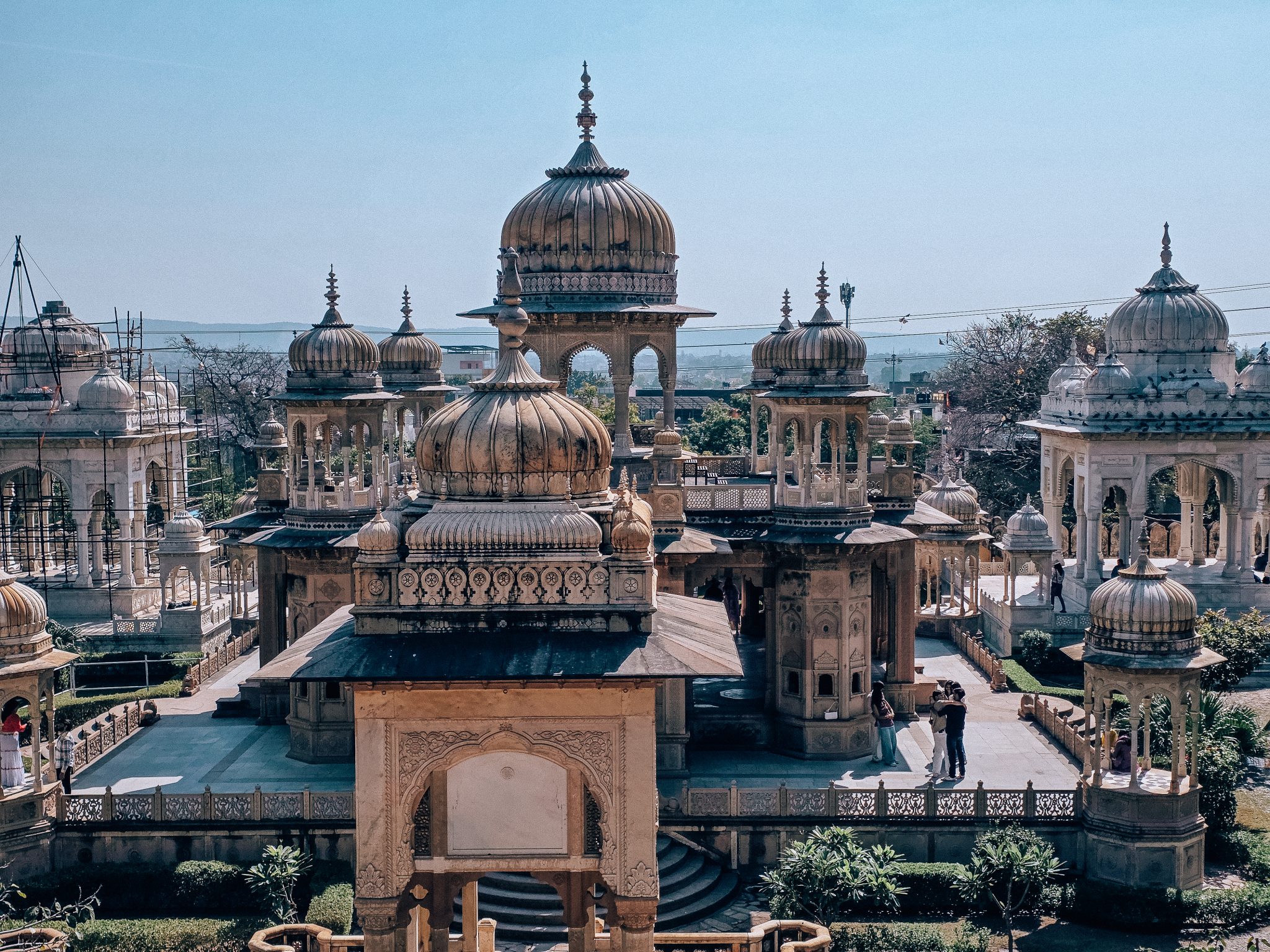
Traveling to India for the First Time? Read This First.
Traveling to India for the first time felt more overwhelming than many of my previous trips, and it’s actually something I started writing about while sitting in the airport lounge, waiting for my very first flight there. Even though India is my 90th country and I’ve navigated countless airports and visa processes around the world, I still found myself wishing I had a proper “what to expect” guide before going.
Please note that this post included affiliate links, when you decide to purchase anything through these links I get a small commission at NO extra cost to you, it helps me to keep running this blog! I only promote products and services I use or would use myself. All images are the property of Postcards from the World and cannot be used without permission.
Everything you need to know before Traveling to india for the first time
India is really the country you want to be prepared for, especially if it is your first time. I was traveling alone to India, so I took extra care with all the preparations, planning and documents. It doesn’t mean I had every moment planned, but I was I knew more or less all the basics.
The Pre-Departure Checklist: Visas and Essentials
When preparing for traveling to India for the first time, getting your pre-departure checklist right is absolutely essential, especially when it comes to visas and key travel documents.
I remember when I was planning a trip to India years ago, the visa process was exhausting. Luckily, this has now changed and it is much easier to get an e-Visa. But it is lenghtly and requires to have a few documents handy.
Most people will need an e-Visa, which is applied for online before arrival. In most cases, it will allow you to stay in India for 30 days, but check it properly by yourself to avoid any issues.
It’s important to apply well in advance, double-check passport validity (it should usually be valid for at least six months from your entry date), and carry a printed copy of your approved visa even if it’s electronically linked. It took no more than 2 days for my visa to be approved, but I’ve heard that some people waited 5 days. When you print it, make sure that it is the actual visa, not just the confirmation. I printed the wrong copy (which looked very similar) and had a little bit of a delay at the airport. Luckily, the staff printed the right document for me.
Beyond the visa, make sure you have your onward or return flight details ready, as immigration officers may ask for proof of exit. Actually, have all the accommodation bookings on paper too.
Travel insurance is also strongly recommended given the scale and variety of travel conditions across India.
Having everything organised before departure makes the arrival process significantly smoother and helps reduce that initial overwhelm arriving in a new country. But not only that, I’ve heard stories of the officers to be extra picky about all the documents and their order.
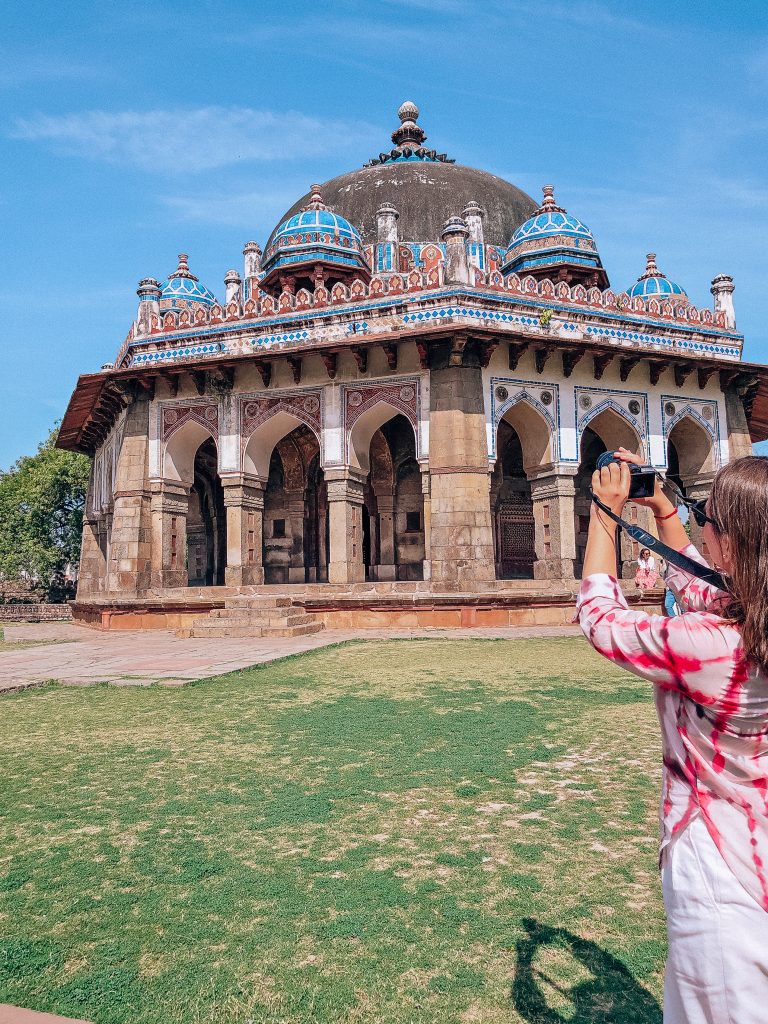

Navigating the new delhi Airport: Your First 60 Minutes in India
Before I continue, it is important to mention that I landed at the New Delhi airport, so I do not know whether the arrival experience could be similar to mine.
The process through immigration and customs was quick and smooth for me. I’ve heard stories that all the checks are strict and slow, but it wasn’t my experience. It was actually very nice and trouble-free.
I flew to India with Qatar Airways from Doha. It was a relatively short, overnight flight, so I arrived early in the morning and had plenty time to get to my next destination just for the hotel check-in.
First, I noticed big signs saying that if it is your first time in India, you can register your biometrics in one of the machines for smoother immigration. It was pretty fast and self explanatory, but despite that there were a few members of staff helping. Basically you need to scan your passport, fingerprints and take a photo of your face. That’s it. 2 minutes and you can proceed to passport control and border crossing.
The airport is well organised with many clear signs of where to go. They even display how many people are queuing in front of you.
There are a few arrival sections depending on whether you’re Indian national, have e-visa or are eligible for visa on arrival and so on. I needed an e-visa as Poland is on the list of countries eligible for it. Following the signs, I proceeded to the dedicated section. There was nobody in front of me and it look less than 5 minutes to get stamped.
Documents I had printed and prepared for the officer:
- Visa approval
- Arrival card
- All my hotel bookings
- My boarding pass
- Confirmation of return ticket
The documents they checked:
- Passport, obviously
- Visa
- Arrival card
- Boarding pass to confirm where I arrived from
I believe this should be a habit of having those documents ready and organized, in case you get asked. You don’t want the officials to get annoyed with you. My top tip: get your papers ready and organized to make it easy for the immigration officer.
Staying Connected: The Best Way to Get Data and a SIM
As I was traveling to India for the first time, staying connected was something I didn’t want to leave to chance, and I always use Airalo. I installed an eSIM before departure, which meant I had mobile data the moment I landed in India, no need to queue for a local SIM or deal with paperwork after a long flight, especially when I travel alone. It worked really well throughout my trip, especially in cities where I relied on maps, ride apps and quick translations on the go. For me, it’s become a simple but reliable part of my pre-travel routine, and India was no exception.
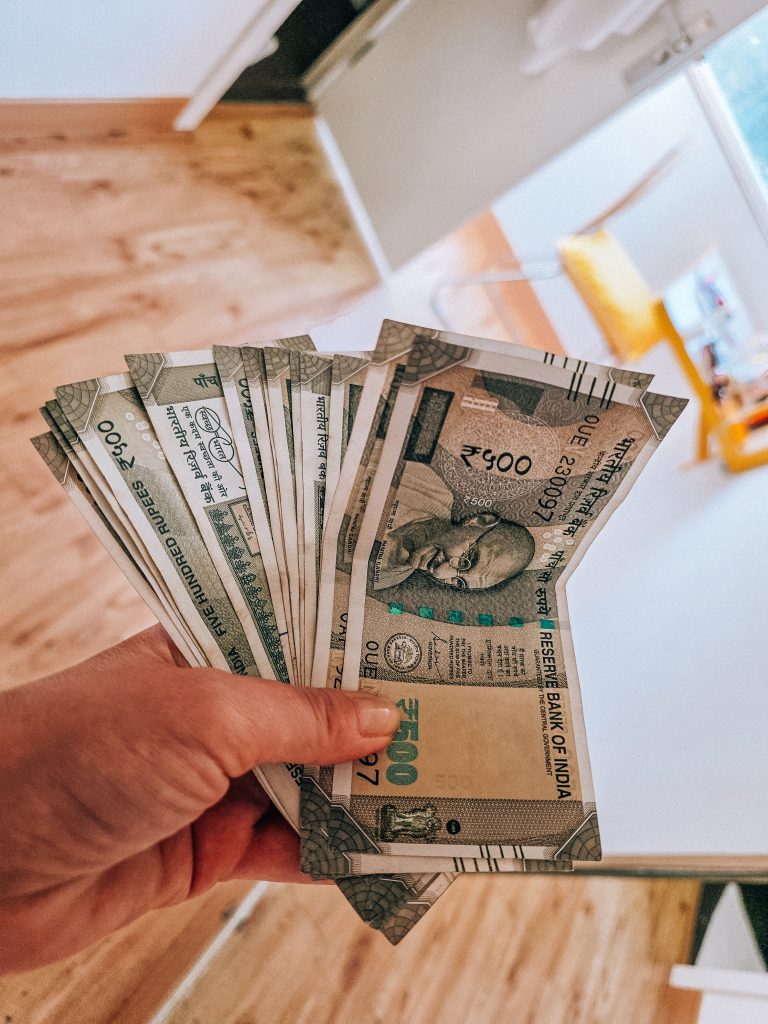
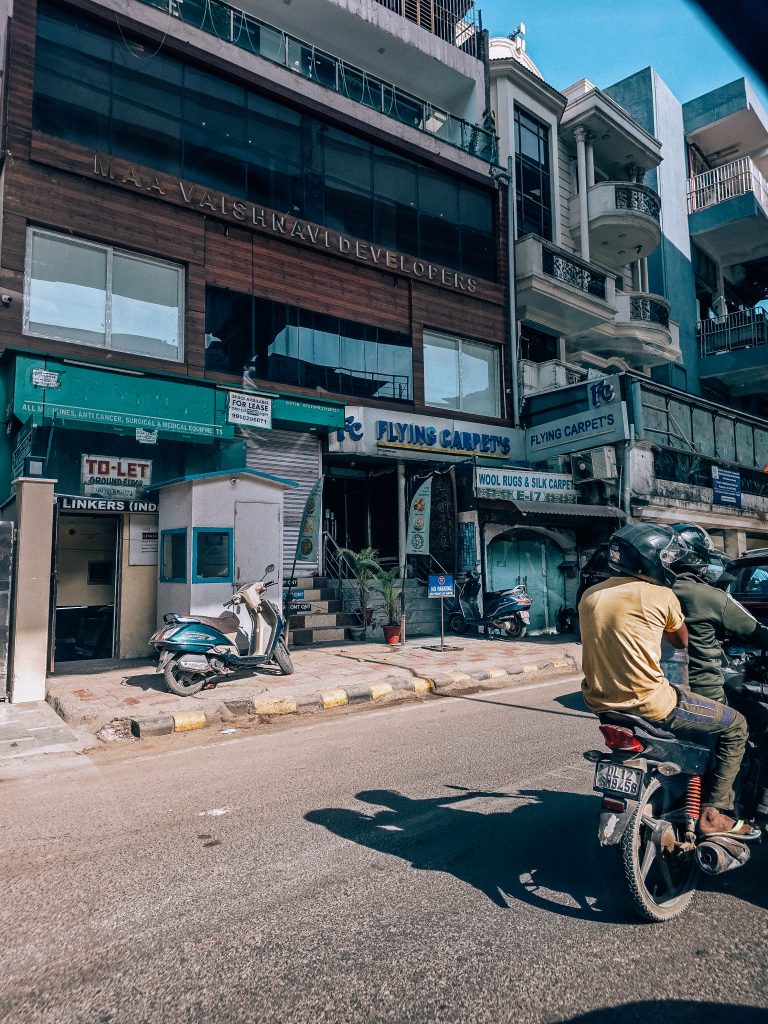
Exiting India through Delhi airport: my experience
I both entered and exited India through Indira Gandhi International Airport in Delhi. I think it is quite useful to know what the exiting through Delhi airport looks like, so you can plan accordingly.
Getting to Delhi airport from the city
I’m one of those people who arrives at the airport far too early. I hate rushing through security and passport control. I despise that kind of stress. My husband, on the other hand, would happily leave it until the very last second. But this time I was travelling alone, so it felt completely natural to leave the hotel four hours before my flight. I pre-booked my airport transfer through Booking.com, and it arrived right on time.
It took about 30 minutes to get from Janpath in New Delhi to the airport at 6 a.m. I can only imagine the traffic later in the day is much heavier.
What the airport experience looked like
At every entrance to the airport, there’s a boarding pass and passport check. It was fairly slow, mostly because many people had lots of luggage and didn’t have their documents ready. After a few minutes in the queue, an officer gestured for me to come forward and skip the line. I assume it was because I was alone with just hand luggage. He was polite and smiling, a surprisingly lovely start to the morning. It took me about five minutes to get through. Without his help, I think it would have taken 10–15 minutes just to enter the main hall.
I needed to collect my boarding pass at the counter. Again, the lines were long, filled with travellers juggling multiple suitcases. As a member of Qatar Airways, I was able to use the business class counter, which was almost empty. The standard queue had nearly 50 people, I imagine that would have been at least a 30-minute wait. Sometimes Qatar Airways issues boarding passes online, but this time I had to present additional documents.
Passport control was about 30% busy, but it moved slowly. I chose a line with four or five people ahead of me, and it still took around 10 minutes.
Security check- this was by far the slowest and messiest part. There didn’t seem to be much organisation, and people were queuing in all directions. You need to place your electronics and bags into trays (as usual), but here you first have to find the trays yourself. The staff mostly stood and observed. The trays were much smaller than standard ones, about half the size.
I was also surprised to learn that dry coconut and spices are not allowed in hand luggage. When I collected my boarding pass earlier, I was only warned about coconut, nothing about spices, so it’s definitely worth double-checking, unless you want your carefully chosen masala confiscated at the last minute.
While we were waiting for our belongings to be scanned, they temporarily closed our line because the area behind the scanner became too crowded for people to collect their items. Then, unexpectedly, a security officer told me to switch lines for a personal check, leaving all my belongings behind, including my passport. I was allowed to take only my boarding pass.
I was directed into a small enclosed cabin and scanned with a handheld device. After that, I had to exit on the other side and rejoin my original line from the opposite direction.
I won’t lie, it felt uncomfortable being separated from my passport. The staff weren’t particularly warm or friendly, but they were simply doing their job. What stood out to me was that, among everyone going through security at that moment, I was the only person singled out for additional screening. I didn’t notice any other foreigners around me either. I don’t want to jump to conclusions, but I couldn’t help wondering if being a foreign traveller played a role.

The “Indian Head Shake” Decoded
One of the most confusing things when traveling to India for the first time is definitely the famous Indian head wobble. I was very used to it since I deal with people from India on daily basis in Qatar. However, for many Western travellers, it initially looks like uncertainty or hesitation, when in reality it often means the complete opposite.
That side-to-side head movement usually translates to “yes”, “okay”, “I understand”, or simply an acknowledgement of what you’re saying. A more rigid up-and-down nod is also used for “yes”, though less frequently, while a firm side-to-side shake generally still means “no” in the way most people expect. It takes some time to get used to it. So if you ask a driver whether he can take you somewhere and get the famous head shake in return, chances are he’s simply saying, “Yes, let’s go.”
Personal Space in india
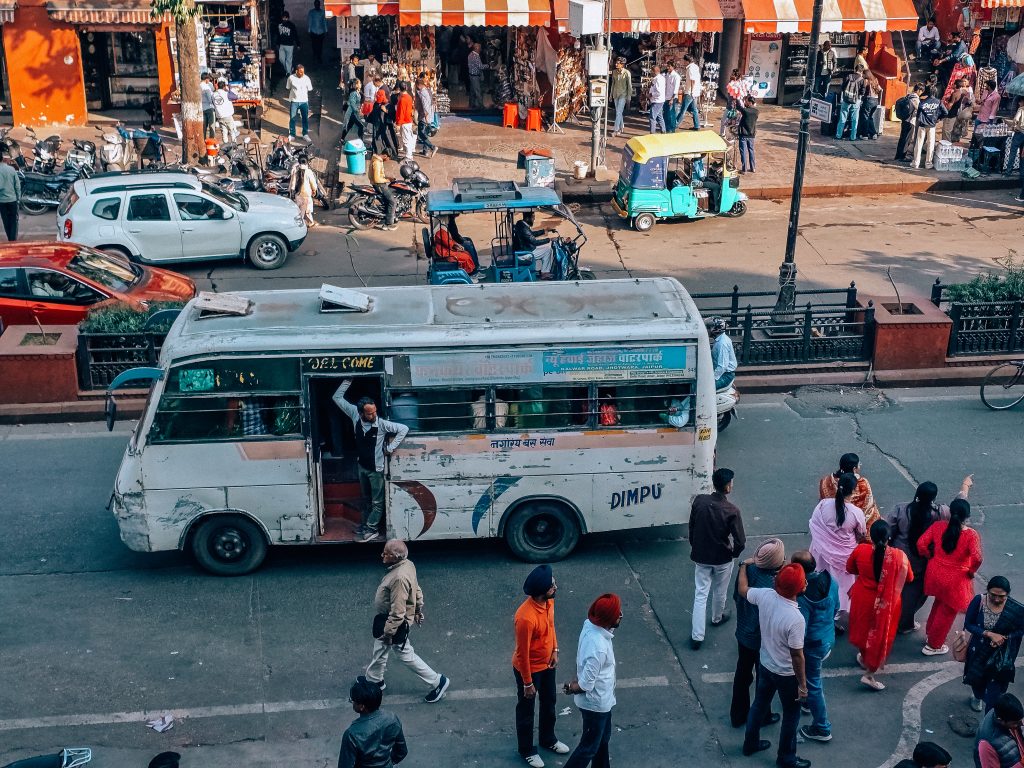
One thing that can feel quite intense when traveling to India for the first time is the concept of personal space, or rather, the lack of it in busy public settings. This is something you need to get used to it quickly, otherwise, you might have a really difficult time in India.
In a country with over 1.4 billion people, queues, train stations and crowded streets naturally function a little differently than in many Western countries. People will often stand extremely close to you in lines, sometimes close enough to feel uncomfortable at first, but it’s usually not meant as rudeness or impatience.
In many situations, leaving too much space simply invites someone else to step into it (I stopped getting annoyed after a while), so people tend to stay physically close to keep the line moving and avoid confusion. It took me a little while to adjust to, but once you understand it as part of how crowded environments operate rather than a personal intrusion, it becomes much easier to navigate.
Staring
One thing that you need to be aware of before traveling to India for the first time is that people will stare at you. A lot! It can feel intense at first, particularly in busy cities or areas that receive fewer international tourists, but in many cases it comes more from curiosity than hostility.
India has such a huge population and diverse social dynamics that people are often simply interested in seeing someone who looks or dresses differently from what they are used to. I usually just smiled at them and they would say hi. Sometimes, people wanted to sell me something and the moment I had an eye contact with them, they would not let me go. So after a while, it became a bit tiring and I started avoiding eye contact.
Over time, it became much less noticeable once I adjusted to the environment. Of course, there’s a difference between harmless curiosity and situations that genuinely make you uncomfortable, and it’s always important to trust your instincts, but overall it helped me to remember that cultural norms around eye contact and public attention can be very different from what many people of diverse backgrounds are used to.
Managing the “Selfie” Requests
This is one of those parts of travelling in India for the first time that can feel quite overwhelming, especially at the beginning and if you travel solo.
People may ask to take photos with you simply out of curiosity, as you can stand out in certain areas. It’s completely okay to politely decline with a simple “No, thank you” (or “Nahi, shukriya”).
If you do say yes, just be aware that it can quickly attract more attention and a small group may gather. I was warned that it might happen a lot, but honestly, I was only asked three or four times and each time by a family or children. But I was not very comfortable with taking selfies with people I don’t know, so once I declined (with a smile), they would smile back and not insist.
food and drink (especially when traveling to india for the first time)
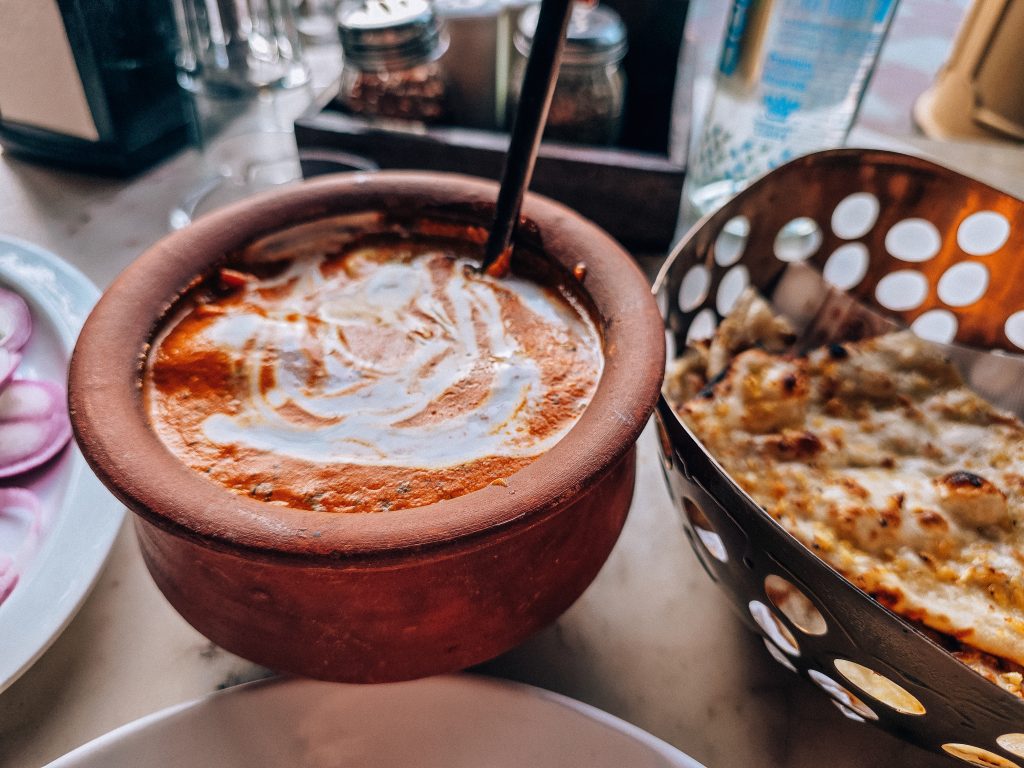
Food is a huge part of the experience in India, and honestly, it’s one of the things that makes the country so memorable. But there are a few things to keep in mind when traveling to India for the first time. Indian cuisine varies massively from region to region, so what you eat in Delhi can feel completely different from what you’ll find in Mumbai, Kerala or Rajasthan.
One thing I learned quickly is that “Indian food” abroad barely scratches the surface of what food in India is actually like. Expect bold flavours, a lot of spices, plenty of vegetarian options and meals that are often much richer and fresher than versions you may have tried elsewhere.
At the same time, first-time visitors do need to be careful with water and hygiene, especially when it comes to street food. I personally stuck to bottled water, avoided ice in smaller places, and eased into street food gradually rather than trying everything on day one. Even if the food is fresh, your stomach is likely not used to it and might get upset a bit.
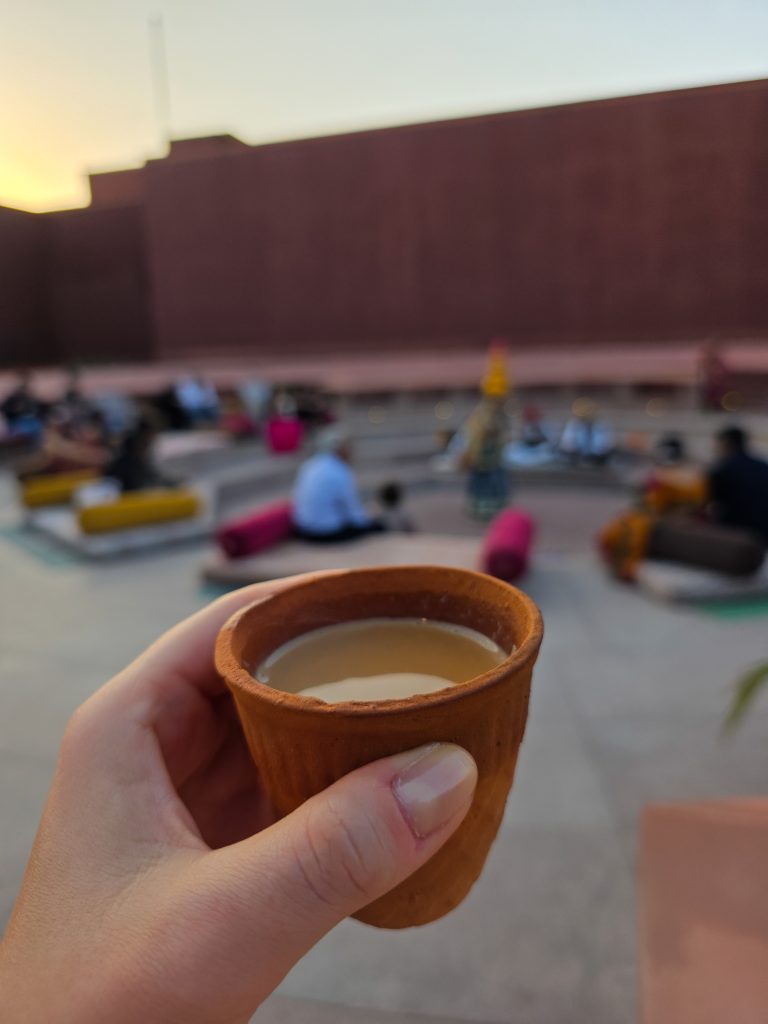
Chai quickly became part of my daily routine though, sweet, spiced and available almost everywhere, and I don’t even like sweet drinks. One of the nicest parts of travelling around India was how much food becomes part of everyday interactions and local life. I refused to eat anything but local food.
booking accommodation in india
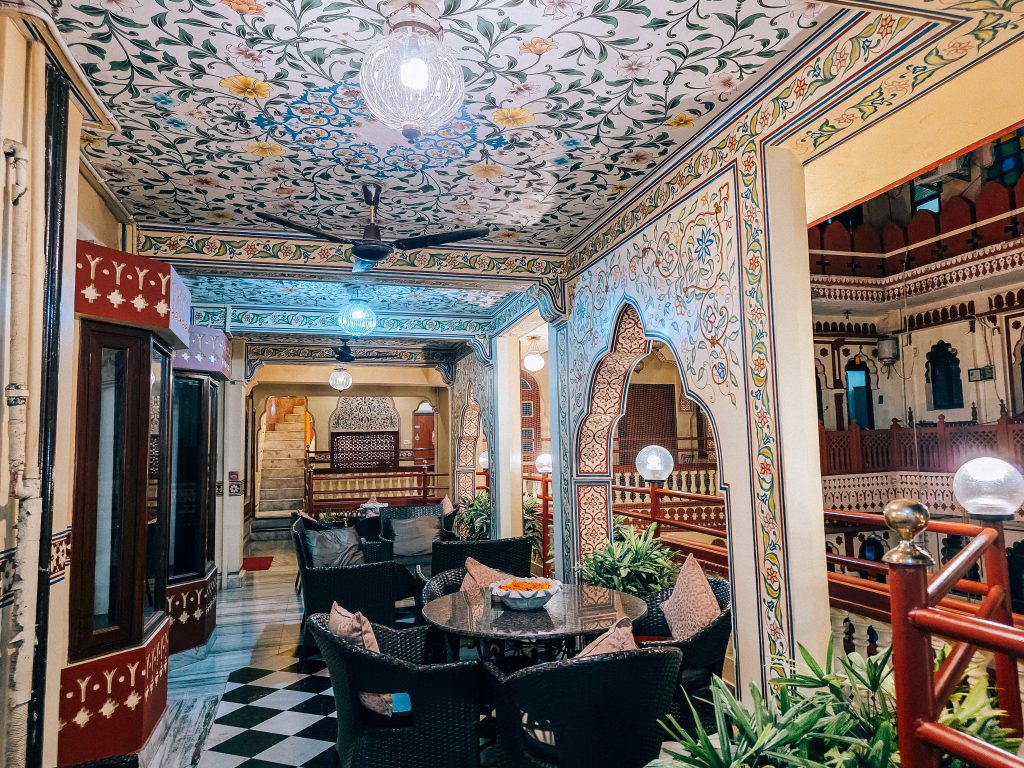
When traveling to India for the first time, one of the things I paid extra attention to was booking accommodation, mainly because I had heard quite a few stories about scams and misleading listings, especially in cities like New Delhi.
Some friends (and even people from India themselves) mentioned arriving at hotels that either didn’t exist at all or looked very different from the photos and reviews online, which can obviously be a shock after a long journey. In some cases, fake listings or heavily edited reviews can make places appear far better than they actually are, so it really pays to double-check everything and book through well-known, reputable platforms or directly via official hotel websites.
I also learned that it’s important to confirm your reservation a day or two before arrival, especially for smaller or less established properties. Overall, the key takeaway for me was not to rely solely on reviews, but to cross-check location, photos, and booking details carefully, it makes a huge difference in avoiding unnecessary stress on arrival. I booked all my accommodation through Booking.com, but I only stayed in hotels that are either well known or where recommended on other travel blogs.
Connecting with people
In general, people in India were quite friendly. I didn’t even have any instances of scamming that everyone was warning me about.
I met random people that were simply caring and interested to connect. For example, on my way from Agra to Delhi, I travelled by rented taxi. I had a short stop and while waiting for a diver, a young girl started talking to me. She was having a snack and was resting with her family. She asked if I was lost. I guess it was not the usual sight to have a foreign girl sitting alone on a parking lot. She was just simply worried and ready to help. Then we had a nice chat about India and she gave me tips on how not to get scammed etc.
Use my favourite travel resources to plan your dream trips
- Booking.comfor searching best prices on accommodation.
- AirHelp helps to get compensation for cancelled or delayed flights.
- Travel Payouts is my favourite platform for monetizing the blog.
- Discover Cars is a great website as they search both local and international car hire services, so you can choose the best deal for yourself. Make sure though, that the company has a good reputation and reviews.
- Get Your Guide is my place to go for searching and booking tours and excursions, especially when I travel solo.
- World Nomads and EKTA travel insurance. I like them because they have quite extensive coverage of different activities.
- WeGoTrip sends you audio guides to your mobile, so you can visit places while learning history and interesting facts easily and for little money.
- Go City is a perfect site for booking bucket list experiences and attractions all in one to avoid paying for multiple tickets. Easy and saves money. You can even save 50%.
- Trip Advisor– amazing for good quality recommendations.
- Skyscanner is a perfect website for searching flight routes and comparing prices.
- Airalo is my eSim choice for alternative data abroad.
Did you like the post? Pin it for later: