What to Do in Intramuros: Walking Tours, Museums, and Secret Corners
Intramuros was on top of our list during our 2 days in Manila. If you only have a short time in Manila, there’s one place you absolutely shouldn’t skip: Intramuros. This walled city is the heart of the capital’s history, where cobblestone streets, centuries-old churches, and historic forts tell the story of the Philippines like nowhere else. There are more places worth seeing in Manila, but Intramuros should be the priority and can be done even if you are in Manila as a day stopover.
Please note that this post included affiliate links, when you decide to purchase anything through these links I get a small commission at NO extra cost to you, it helps me to keep running this blog! I only promote products and services I use or would use myself. All images are the property of Postcards from the World and cannot be used without permission.
What to do in intramuros – the historic district in manila
Even if you only have a few hours, spending them in Intramuros will change the way you see Manila. It seems that there is such a strong stereotype about Manila (I am sure you’ve heard it) when it comes to safety, poverty and dirt and I think Intramuros demolishes that stereotype quite quickly.
It’s one thing to drive through the city and watch it from a taxi window, and another to actually walk its oldest streets, touch the stone walls, and sit quietly inside centuries-old churches. That’s where Manila started to make sense to me. In this guide, I’m sharing what to do in Intramuros, from the best walking tours and museums to the quiet corners and little cafés I found along the way, so you can experience it properly, not just pass through it.
This article is also featured on GPSmyCity. To download this article for offline reading or create a self-guided walking tour to visit the attractions highlighted in this article, go to Walking Tours and Articles in Manila.
Why Intramuros Is the Heart of Manila
If you’re wondering what to do in Intramuros, it helps to first understand why this place matters so much. Intramuros isn’t just another historic district; it’s where Manila began. Within these walls, you can trace centuries of Spanish rule, the heritage of its culture, resilience and the foundations of the efforts to offer higher education to the people.
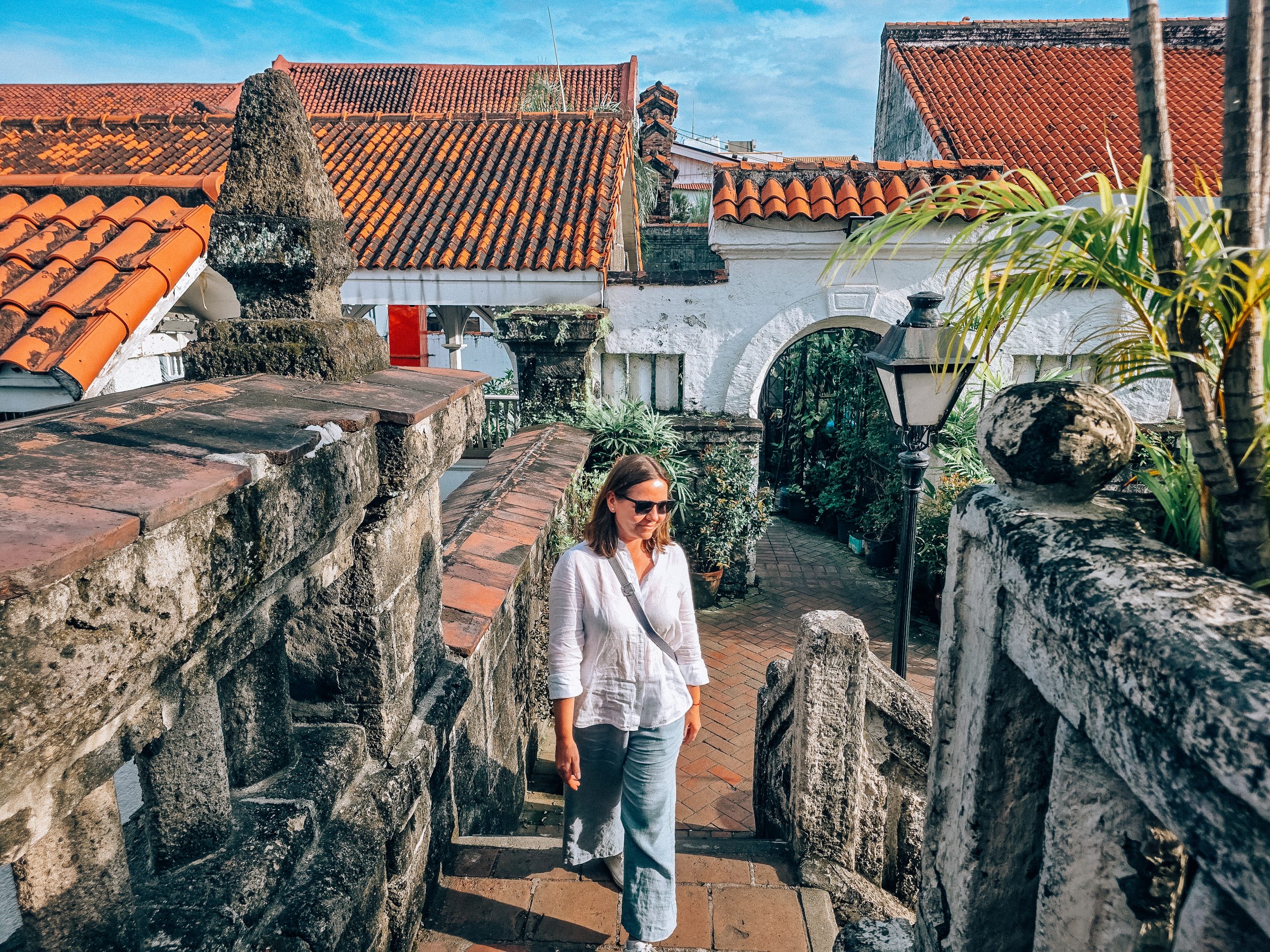
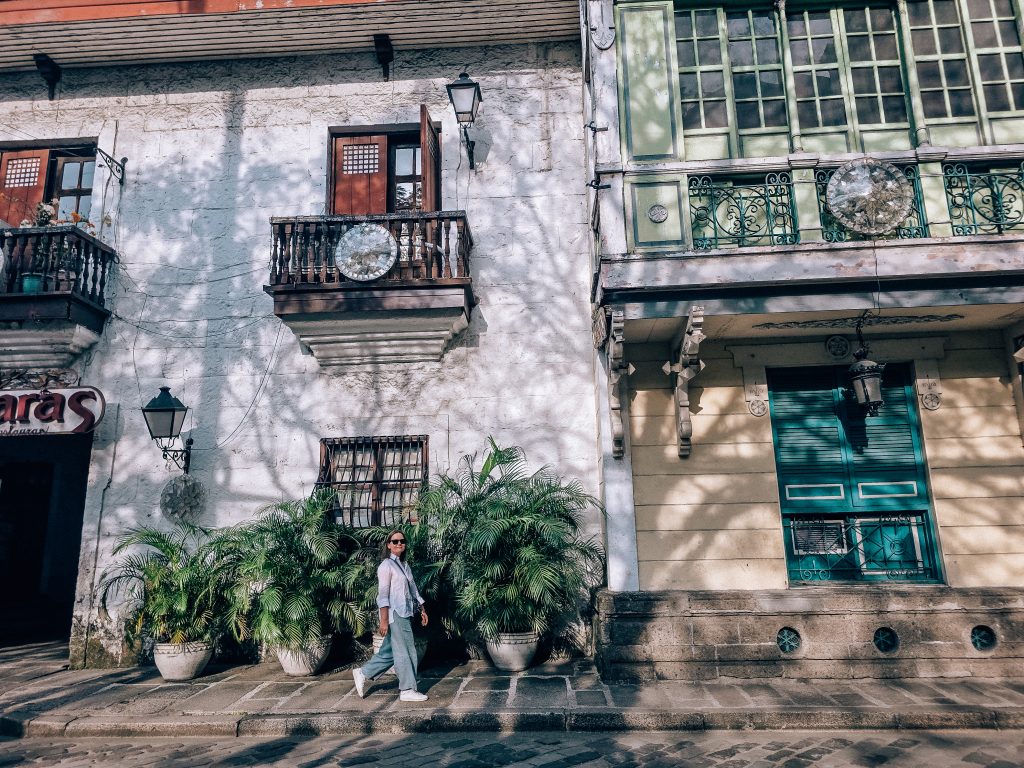
Walking here feels different from the rest of the city, obviously. The pace slows down. The streets narrow. The noise softens just enough for you to notice details: the wooden balconies, the heavy church doors, the quiet courtyards hidden behind stone gates (there are quite a few surprises). For me, this is where Manila stopped feeling overwhelming and started feeling layered. Once you get there, you will understand what I mean. If you want to understand the city beyond its traffic and skyscrapers, this is where you start.
how to get to intramuros
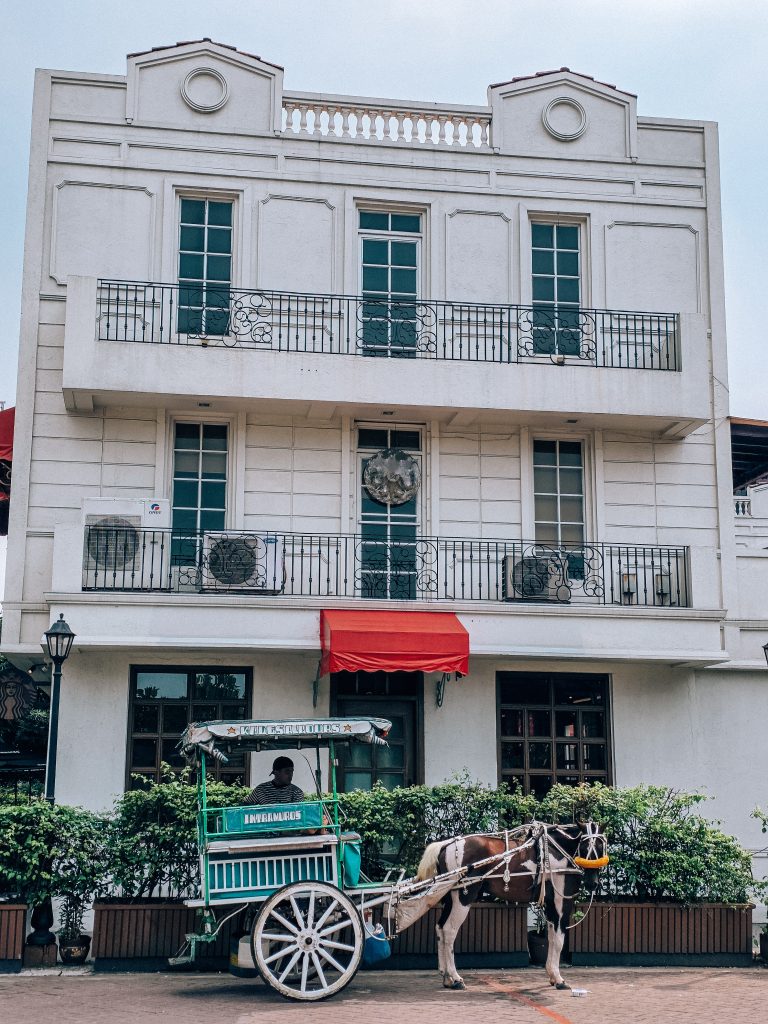
Getting to Intramuros is relatively straightforward, but like everything in Manila, it depends on traffic. The easiest and most convenient option is to take Grab, which it’s affordable, reliable, and saves you from figuring out routes or negotiating fares. Just type “Intramuros” or a specific landmark like Fort Santiago or Manila Cathedral into the app.
If you’re staying in Makati (where we stayed) or Bonifacio Global City, expect the ride to take anywhere from 20 minutes to over an hour depending on the time of day, the traffic can get really horrible. There are also local buses and jeepneys that pass nearby, but unless you’re familiar with the routes, they can feel a bit confusing. Personally, for a short stay, I found Grab to be the most stress-free way to arrive, especially if you want to start exploring without already feeling exhausted.
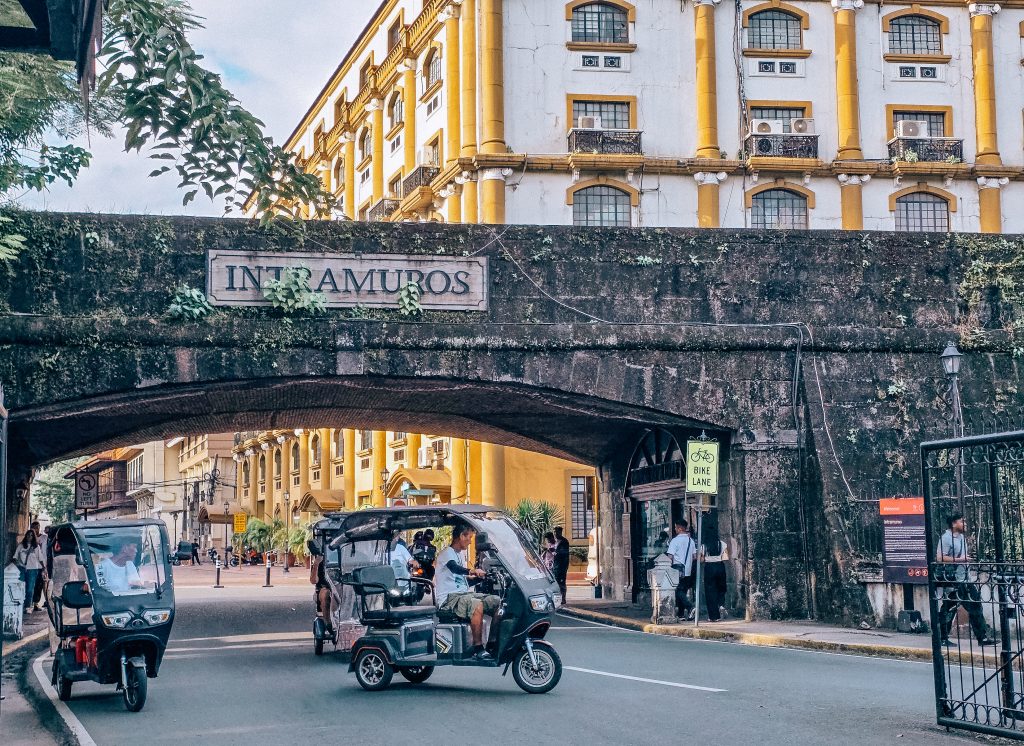
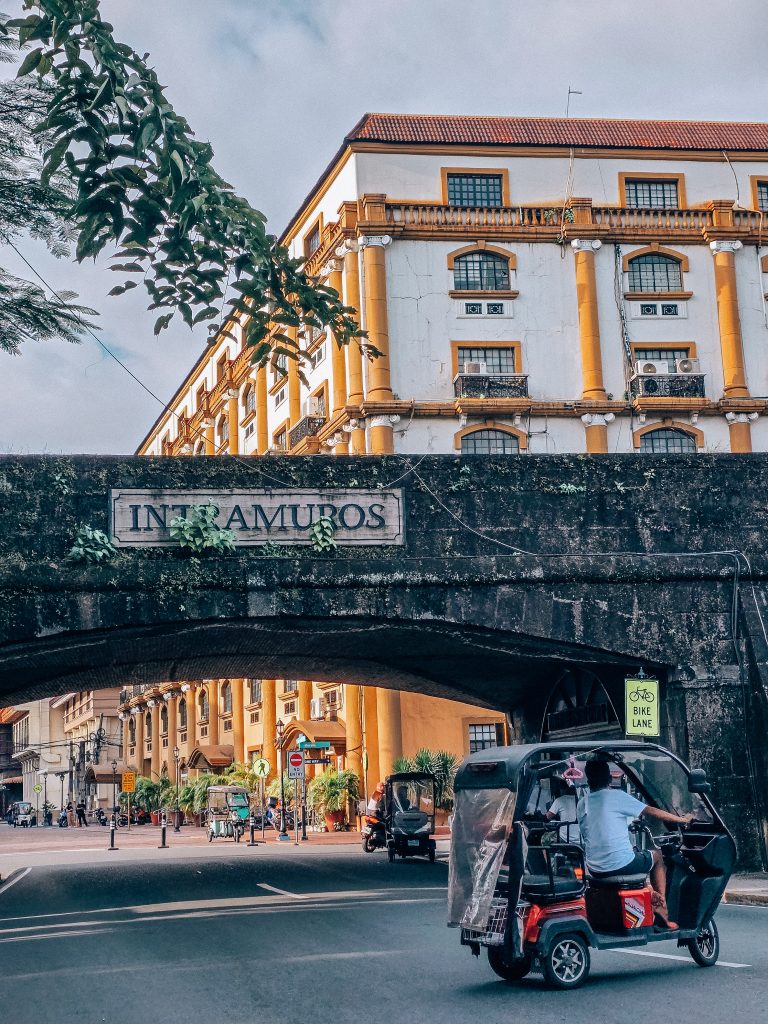
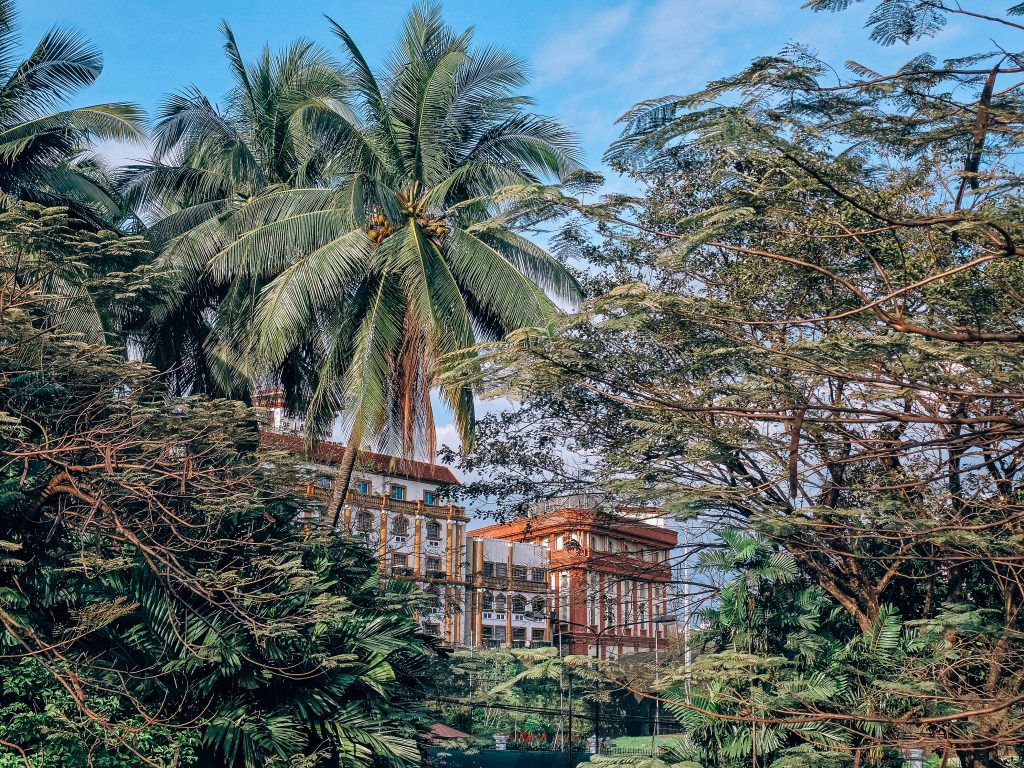
To get back, we ordered a Grab from just outside the gate (the one you can see in the photo below). We did end up waiting there for a while. There’s a small park right outside where you can walk around, although we were advised not to wander too far for safety reasons. To be honest, many of the warnings we received (mostly from locals, interestingly enough) felt a little exaggerated. Manila wasn’t nearly as intimidating as people made it sound, at least not in our experience.
Top things to see and do in intramuros
Fort Santiago: Gardens, History, and the Museum of José Rizal
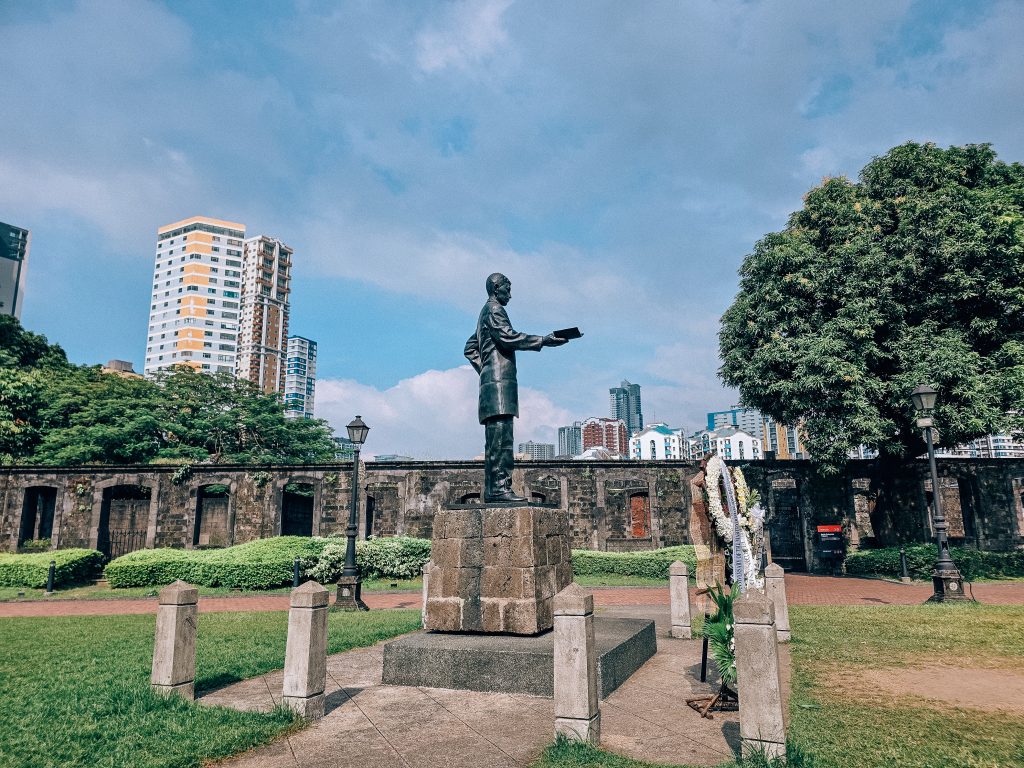
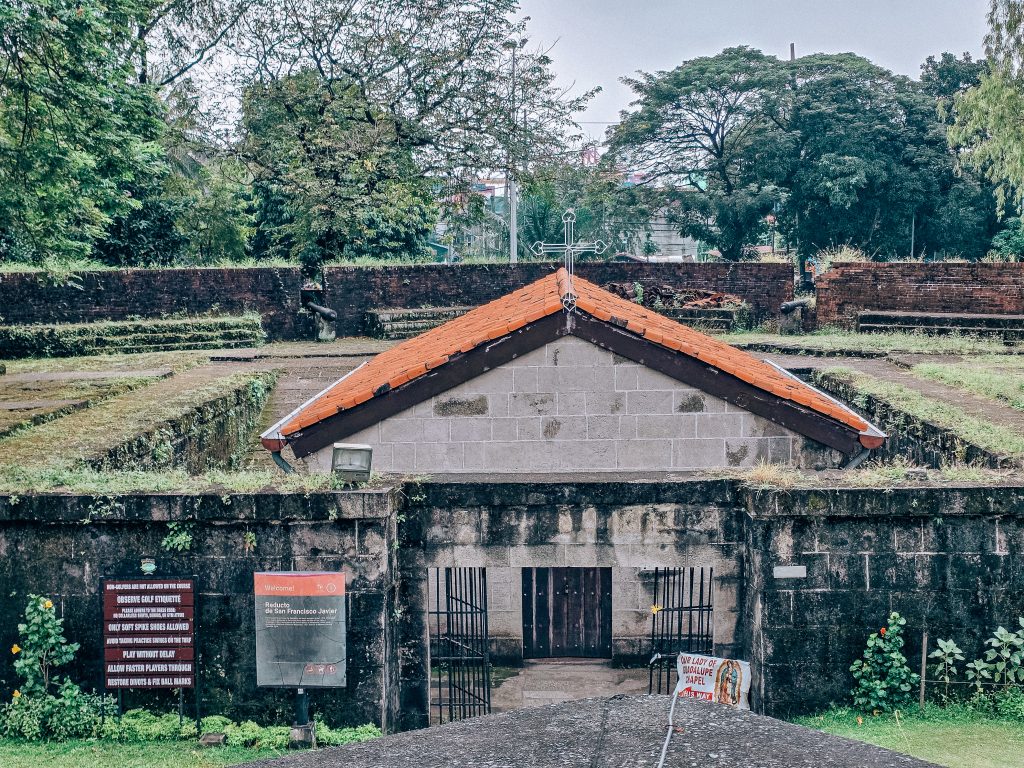
Fort Santiago is one of those places where you feel history all around you. Walking through the massive gates and along the stone paths toward the river, it’s impossible not to think about the events that took place here centuries ago.
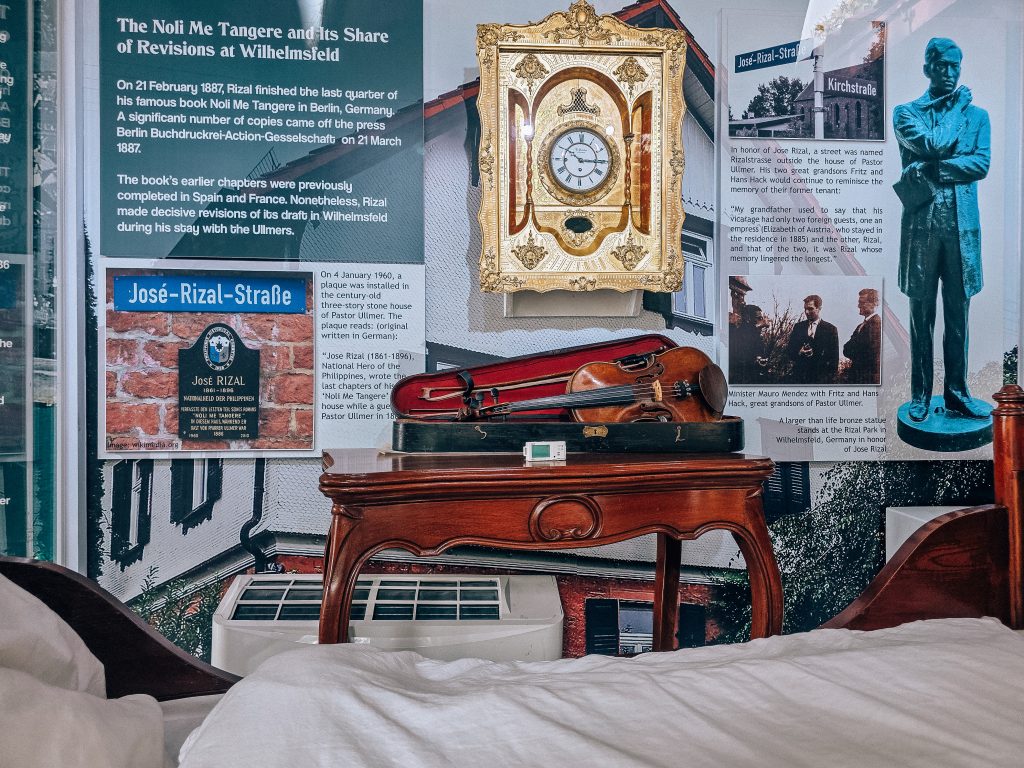
The gardens are peaceful now, almost deceptively so, with families strolling, couples taking photos, and kids running along the paths, yet behind it all is a deep and complex history. The highlight is definitely the Museum of José Rizal, which gives a glimpse into the life of the Philippines’ national hero. Seeing his letters, personal belongings, and the small details of his story made me pause more than once and really reflect.
José Rizal was incredible in so many ways. He was not only a writer and revolutionary, but also a polymath, fluent in multiple languages, trained in medicine, and deeply interested in science and the arts. His connection to Spain went beyond his studies; he traveled extensively in Europe, exchanging ideas with intellectuals and advocating for reform in the Philippines through his writings rather than violence. Visiting his museum in Fort Santiago, you can feel how his intelligence and vision shaped a whole generation, and why he remains such a beloved figure in Filipino history.
You could easily spend an hour or two here if you take your time, reading the plaques and simply absorbing the atmosphere. For me it was one of the most interesting museums.
San Agustin Church and Manila Cathedral: Timeless Spanish-Era Churches
After wandering the fort, stepping into San Agustin Church feels like moving into a completely different world. The ceilings are ornate, the walls full of intricate details, and the silence inside is almost overwhelming. I loved just standing there for a few minutes, letting the weight of the history sink in. When we were there, the church was closed and it seemed that it’s been a very long time since people were allowed to enter. I hope it gets open during your visit, because apparently, it’s beautiful inside as well.
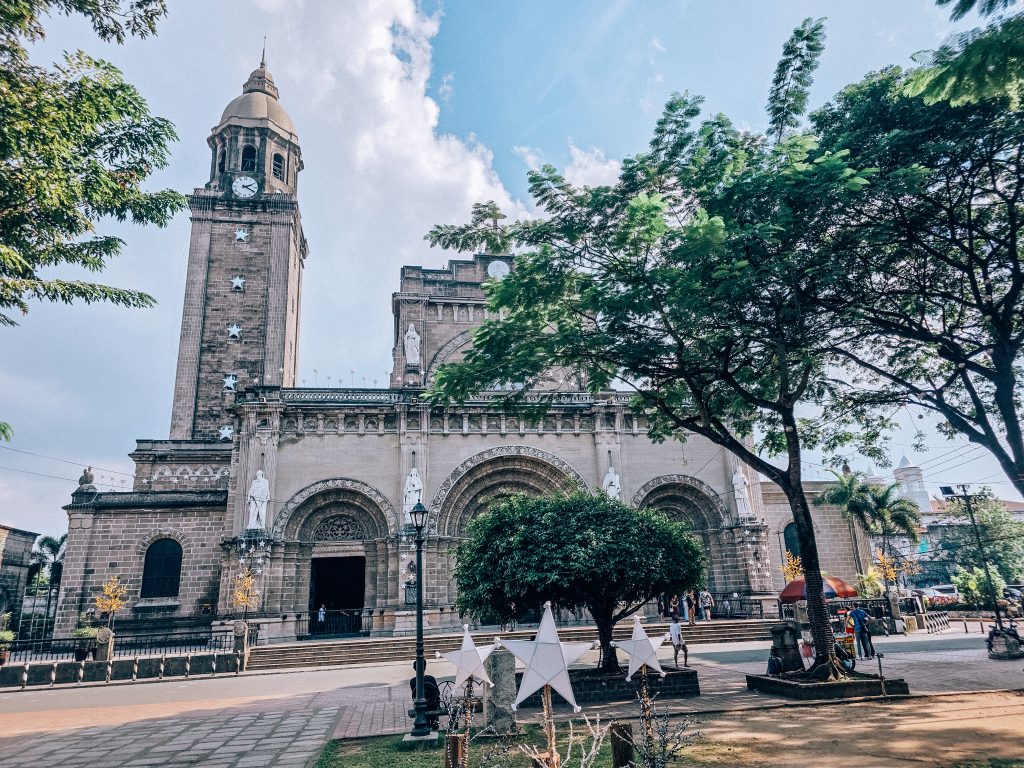
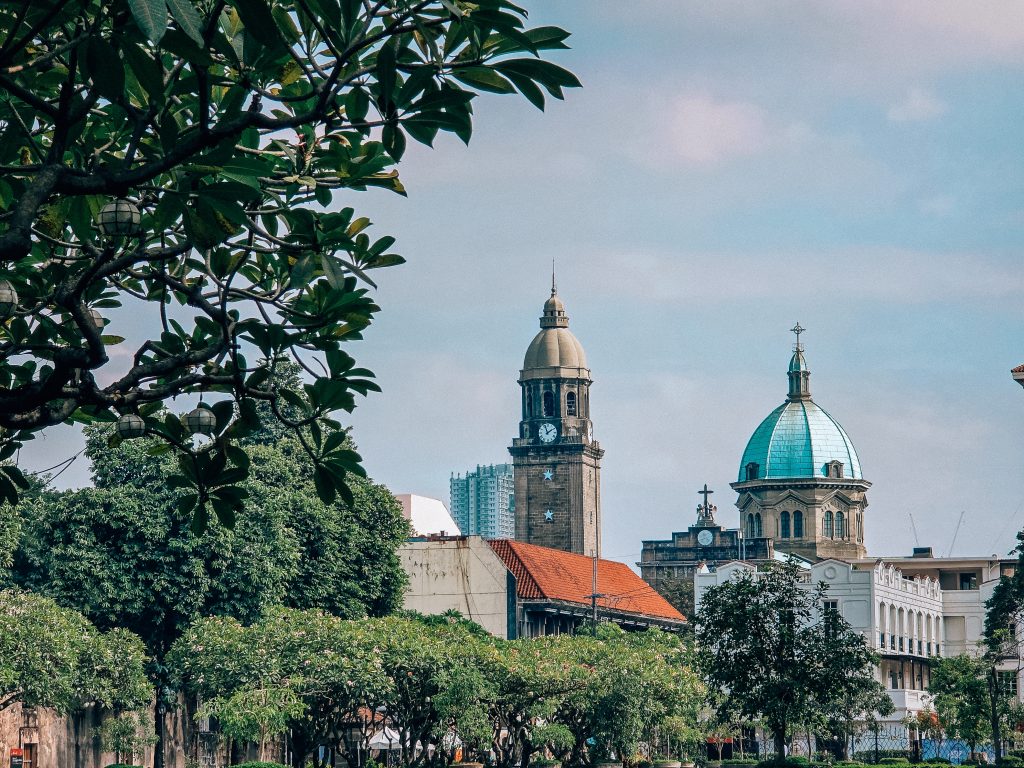
Across the plaza is Manila Cathedral. It’s a stunning contrast, and the plaza in front gives you a chance to just watch life in Intramuros. Both churches survived wars and earthquakes, which makes them feel even more special , like quiet survivors witnessing everything that has happened in the city.
Museums in Intramuros: Where to Learn More
If you want to really understand Intramuros beyond its walls, the small museums scattered around are perfect. Casa Manila gives you a peek into colonial life, showing the furniture, homes, and daily routines of the Spanish era. Bahay Tsinoy focuses on the Filipino-Chinese community, which adds another layer to the city’s history. Some museums require prebooking online (it might be necessary when the ticket office is closed, like when we visited)so it’s good to check ahead. I ended up spending more time than I expected in the exhibits, they’re small but full of interesting stories that make the streets and buildings come alive in a way you can’t get just by walking around.
Walking Tours of Intramuros: How to Get the Stories Behind the Walls
Walking around Intramuros on your own is a wonderful way to explore, especially if you already have some knowledge of Manila’s history and its ties to Spain, like we did. We wandered at our own pace, stopping to admire the stone walls, old plaques, and hidden chapels, piecing together the stories as we went.
That said, a guided walking tour can be really fascinating if you don’t know much about the city’s past. A good guide will point out details you might miss entirely, share the stories behind the plazas, and bring the streets to life in a way that makes the history tangible rather than just scenic. It’s also a great option if you want to get the full picture in a shorter amount of time, with anecdotes and context that you might never find on your own.
Bamboo Bike Tours: A Fun Way to Explore More Corners
If you want to cover more ground than walking allows, a bamboo bike tour (it’s called bambike) is a really fun option. The bikes themselves are neat, light and handmade (pretty cool). You can explore more of the walls, side streets, and quiet corners without feeling rushed.
We didn’t hire a guide ourselves, but I can see how having one on a bike tour would be amazing, especially if you don’t know much about Intramuros. A guide could show you hidden plazas, tucked-away alleys, and small courtyards you might never notice on your own, while sharing the stories that bring the city to life.
Hidden Corners and Secret Spots in Intramuros
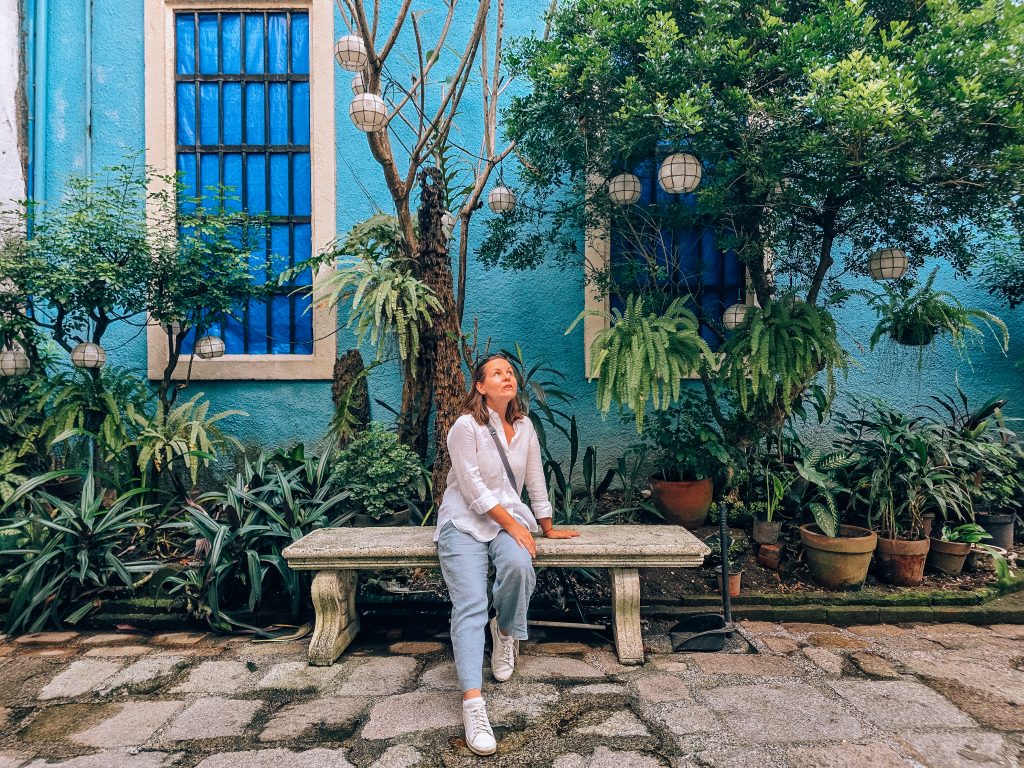
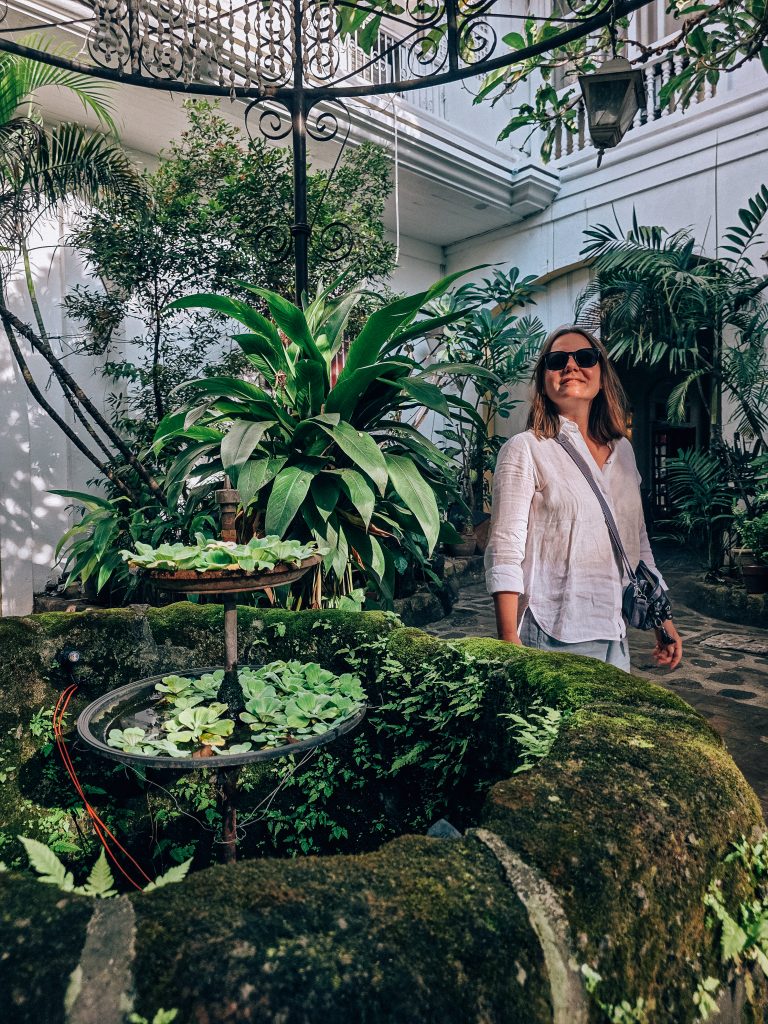
One of my favorite things about Intramuros is that you can keep finding surprises no matter how many times you walk around. Small courtyards with benches shaded by trees, old gates leading to quiet streets, and tiny cafes tucked into corners make the city feel like it’s hiding its secrets for those willing to explore.
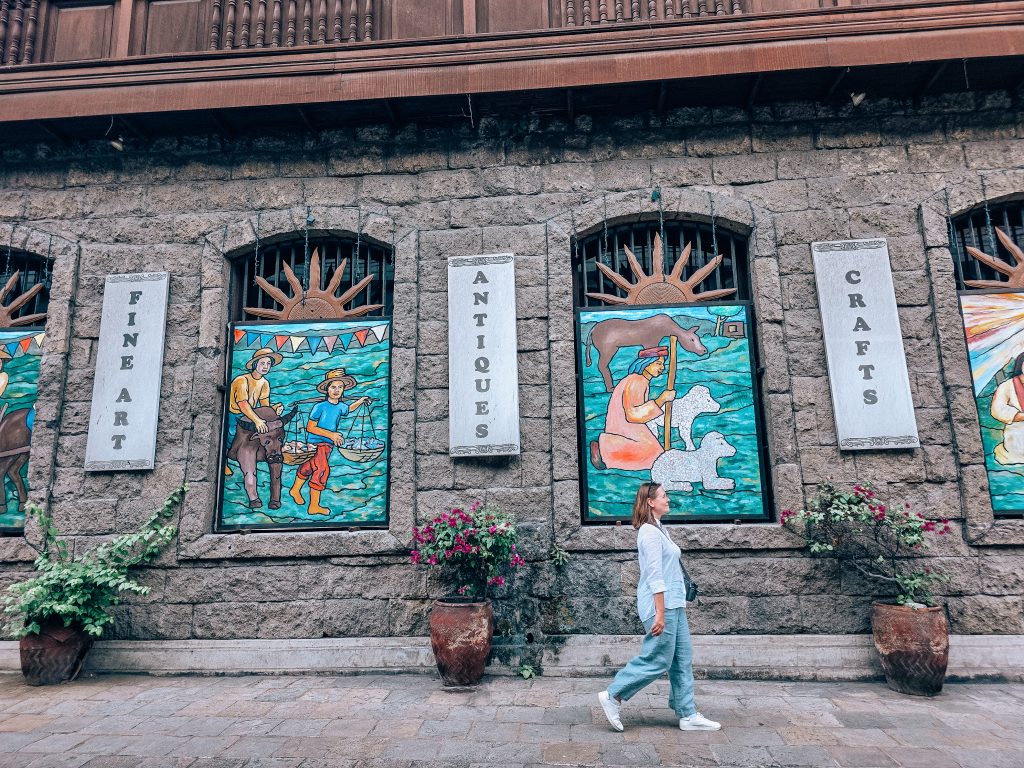
I loved just wandering and stopping whenever something caught my eye, a carved wooden door, an old fountain, or a sunlit square where locals were quietly going about their day. These little discoveries are what make Intramuros more than just a tourist stop. When I looked back at my camera roll, Manila shows as a very colourful place- something I did not expect.
Where to Eat and Drink in Intramuros
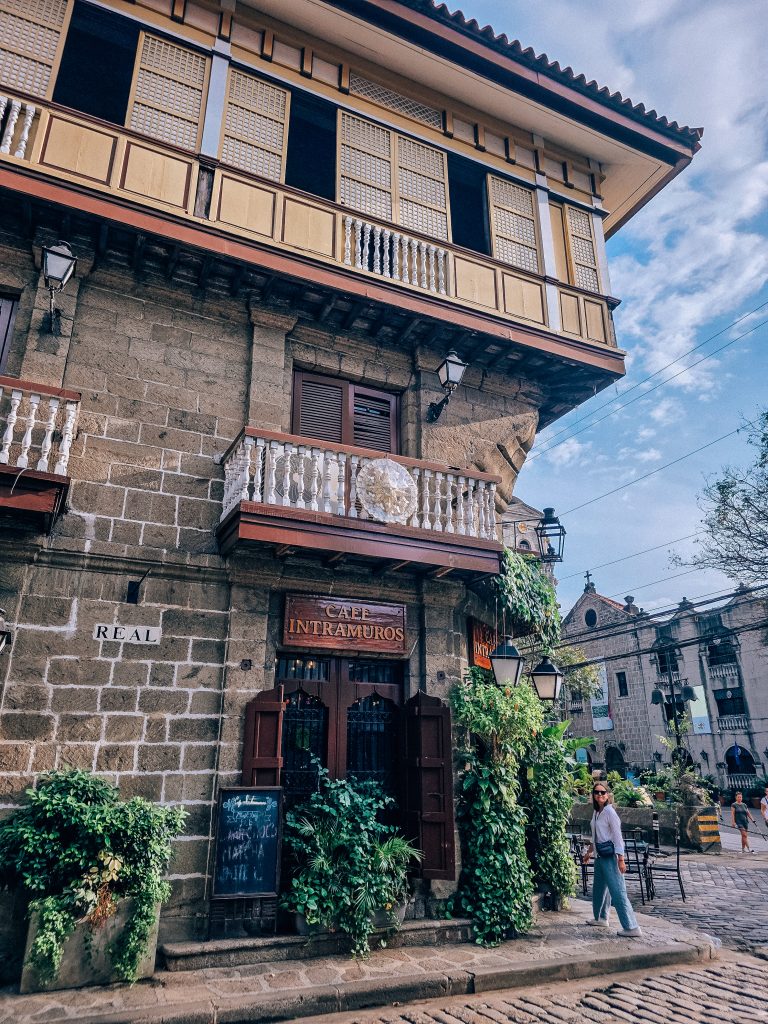
Exploring Intramuros makes you hungry, and luckily there are some really lovely spots to stop along the way. There are small cafés perfect for an afternoon coffee and pastry, like Ilustrado Café, known for its historic charm and hearty Filipino dishes, or Barbara’s Heritage Restaurant, which offers traditional meals in a beautiful colonial setting. We also loved The Bayleaf Hotel’s Café tucked on a quieter street, where you can enjoy a cold drink while watching the old streets go by. I liked the look of this cute cafe next to San Agustin church, but they just closed the door when we tried walking in (like literally seconds away from when this photo was taken).
Practical Tips for Exploring Intramuros
Intramuros is easy to get around on foot, but a few tips make the visit smoother. Wear comfortable shoes because of the cobblestone streets, and bring water, especially on hot days. There are shops inside the museum complex as well, so if you need a snack, water or souvenirs, you’ll find them there.
Most sites are cash-only or have small entrance fees, so have small bills ready. Allocate at least half a day if you want to see the highlights, or a full day if you want to do museums and take a walking or bamboo bike tour. Early morning or late afternoon is the best time to avoid the midday heat and get softer light for photos.
How to Pair Intramuros With Other Manila Highlights
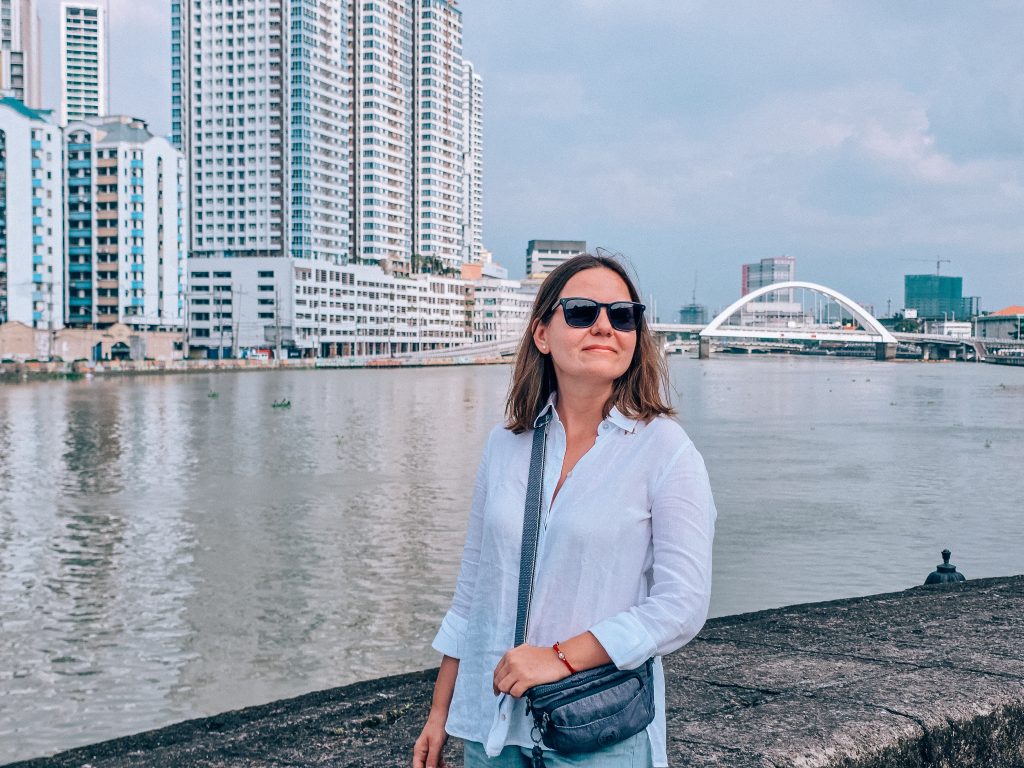
If you have more time, Intramuros pairs nicely with other nearby attractions. Rizal Park is just a short ride away and offers open green spaces and monuments. Binondo, Manila’s Chinatown, is great for lunch or a food tour afterward. For a modern contrast, Bonifacio Global City or Makati are just a short drive away, where you can experience the contemporary side of Manila: cafes, malls, and city life. Pairing the historic with the modern gives a full picture of the city in just one or two days.
See also:
- Don’t Go to the Palawan’s Puerto Princesa Underground River Without Reading This First!
- Renting a Car and Driving in Palawan, Philippines. All I Wish I Knew Before My Trip.
- El Nido beaches by Land: Best Beaches Accessible by Scooter, Car, or Tricycle (No Island-Hopping)
- 7-Day Palawan Itinerary: The Best Route for a Self-Drive Road Trip
- Only Have 1 Day in Puerto Princesa? Here’s What to Do
Use my favourite travel resources to plan your dream trips
- Booking.comfor searching best prices on accommodation.
- AirHelp helps to get compensation for cancelled or delayed flights.
- Travel Payouts is my favourite platform for monetizing the blog.
- Discover Cars is a great website as they search both local and international car hire services, so you can choose the best deal for yourself. Make sure though, that the company has a good reputation and reviews.
- Get Your Guide is my place to go for searching and booking tours and excursions, especially when I travel solo.
- World Nomads and EKTA travel insurance. I like them because they have quite extensive coverage of different activities.
- WeGoTrip sends you audio guides to your mobile, so you can visit places while learning history and interesting facts easily and for little money.
- Go City is a perfect site for booking bucket list experiences and attractions all in one to avoid paying for multiple tickets. Easy and saves money. You can even save 50%.
- Trip Advisor– amazing for good quality recommendations.
- Skyscanner is a perfect website for searching flight routes and comparing prices.
- Airalo is my eSim choice for alternative data abroad.
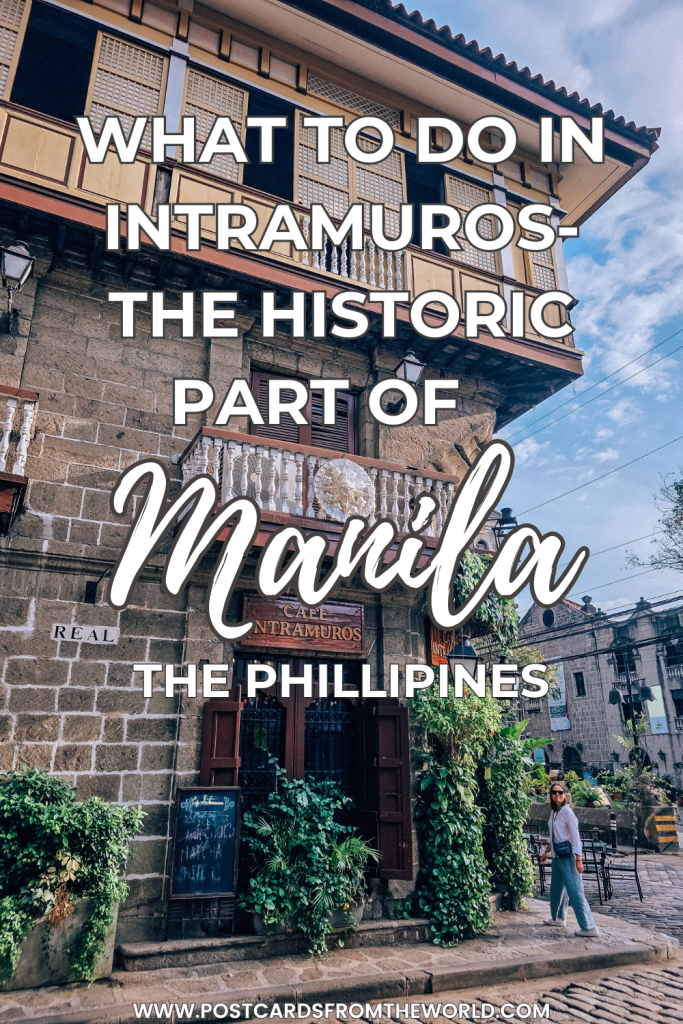
Did you like the post? Pin it for later:
Popular posts from Asia:
- Guide to South Korea for first timers: 10 days itinerary in spring (would also be great in autumn)
- Where to Stay in Busan for the Best Experience
- All you need to know about renting a hanbok in Seoul: a comprehensive guide for first timers
- 15 Best Hotels in Hong Kong: Where to Stay for Every Style and Budget
- 1 day in Macau: what to see and how to get there from Hong Kong