The Real Whirling Dervishes Ceremony in Istanbul (Not a Tourist Show): Unforgettable
If you’ve been researching the real Whirling Dervishes ceremony in Istanbul, you’ve probably noticed there are two very different things hiding under the same name. It took me so much time to research the differences before my second trip to Istanbul, because I really wanted to add this to my 3-day Istanbul itinerary.
So I discovered that there’s the polished evening show, easy to book, central, done for visitors like you and me. And then there’s the real thing, a Sufi ceremony that happens whether tourists turn up or not. This is the story of the second one, the one I took my mum to, and why I’d send you there too.
Please note that this post included affiliate links, when you decide to purchase anything through these links I get a small commission at NO extra cost to you, it helps me to keep running this blog! I only promote products and services I use or would use myself. All images are the property of Postcards from the World and cannot be used without permission.
I’d seen the Whirling Dervishes before, as a show
Here’s my confession. This wasn’t my first time watching the dervishes spin. I saw them once before in Cyprus, and honestly, it was lovely. The music, the robes, the whirling, all of it was beautiful and I’m glad I went. But it was a show, put together for tourists, with a start time and an end time and a neat little slot in the evening’s entertainment. Nothing wrong with that.
At that time, I didn’t know much what whirling dervishes are and had no idea that it was a show for tourists. I didn’t even look for it, but the ”activities” sellers on the street convinced us to go. When I learned a bit more about it, it just left me curious about what the ceremony looks like when it isn’t being performed for an audience.
So when I was planning this trip with my mum, I wanted her to see it too, but I wanted us to see the real one. Not a performance. The actual ritual, from beginning to end. It is such a unique experience that is really worth adding to the list.
See also:
- Hot air balloon flight over Cappadocia. An experience to remember.
- 3 Days in Istanbul: The Perfect long Weekend Itinerary
- 10-Day Bulgaria Itinerary: Complete Travel Guide & Highlights of Bulgaria
- A comprehensive guide to Athens: what to see and do in 3 days.
- 7 Wonderful Things To Do in Cyprus (Beyond the Beaches!)
Why the “real” ceremony is a different experience
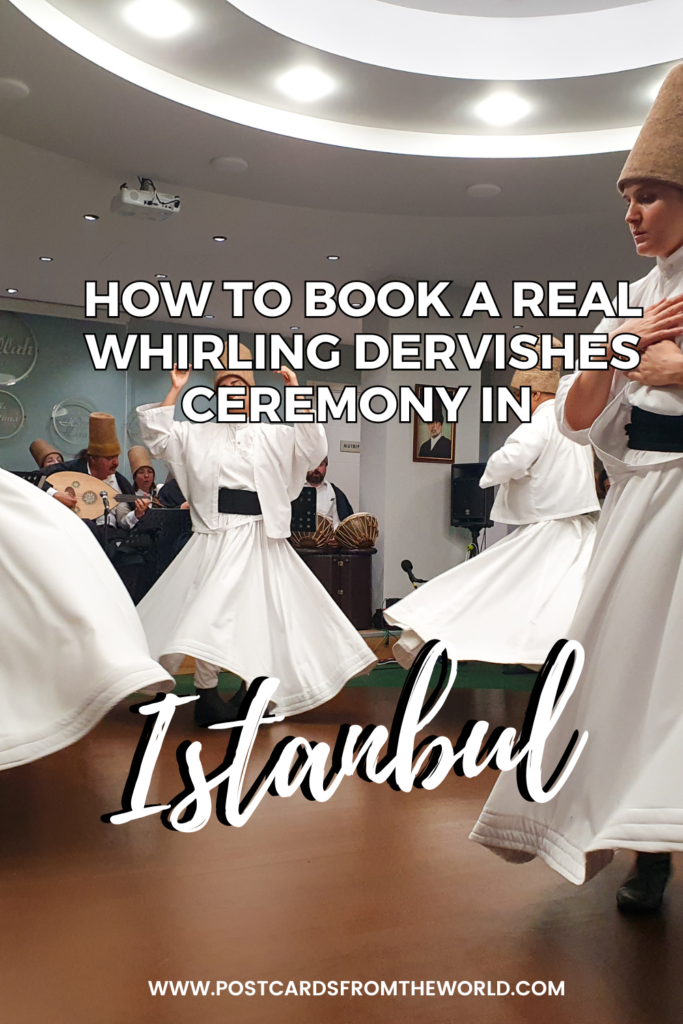
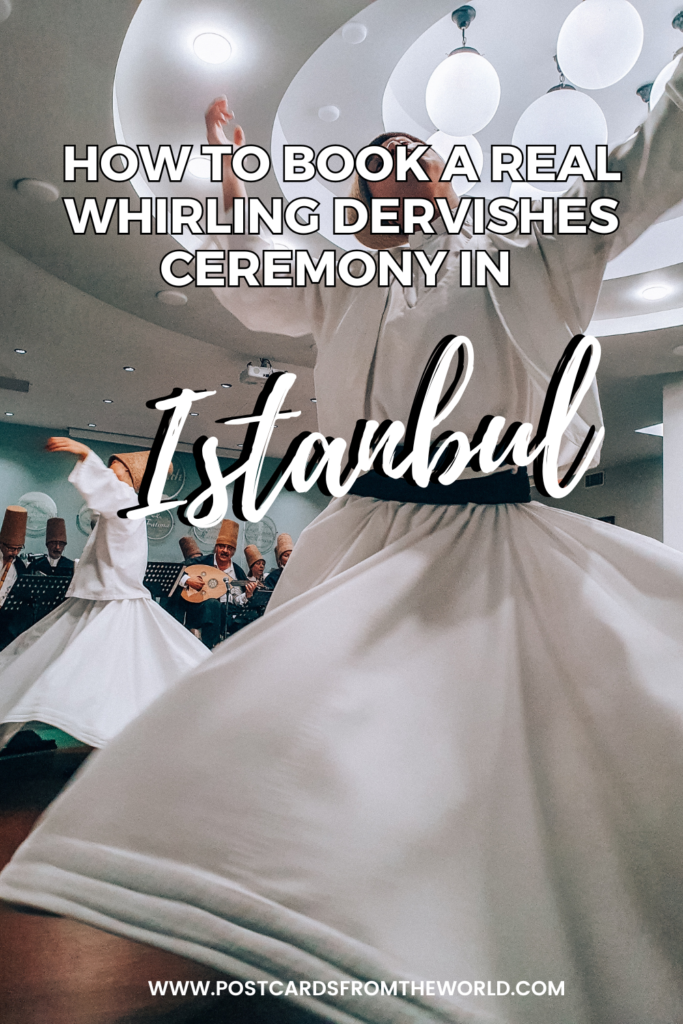
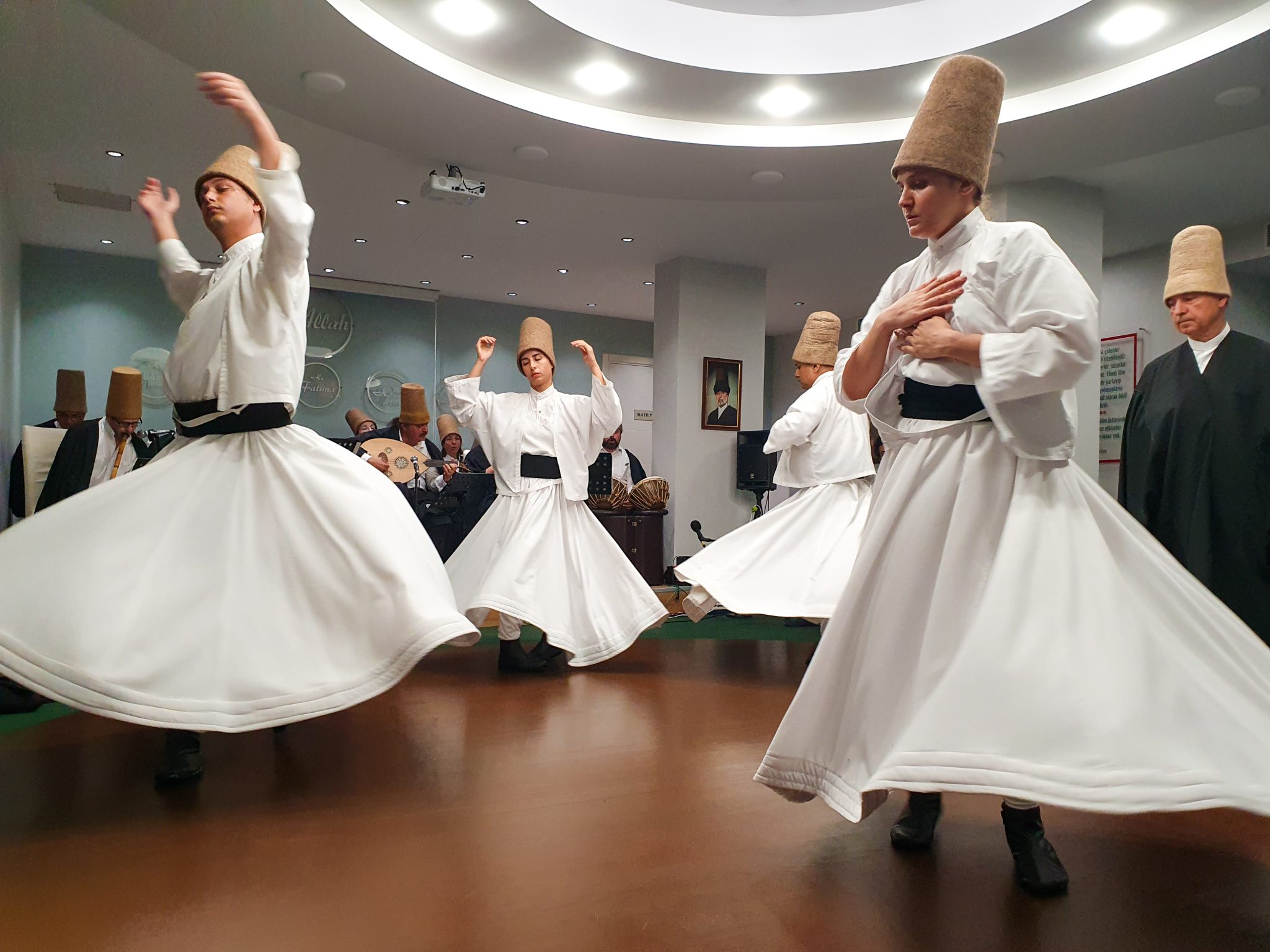
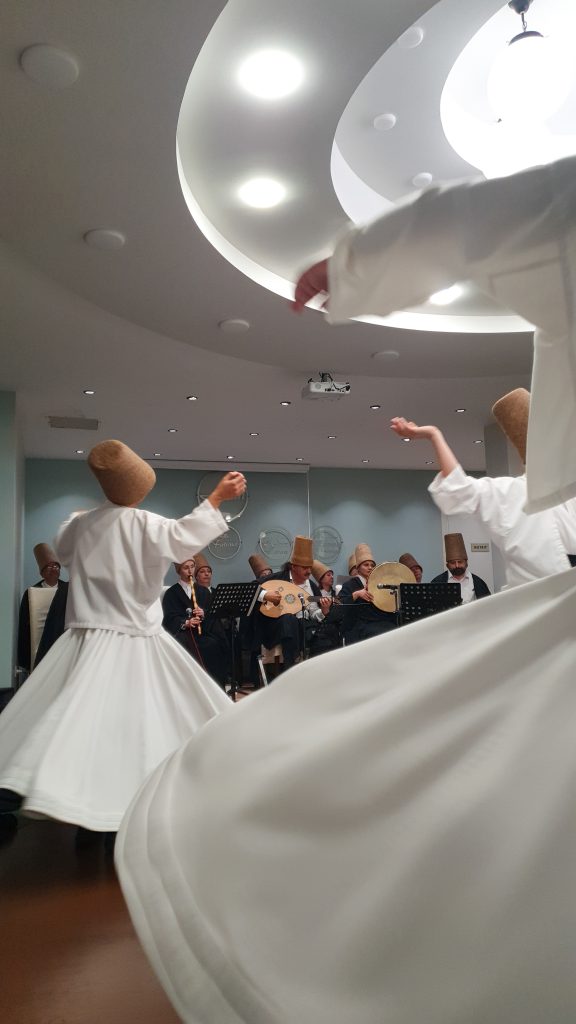
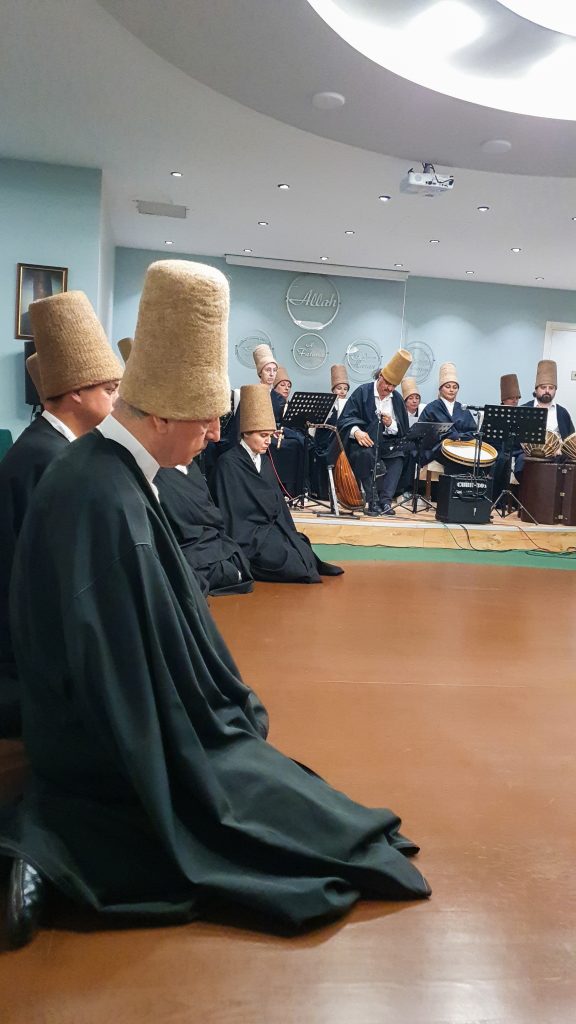
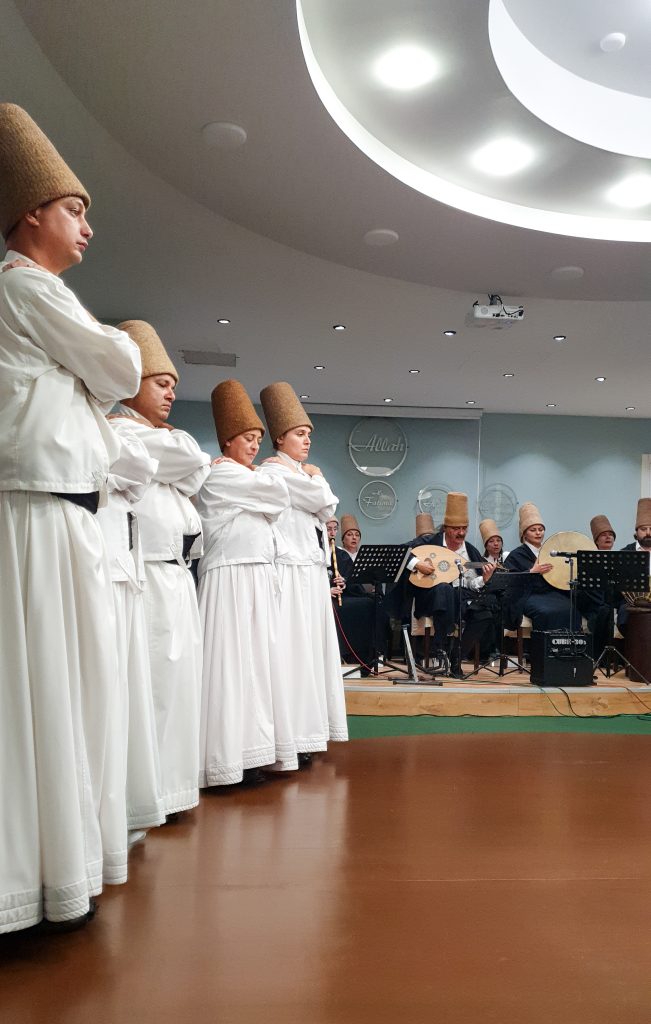
The difference is hard to overstate. I wasn’t really sure what the whole thing will look like. This ceremony takes place in a small hall in a residential part of Fatih, well away from the tourist areas. The room isn’t big, and they only let a handful of visitors in, so it never feels like a spectacle. You’re a guest at someone else’s gathering rather than a ticket holder at a show. And you can actually feel it, even though everyone is so friendly and inviting.
We were given snacks and water, and we were welcome to take photos. And crucially, we got to see the whole thing unfold, not just the whirling. The evening builds slowly, there’s chanting and music before the Sema itself begins, and because it isn’t run to a tourist clock, it takes as long as it takes. Seeing it from beginning to end, in that order, in that intimate space, is what made it feel real in a way the Cyprus show never could.
What the Sema actually is
A quick bit of background, because it makes the whole thing land differently once you understand it. This is the researched part rather than something I can claim to be an expert on, so take it as an introduction.
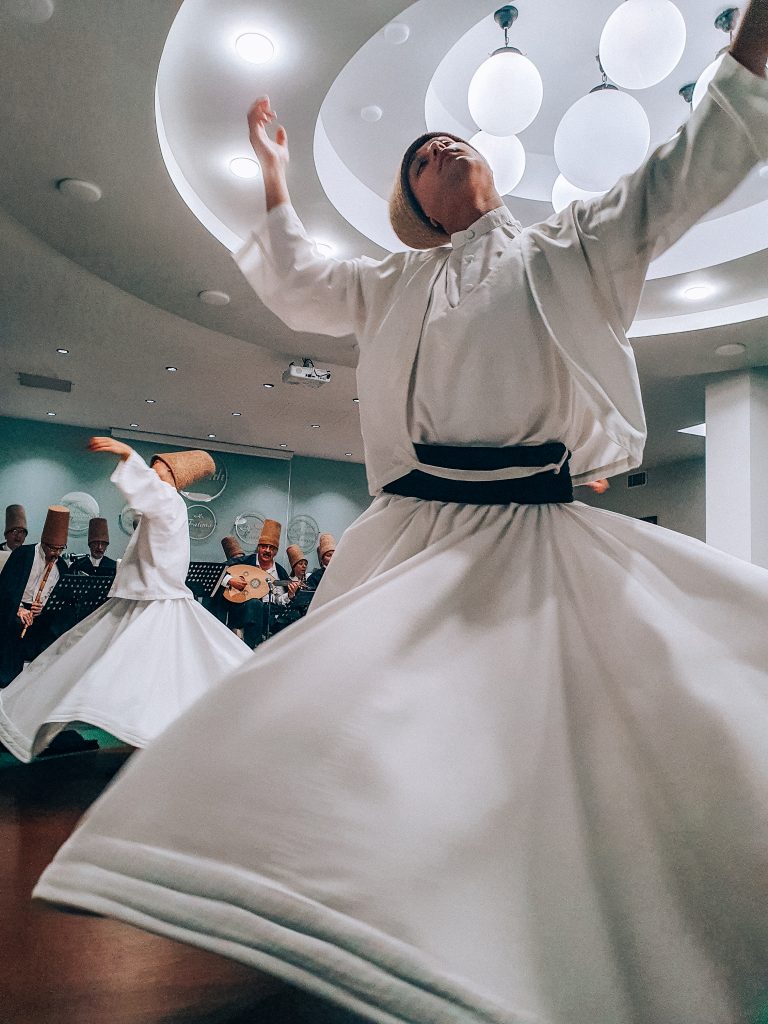
The Whirling Dervishes belong to the Mevlevi order, a Sufi tradition founded in the 13th century around the teachings of the poet and mystic Mevlana Rumi, in Konya. The spinning, properly called the Sema, isn’t a dance in the way we usually mean it (when I first saw it I really thought it was a cultural event and dancing). It’s a form of worship, a way of turning towards the divine and letting go of the ego.
Every part of it carries meaning, the tall hats, the white robes revealed when the dark cloaks are dropped, the position of the hands as they turn. It looks simple and it absolutely is not. It takes years of practice and I was told that it is a huge privilege to take part in the ceremony.
Once you know you’re watching prayer rather than performance, you watch it completely differently.
How to get there
The venue is in Fatih, in a quiet, ordinary neighbourhood (Emav Kultur merkezi -Culture Center )that you’d never wander into by chance. We took the tram and got off at the Çapa Medical University stop, then walked the rest of the way. It’s a short walk, maybe five minutes.
I’ll be honest, I couldn’t spot the place straight away, it’s on a small residential street and it doesn’t announce itself. But it wasn’t a real struggle either, and once you’re on the right street it’s obvious. Give yourself a little buffer so you’re not stressed about finding it, and if you’d rather not navigate at all, a taxi from Sultanahmet takes around fifteen minutes.
However, when you do your booking, you’ll get an email with very detailed directions on how to get there, it’s not really difficult to follow.
How to book
This is where it’s a bit more effort than booking a standard tour, and that’s part of the deal. The ceremony runs on set evenings (a Thursday when we went, with a Saturday option too), places are genuinely limited because the room is small, and you need to reserve online in advance through the organisers, Les Arts Turcs. After you book, they email you the exact address and details, so watch your inbox and your spam folder.
On price, I’d rather you check in case it changed. When I booked the ceremony, I pad 39 EUR for an adult (there are reduced and free rates for children, but I’ve seen other figures quoted elsewhere and prices change, so confirm the current cost on their site when you book).
One honest heads up: the ceremony is conducted in Turkish. When we booked there was an English subtitled introduction video and an audio link to follow along, so you’re not left completely in the dark, but don’t expect a running English commentary. You’re there to witness, not to have it narrated.
Things to know before you go
A few practical bits, gathered from the night and from the organisers’ own information:
- It’s worship, not entertainment. This is the single most important thing. Be quiet, be respectful, and remember the people in front of you are praying, not performing for you.
- Dress modestly. The organisers actually say there’s no strict dress code, which surprised me, but you’re in a religious space, so I’d still cover shoulders and knees and keep it respectful. Confirm the current guidance when you book.
- Photos, within reason. We were welcome to take photos, but this isn’t a photo shoot. Amateur snaps are fine, professional camera setups are not allowed. Keep your phone low and don’t let a screen come between you and the room.
- It runs long and loose. Because it isn’t a tourist show, it doesn’t stick to a tidy schedule. Go with nowhere to be afterwards.
- Bring a little cash in case you want to support the community by buying music or a book.
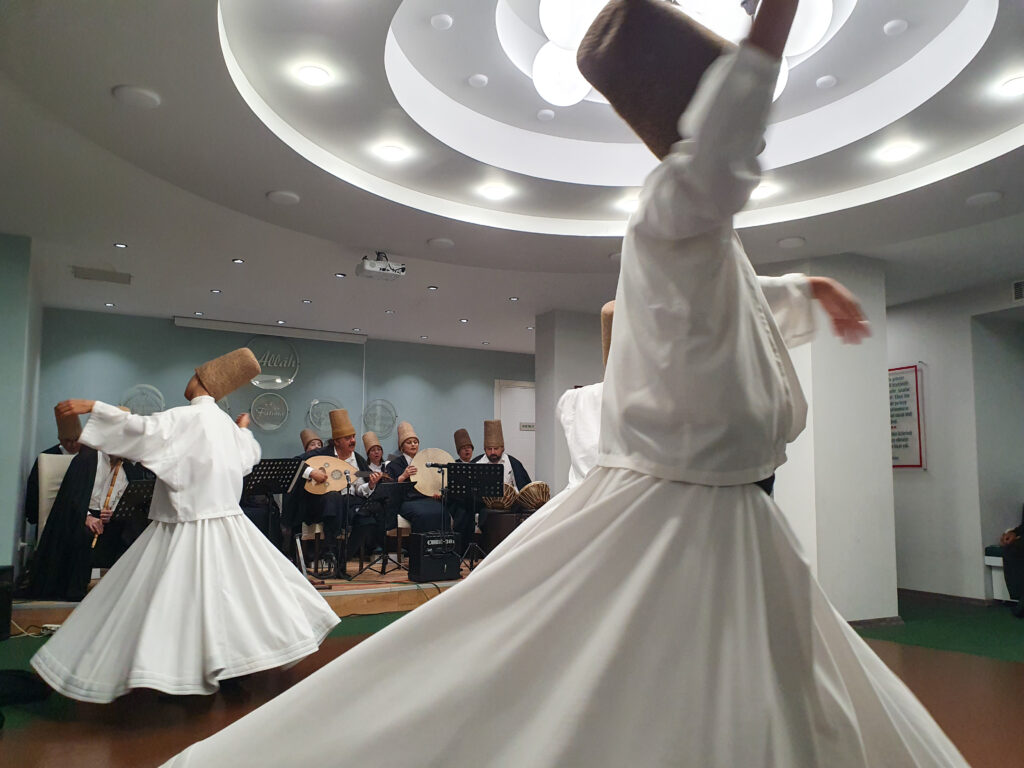
What the evening actually looked like
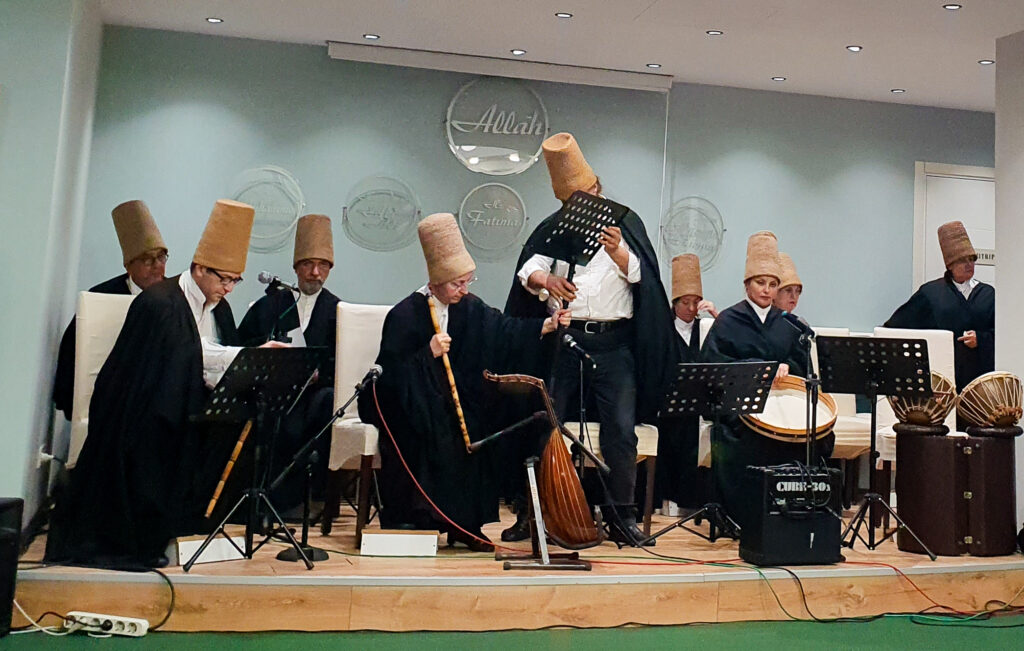
If you like knowing what you’re walking into, here’s roughly how the evening runs.
Things kick off early, from around 7:30pm, with an optional recorded talk about the Mevlevi path, subtitled in English, so you can arrive ahead of time and get some context if you want it. My recommendation would be to skip it and arrive after 8pm or even closer to 9pm (but you might get seats at the back then), because it felt really long, and a bit boring, if I must be completely honest.
The ceremony itself begins about 9pm with the dhikr, a gentle, rhythmic chanting that eases you in. Then comes something lovely and unexpected: they serve dervish food before the main event.
And finally, from around 9:45pm, the Sema, the whirling itself, which runs for the best part of an hour. Do the maths and you’ll see this is a long evening, so don’t book anything after it.
Can’t make it on a Thursday? Your other options
Here’s the catch with the real ceremony: it only runs on certain evenings, so if your Istanbul days don’t line up with theirs, you’ll need a plan B. I didn’t attend these myself, so I’m passing them on as options to research rather than personal recommendations.
The best known is HodjaPasha, a nightly show near Sirkeci in a converted historic building. It’s openly a tourist production, professionally staged, with the actual whirling lasting around twenty minutes inside a longer programme, and no photography. Plenty of people enjoy it, just go in knowing it’s a curated presentation rather than a living ritual. It’s easy to book in advance, which is its big advantage if your schedule is tight.
There’s also the Galata Mevlevi Lodge, which holds ceremonies on a different evening and is performed by members of the same community as the Fatih one, so it’s another more authentic option worth looking into if Thursday doesn’t work.
Make an evening of it
A dervish ceremony sets a particular mood, contemplative and quiet, unlike anything else you’ll do in Istanbul, so it pairs beautifully with a slow dinner rather than a packed itinerary. If you’re basing yourself near the old town, Sultanahmet and Fatih put you within easy reach of both the ceremony and the big sights the next morning.
Was it worth it?
For me, completely. I’ve now seen the Whirling Dervishes both ways, as a show and as the real thing, and while I enjoyed the show, it’s the quiet evening in that small Fatih hall that I’ll actually remember. Taking my mum somewhere so genuine, so far from the tourist version, and watching it together from start to finish, that was the whole point.
Use my favourite travel resources to plan your dream trips
- Booking.comfor searching best prices on accommodation.
- AirHelp helps to get compensation for cancelled or delayed flights.
- Travel Payouts is my favourite platform for monetizing the blog.
- Discover Cars is a great website as they search both local and international car hire services, so you can choose the best deal for yourself. Make sure though, that the company has a good reputation and reviews.
- Get Your Guide is my place to go for searching and booking tours and excursions, especially when I travel solo.
- World Nomads and EKTA travel insurance. I like them because they have quite extensive coverage of different activities.
- WeGoTrip sends you audio guides to your mobile, so you can visit places while learning history and interesting facts easily and for little money.
- Go City is a perfect site for booking bucket list experiences and attractions all in one to avoid paying for multiple tickets. Easy and saves money. You can even save 50%.
- Trip Advisor– amazing for good quality recommendations.
- Skyscanner is a perfect website for searching flight routes and comparing prices.
- Airalo is my eSim choice for alternative data abroad.
- Trip.com for a one-stop app for flights, hotels, trains and attraction tickets, with strong deals and a rewards program. It is especially useful in Asia.
Did you like the post? Pin it for later: