Is Florence Worth Visiting? An Honest Guide After Two Trips.
Is Florence worth visiting? I mean is it STILL worth visiting? I’ve been twice, years apart, and my honest answer is yes, but not in the way most people do it. I think Florence always will be worth your time, no matter what. The history found in this city is unbeteable, even if you only got for the Uffizi or David.
The first time, I spent a whole slow week there, staying with a friend’s family just outside the centre. Mornings started with bread, olive oil and juicy tomatoes, followed by amazing coffee, and I had all the time in the world to wander. A friend who worked at the Uffizi gave me tips on how to see it properly, and I took a day trip to Pisa.
The second time was years later, with my husband, as one stop on our 10 day road trip from Italy to the French Riviera. Florence was still charming and beautiful, but in the summer heat it felt overwhelming. The crowds had grown so much that by 8am it was hard to cross the street. So we set our alarm for 5am and had the city almost to ourselves.
This guide is everything I learned from both trips: how Florence has changed, how to beat the crowds, how to do the Uffizi properly, where to stay and what to eat, plus a day trip to Pisa.
Please note that this post included affiliate links, when you decide to purchase anything through these links I get a small commission at NO extra cost to you, it helps me to keep running this blog! I only promote products and services I use or would use myself. All images are the property of Postcards from the World and cannot be used without permission.
Is Florence worth visiting? Then and now
Both my visits were in the height of summer, one in July and one in August. On the first, I was charmed from the first day, especially that it was one of the first trips I had ever taken. I would say that that trip to Italy caused by travel bug.
The idea of going back to Florence stayed at the back of my mind for years- that’s how impressed I was. When I finally returned years later, I realised straight away how much tourism had grown, something you can see all over Italy now and most of Europe, I’d say.
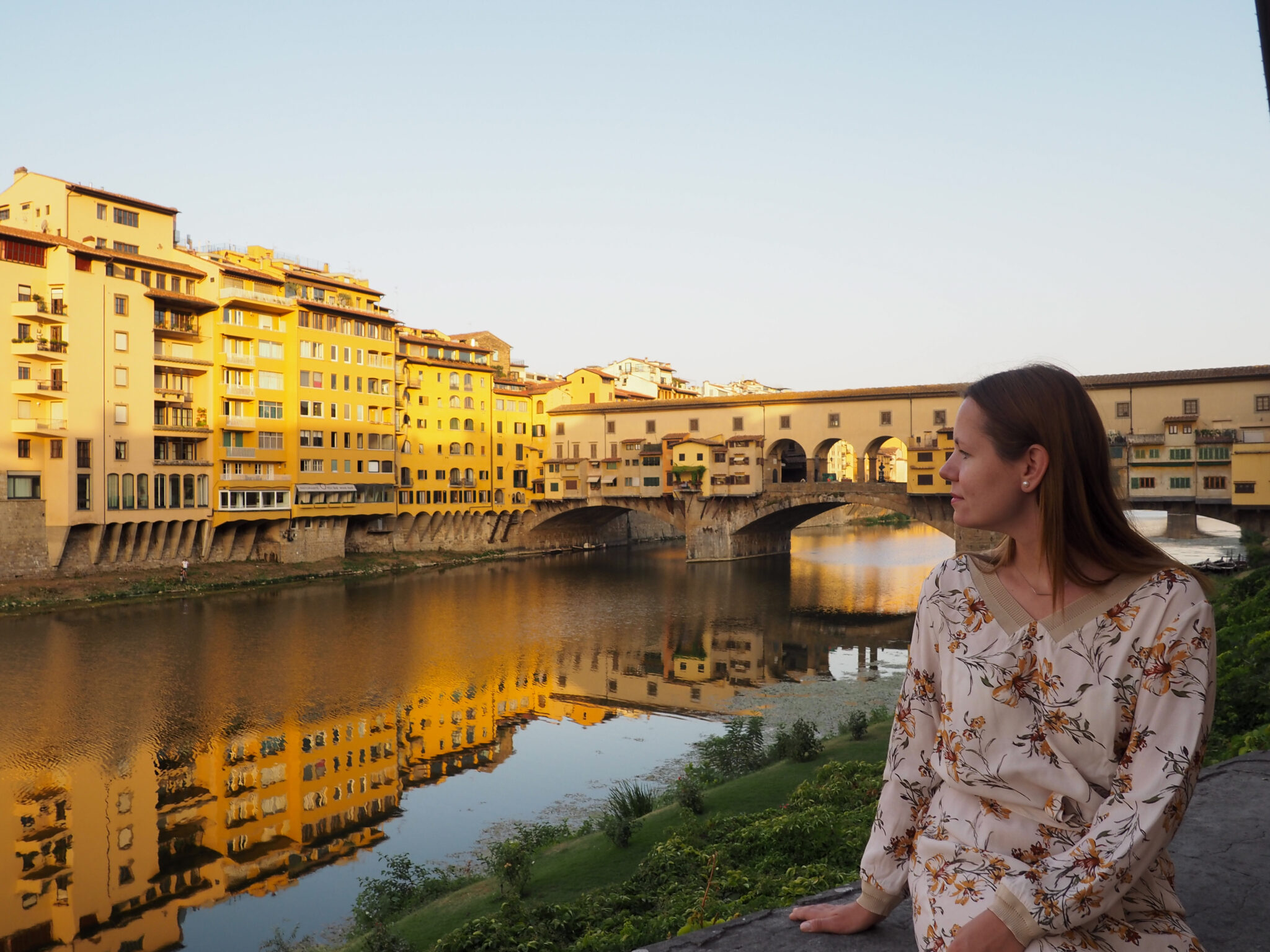
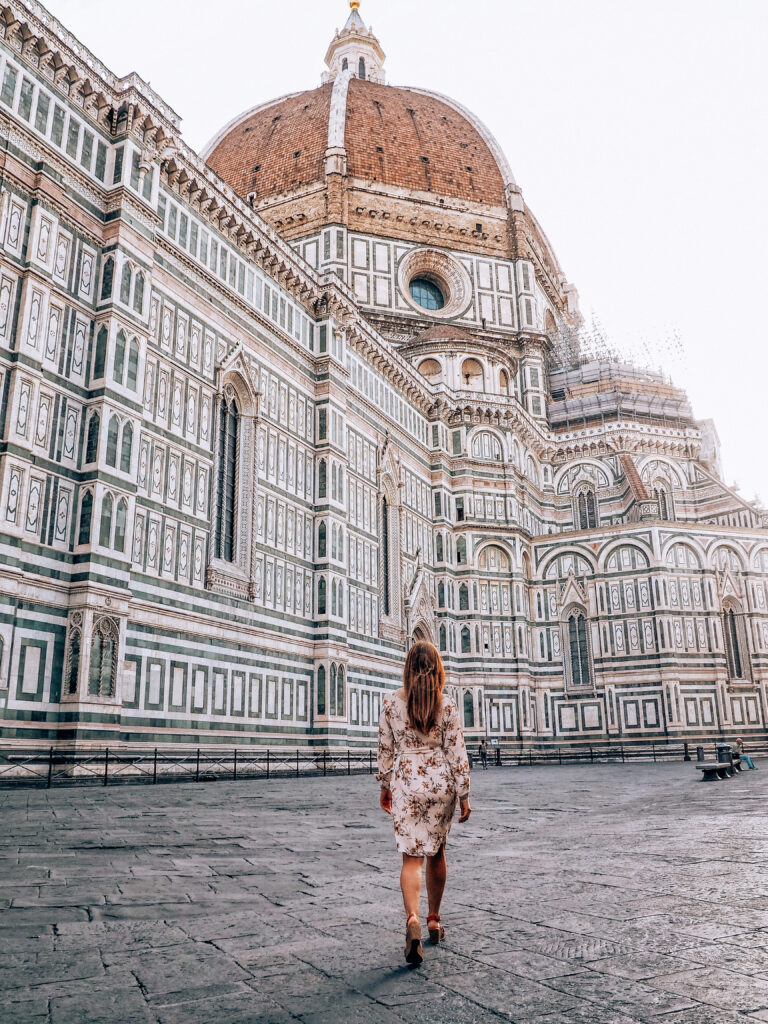
It would be hard to take the charm away from Florence, and nobody has managed it yet and I don’t think it will ever happen. The Duomo still stops you in your tracks, the light on the Arno at sunset is still golden, and the food is still wonderful. But the Florence you get depends a lot on when and how you visit.
Why Florence is still worth it
- More Renaissance art and architecture in a few square kilometres than almost anywhere in the world
- It’s compact and walkable, so you see a lot in a short time
- Superb, simple food, from street sandwiches to Florentine steak
- An easy base for Tuscany, with Pisa, Siena and the Chianti hills close by
What can spoil it
- Heavy crowds from late morning, especially from spring to autumn
- Intense summer heat in July and August
- Long queues at the big museums if you don’t book ahead
- Tourist trap restaurants around the main squares
My verdict: Florence is absolutely worth visiting, but plan around the crowds. Having done it twice in July and August, I’d come in May, June, September or October if you can, stay in the centre, book the big museums ahead, and get up early at least once. That early morning walk was the best decision of our whole road trip. One thing I’d like to point out: I recently revisited Venice in October in hopes for lack of crowds: I was mistaken. My October Venice was as criwded as Venice I visited in July years ago. If anything, people just travel much more. The same might be the case with Florence.
Where to stay in Florence:
• Casa del Garbo on Piazza della Signoria, where we stayed
• Hotel Brunelleschi for an upscale stay between the Duomo and Piazza della Signoria
Must Do Activities:
• Uffizi Gallery skip the line ticket 🎨
• Brunelleschi’s Dome climb ⛪
• Accademia Gallery to see the David 🗿
• Leaning Tower of Pisa and cathedral tickets 🏛️
• Chianti wine tour from Florence 🍷
How to beat the crowds in Florence
Get up with the sun
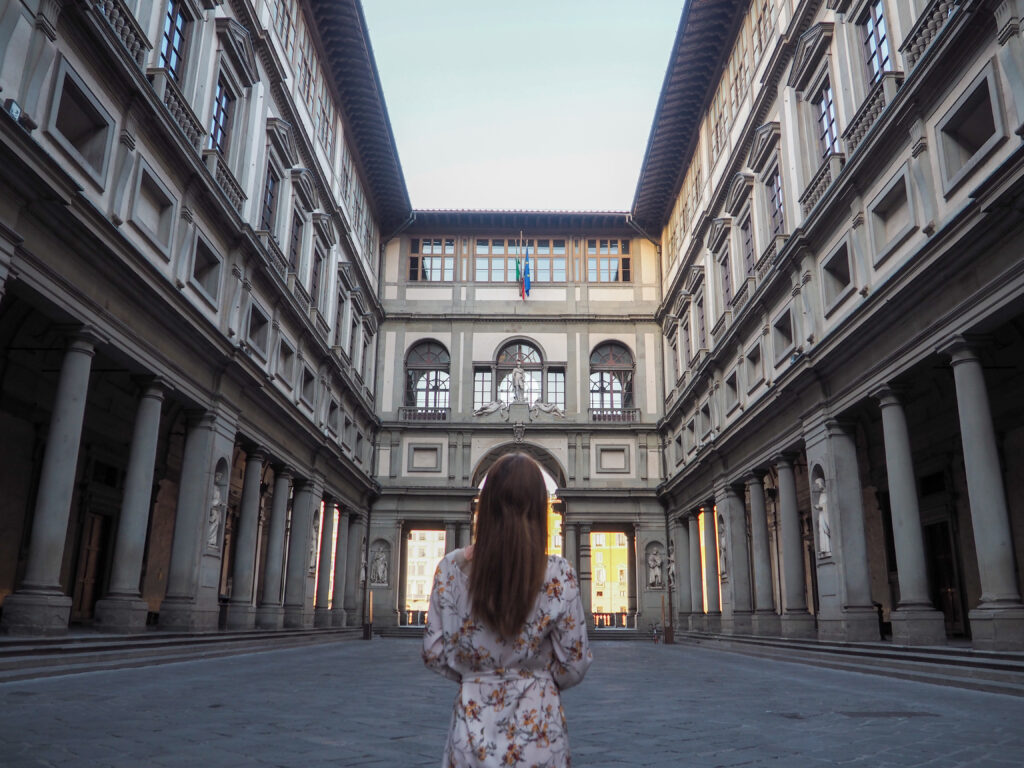
This is my number one tip. On our second visit, we got up at 5am to walk the empty streets and take photos, and we had the most famous squares almost to ourselves. By 8am it was hard to even cross the street. If you only do one thing differently in Florence, make it this.
I am not kidding when I say that it was impossible to cross the street at 8am. Huge, multiple groups of Chinese tourists, mostly, were all in the centre around 8am. On top of that, everyone else, who thought to add Florence to their bucket list. Many people want to enter Uffizi as well as soon as it open, so the line gets long very fast, that’s why prebooking your timed ticked is the best option- this is what we did.
Stay in the centre
An early walk only works if you’re already there. Staying a minute from the Uffizi meant we could roll out of bed and be first on the street. It was the single best hotel decision of our whole road trip.
We stayed right on Piazza della Signoria in Casa del Garbo, a beautiful historical hotel. It was a real hustle to park the car at a designated parking that the hotel directed us to, but if you are not having a car, I would really recommmend this hotel. For me, it is a nobrainer.
Come in the shoulder season
I visited twice in summer, in July and in August, and both times the heat and crowds were intense. Next time, I’d come in May, June, September or October, when the weather is still warm but the city is calmer. Avoid the first three weeks of August if you can: it’s the hottest time of year, and many locals leave on holiday.
Book everything ahead
The Uffizi, the Accademia and the Duomo climb all use timed tickets that sell out in peak season. Book them before you arrive and you’ll skip the longest queues. This is really non-negotiable if you want to visit the main attractions.
Go to the big museums at opening or late in the day
Museums open at 8:15am. The first hour is the calmest, and the Uffizi now sells a cheaper ticket for entry after 4pm, when the tour groups have left. This might be your best option to avoid crowds.
Skip the free first Sundays
State museums are free on the first Sunday of the month, which sounds great, but the queues can stretch for hours. Paying for a timed ticket is worth it.
Escape to the Oltrarno
Cross the river to the Oltrarno for artisan workshops, quieter squares like Santo Spirito, and a more local feel, just a few minutes from the crowds.
Slow Florence: living like a local
My first visit was completely different from the second. I stayed with my friends’ family in a house a little outside the city centre, and being part of the daily life of an Italian family was the best part of the trip.
Every morning started with a slow breakfast: good bread drizzled with olive oil, topped with fresh, juicy tomatoes, and then amazing coffee. Nobody rushed. Only after that did I head into the city, with a whole week to wander without a checklist. But having an Italian friend raised and bron in Florence is a real asset- we got to discover places only the locals know about and see Florence from a fresh perspective.
You don’t need Italian friends to get a taste of this slower Florence. A few ways to find it:
- Stay longer than two days. With a week, you can see the big sights early and spend the rest of the day doing very little, which is exactly the point. I understand that you might not have so many leave days to dedicate to one city only, but Frilernce is a slo a good place for days trips. With 3-4 days, it is already noticeable that you’re not rushing.
- Shop at a market. Mercato di Sant’Ambrogio is where locals buy their fruit, vegetables and cheese, and it’s far less touristy than the Mercato Centrale.
- Have breakfast at a local bar. Stand at the counter with an espresso or cappuccino like the Florentines do. It’s quicker and cheaper than sitting down, but the main point of it to experience the real life of the locals.
- Join a cooking class. Learning to make fresh pasta or a Tuscan meal is the closest thing to eating at an Italian family table. This activity is when you learn how to make tiramisu and fresh pasta is amazing.
- Spend an evening in the Oltrarno. Santo Spirito square fills with locals for aperitivo on summer evenings.
Best things to do in Florence
Across my two trips I did all the classics, and they’re classics for a reason. Here’s what’s worth your time, and how to do each one without the stress.
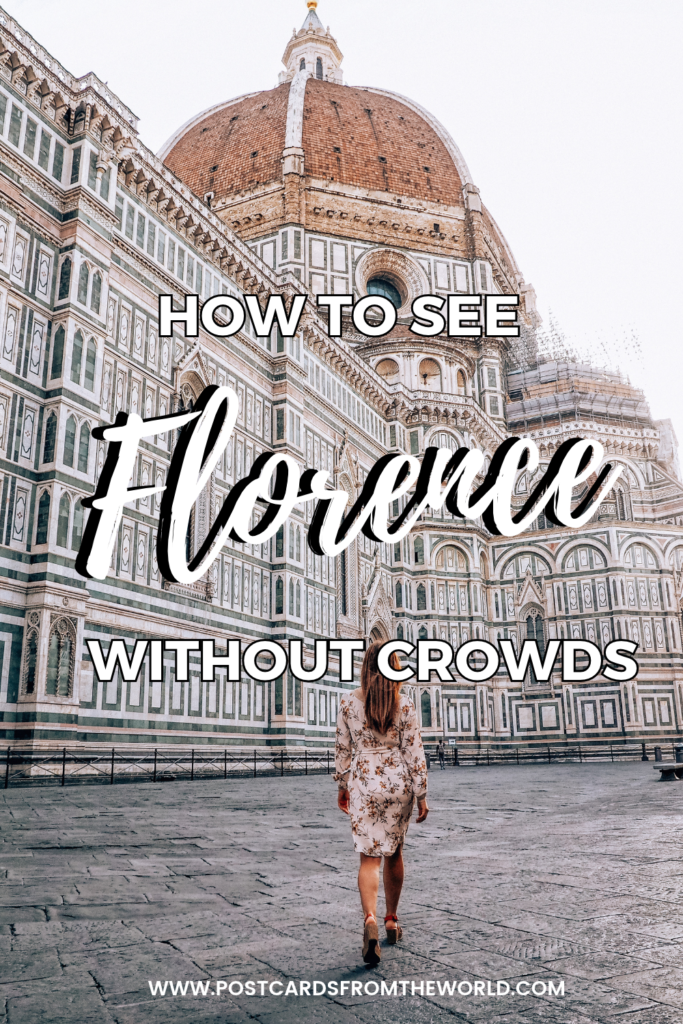
The Duomo and Brunelleschi’s Dome
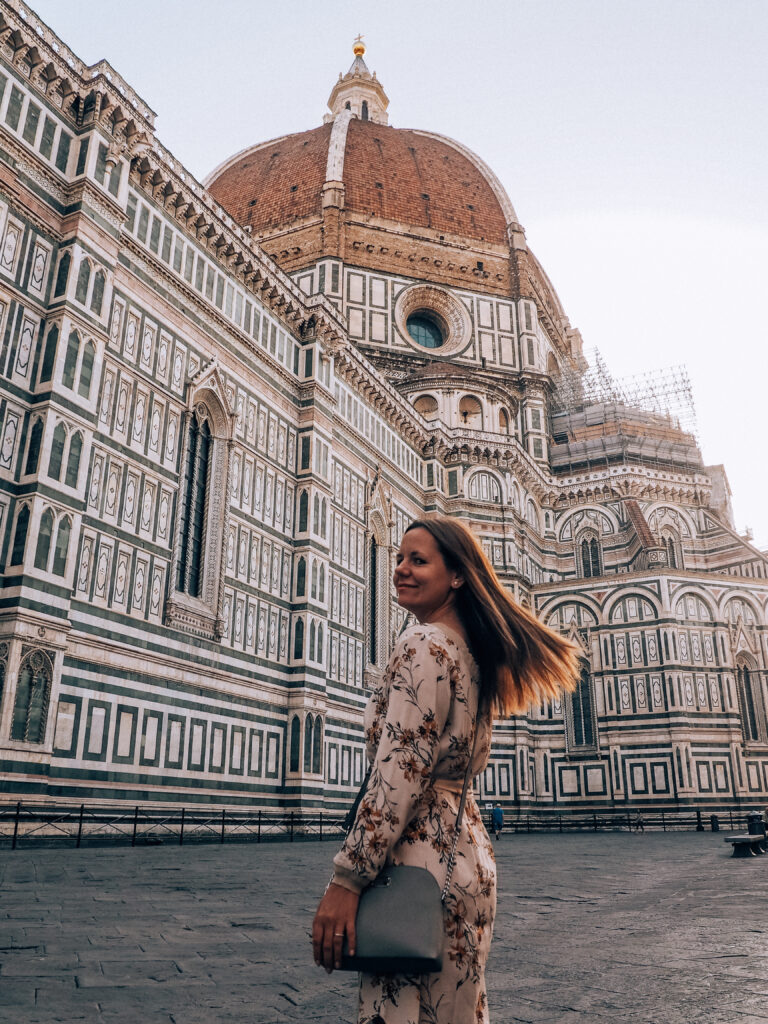
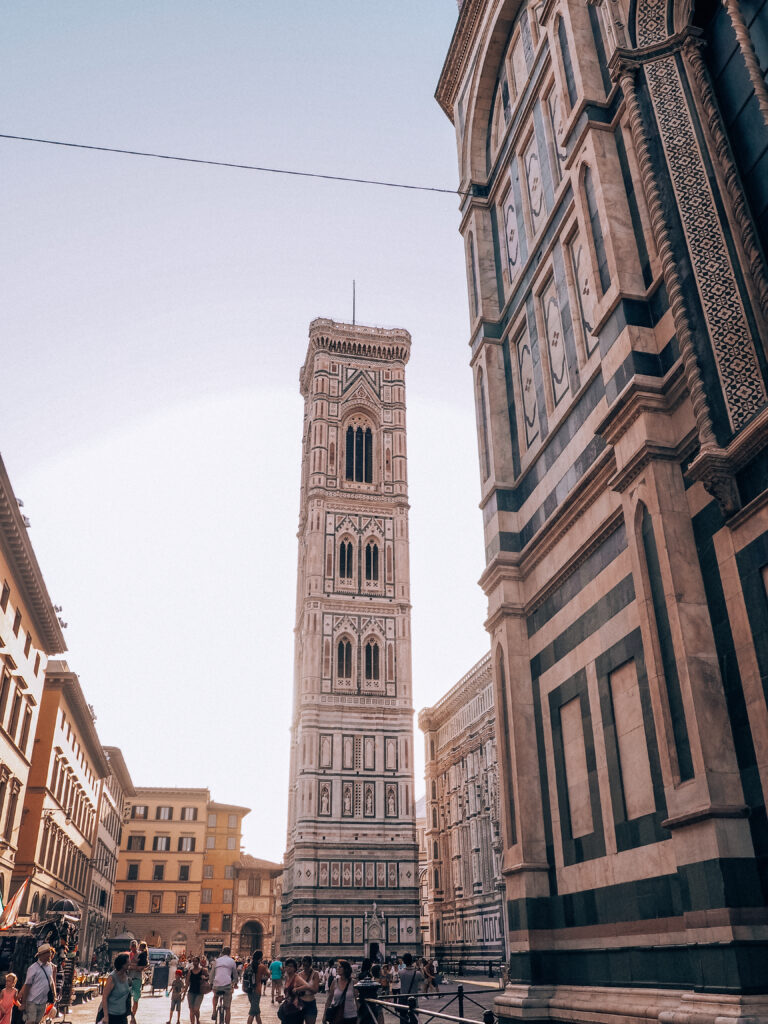
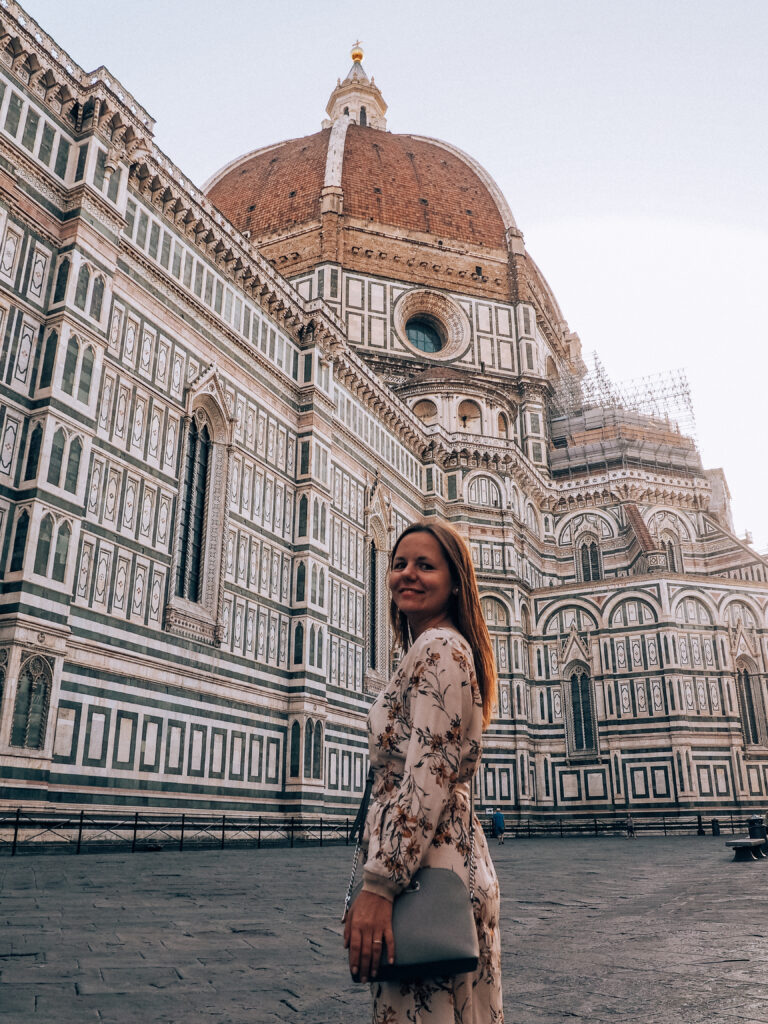
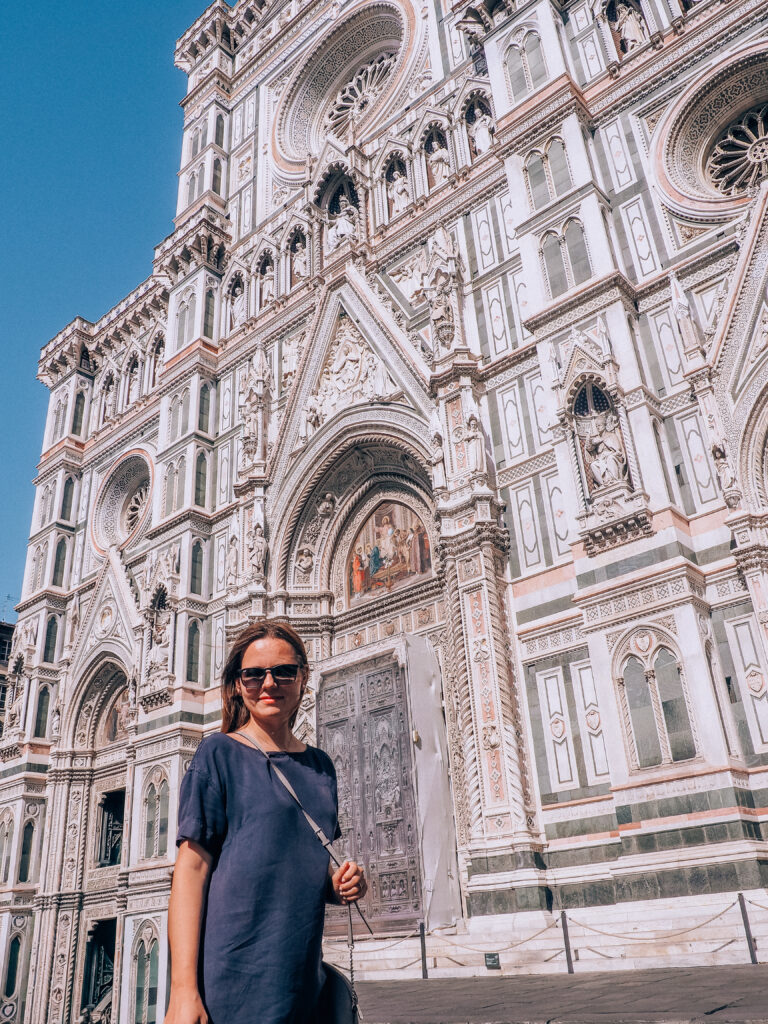
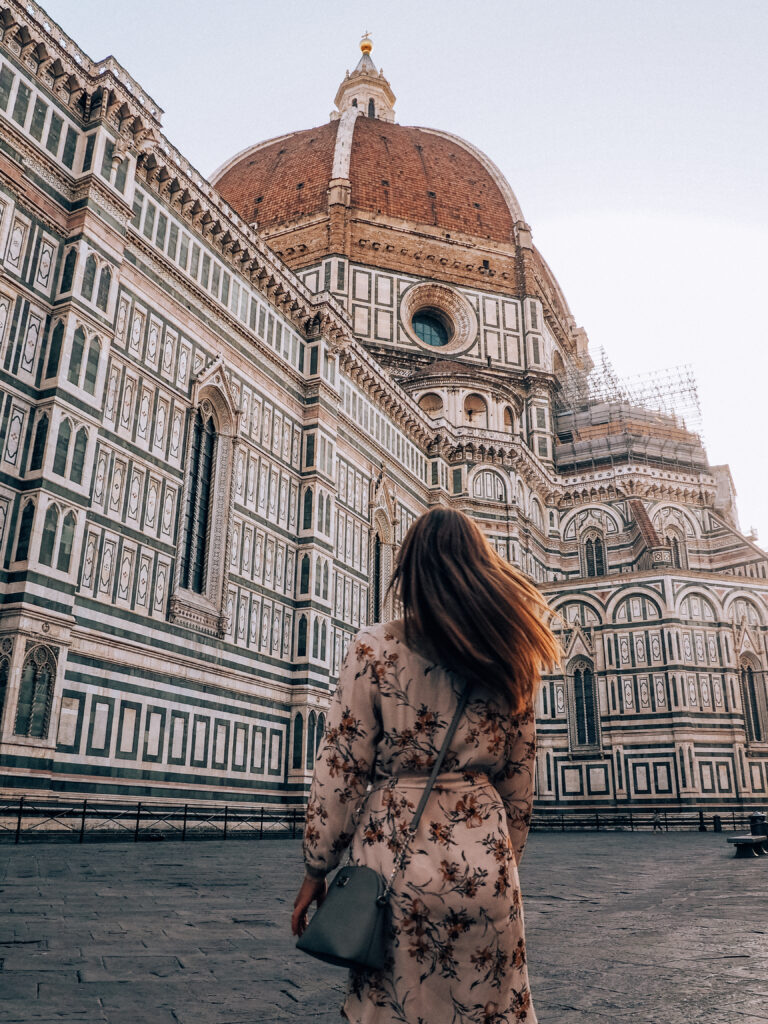
The cathedral of Santa Maria del Fiore, with its pink, white and green marble and huge red dome, is the symbol of Florence. Entering the cathedral itself is free, but to climb the dome you need the Brunelleschi Pass (€30), which also covers Giotto’s Bell Tower, the Baptistery, the cathedral museum and the crypt over three days. The dome climb is 463 steps with no lift, and the slot is timed, so book well ahead in summer.
Tip: if you climb only one, many people prefer Giotto’s Bell Tower, because the view from the top includes the dome itself.
The Uffizi Gallery
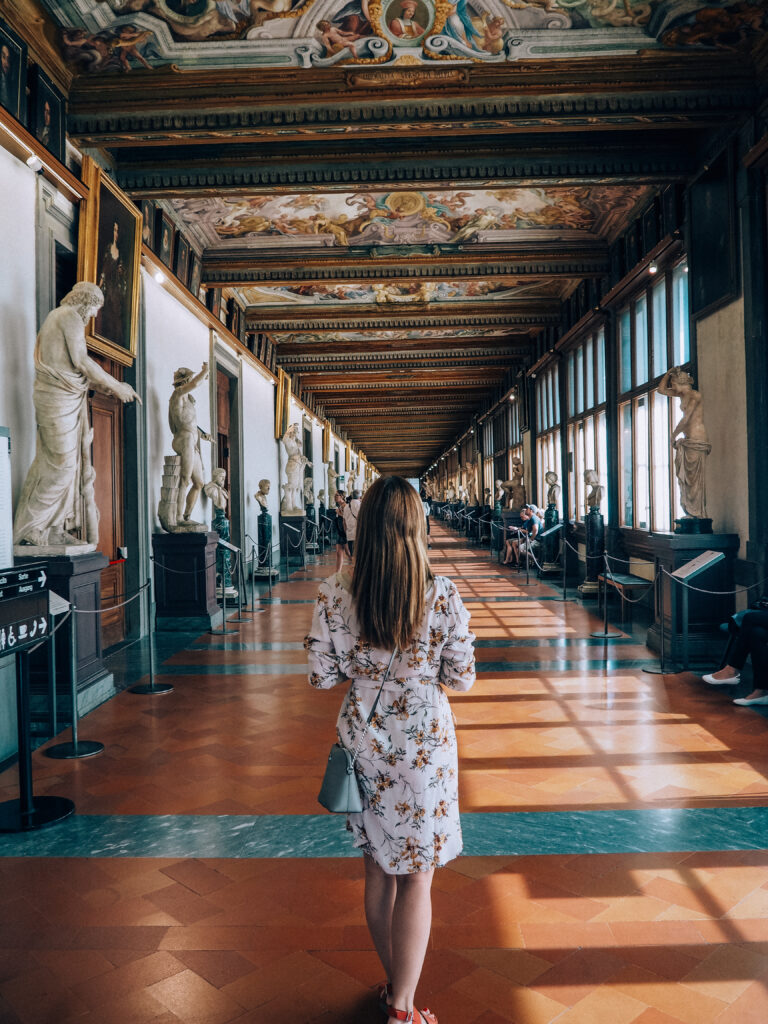
The greatest collection of Renaissance paintings in the world. It deserves its own section, so see my full Uffizi guide below. I’ve been there twice already and I could easily go again.
Michelangelo’s David at the Accademia
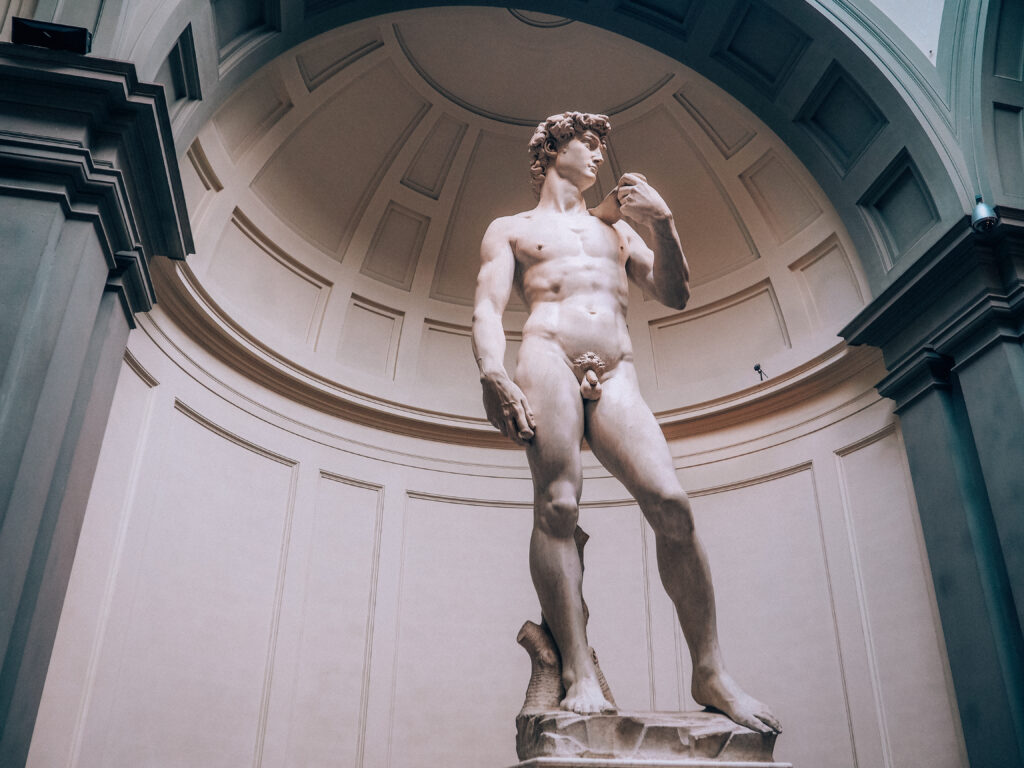
The original David stands at the end of a long hall in the Galleria dell’Accademia, and it’s much bigger and more impressive in person than you expect. Don’t skip Michelangelo’s unfinished Prisoners lining the way to it. Tickets are about €20 booked online, and a new combined ticket adds the Bargello, home of Donatello’s bronze David. Closed Mondays.
Piazza della Signoria and Palazzo Vecchio
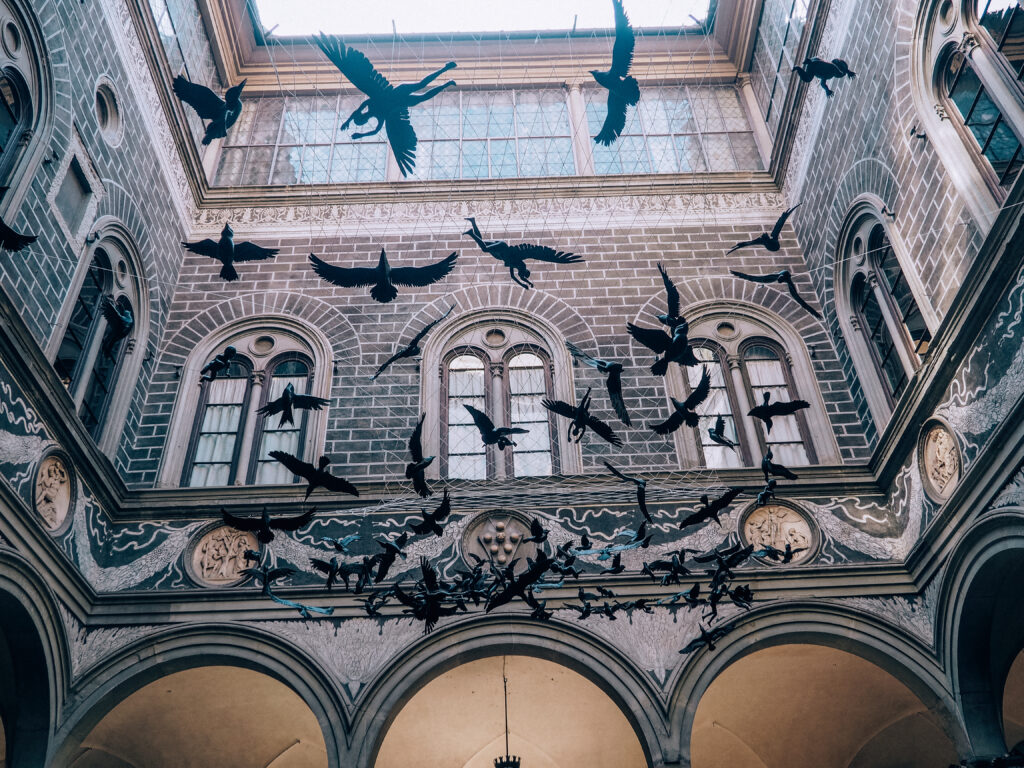
Florence’s grand open air square, with a copy of the David where the original once stood, the Loggia dei Lanzi full of statues, and the fortress like Palazzo Vecchio, still the town hall. We stayed right on this square, so we could step out at sunrise before anyone else was around.
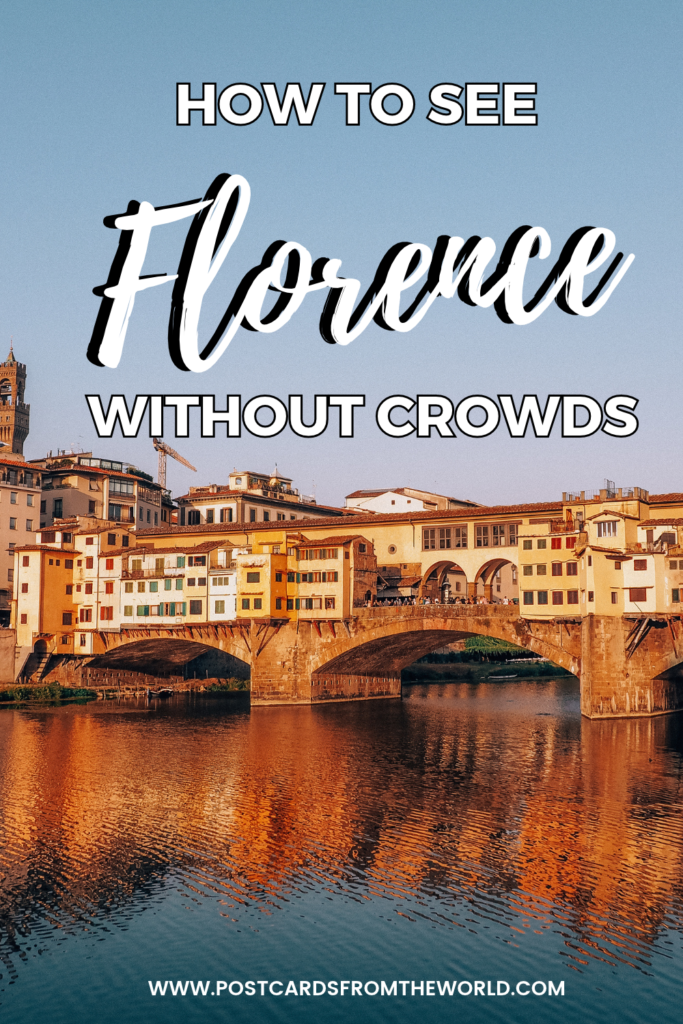
Ponte Vecchio
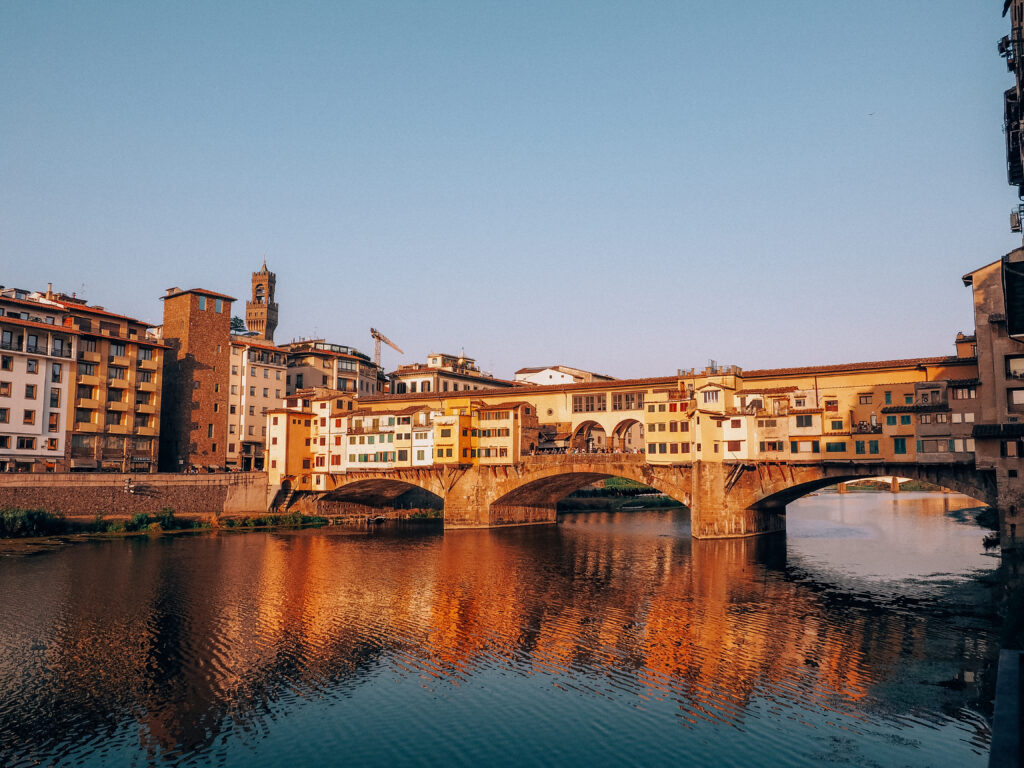
The medieval bridge lined with jewellery shops is lovely, but it’s one of the most crowded spots in the city. Cross it early in the morning, or admire it from the next bridge along, Ponte Santa Trinita, for the classic photo.
Piazzale Michelangelo at sunset
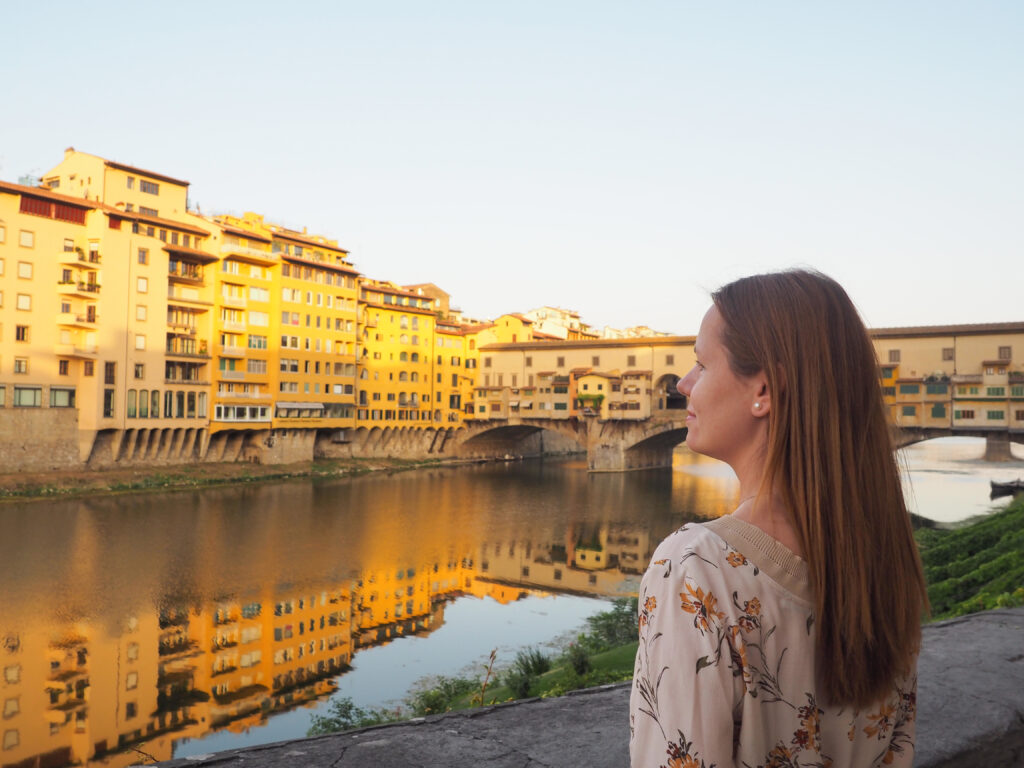
Walk or take a bus up to this hilltop square across the river for the famous panorama of Florence, with the Duomo rising above the rooftops. It’s free and busy at sunset, but worth it. Climb a little further to the church of San Miniato al Monte for the same view with fewer people.
Palazzo Pitti and the Boboli Gardens
The Medici’s enormous palace across the river holds art galleries and royal apartments, and behind it are the Boboli Gardens, full of fountains, statues and shady paths. A combined ticket for the Uffizi, Pitti and Boboli costs €40 and is valid for five days.
Santa Croce
This vast Franciscan church is the resting place of Michelangelo, Galileo and Machiavelli, and the square in front is one of the city’s most beautiful.
Mercato Centrale
The historic food market near San Lorenzo, with fresh produce downstairs and a busy food hall upstairs. Great for a casual lunch.
Look for the wine windows
Small arched hatches in palace walls, once used to sell wine straight to the street. A few still serve wine or gelato today, and spotting them makes a fun treasure hunt as you walk.
How to visit the Uffizi Gallery
The Uffizi is the most visited museum in Italy, and it holds the world’s greatest collection of Renaissance painting, from Botticelli’s Birth of Venus to Leonardo and Caravaggio. It’s also where planning makes the biggest difference.
Tips from a friend who worked there
On my first visit, a friend I’d met as a teenager in Romania was working at the Uffizi, and her advice was simple:
- Book a skip the line ticket in advance. Never just turn up and queue, especially in summer.
- Arrive before 8am. The doors open at 8:15, and being at the front means you reach the famous rooms before the tour groups.
I followed both on my second visit too, and they still work. Here’s everything else worth knowing.
Uffizi tickets and prices
- Standard ticket: €25 on the day, or €29 booked online (the extra €4 is the booking fee for a timed slot).
- Afternoon ticket: since January 2026, entry after 4pm costs €16. You get about two and a half hours in a much quieter gallery.
- Combined ticket: Uffizi, Palazzo Pitti and the Boboli Gardens for €40, valid for five days.
- Free entry: under 18s, and everyone on the first Sunday of the month (expect very long queues).
- Named tickets: tickets now carry the visitor’s name, so bring ID.
Book on the official Uffizi website or with a skip the line ticket. If you’d like the paintings explained, a small group guided tour is worth it.
Opening hours
Tuesday to Sunday, 8:15am to 6:30pm, with last entry at 5:30pm. Closed on Mondays, 1 January and 25 December.
How long you need
Allow two hours for the highlights and three if you love art. The gallery has around 100 rooms, and nobody needs to see them all.
A highlights route
The route is one way: you start on the top (second) floor and work down. Room numbers can change, so check the map when you arrive.
- Botticelli rooms (around rooms 10 to 14). The Birth of Venus and Primavera. Go here first, as it’s the busiest spot in the museum.
- Leonardo da Vinci. The Annunciation and the unfinished Adoration of the Magi.
- Michelangelo’s Doni Tondo. His only finished panel painting in Florence, with startlingly bright colours.
- Raphael and Titian. Raphael’s Madonnas and Titian’s Venus of Urbino.
- Caravaggio (first floor, around rooms 90 to 93). The Medusa shield and Bacchus, next to Artemisia Gentileschi’s powerful Judith Slaying Holofernes.
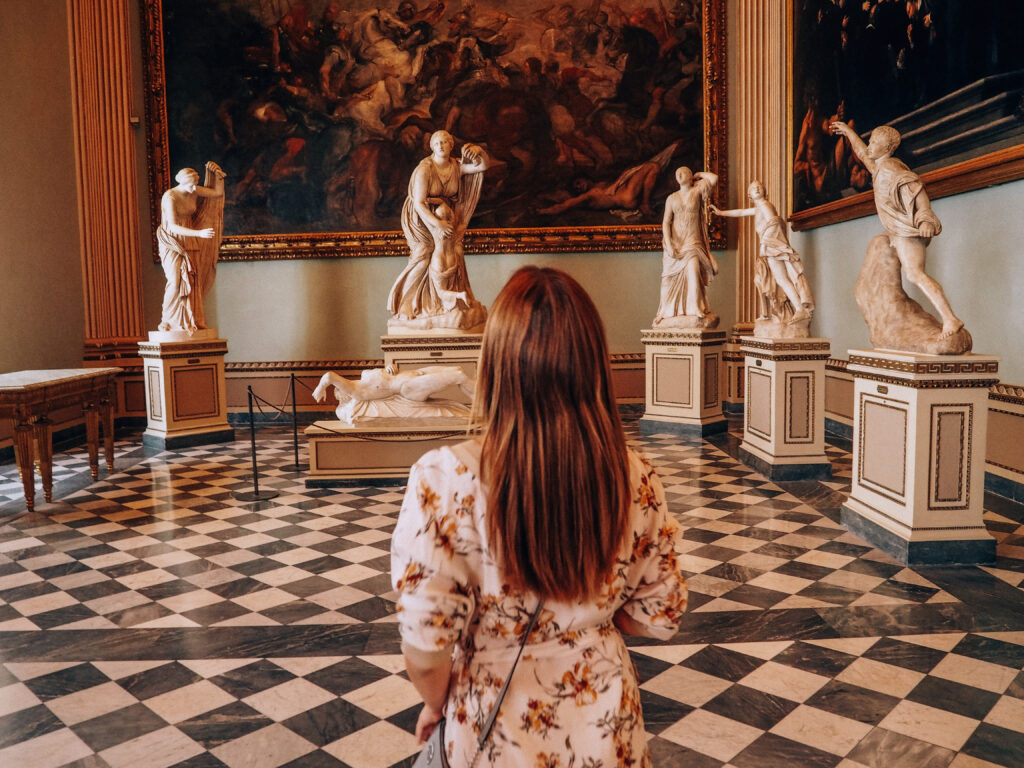
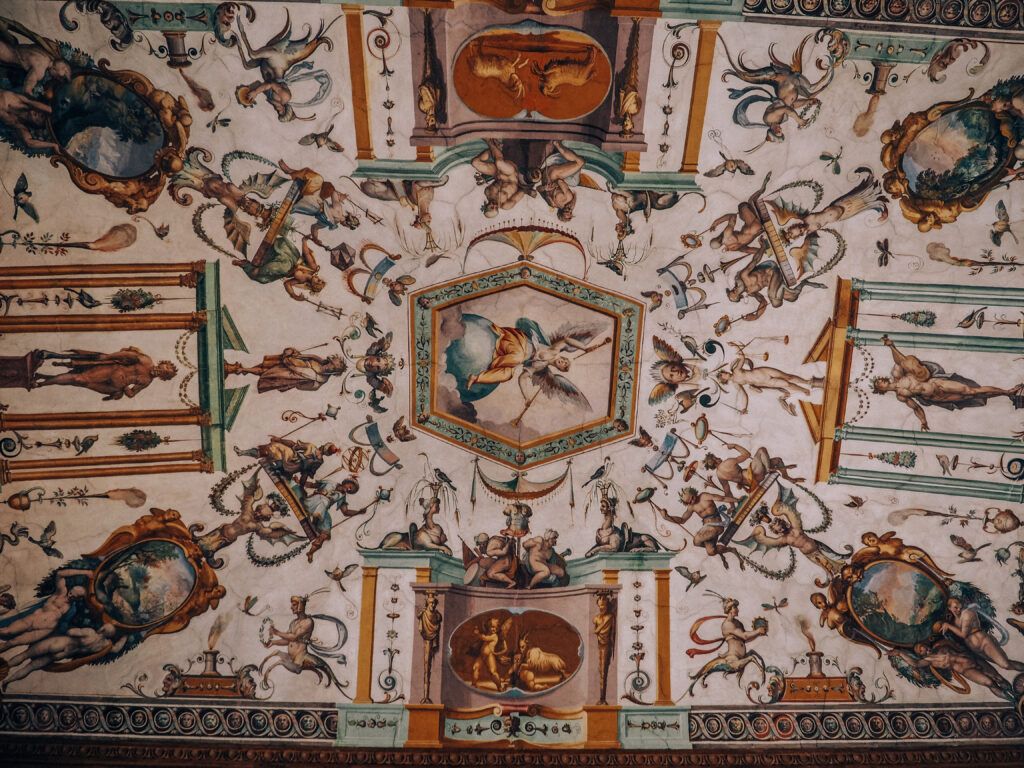
Don’t miss the long corridors themselves, lined with ancient statues, and the windows over the Arno with a view of Ponte Vecchio.
Take a break on the terrace
The café on the terrace looks straight onto Palazzo Vecchio and the rooftops. It gets busy around lunchtime, so go mid morning.
Don’t miss the Tribuna
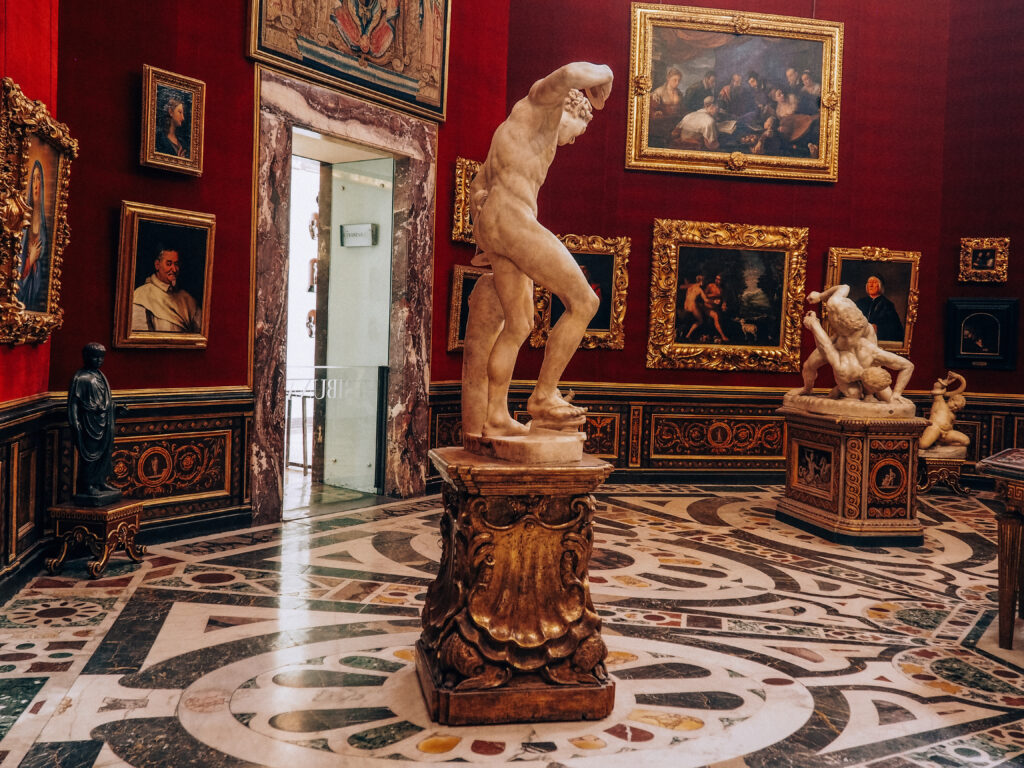
Among all the famous paintings, look out for the Tribuna, a small octagonal room designed for the Medici in the 1580s. Its dome is covered in mother of pearl shells, and it was built as a jewel box for the family’s most precious treasures. You can’t walk inside, but you can look in from the doorways. It’s one of the most beautiful rooms in the gallery and an easy one to miss.
The Vasari Corridor
The secret Medici passage that runs from the Uffizi over Ponte Vecchio to Palazzo Pitti reopened in December 2024 after years of closure. By day, you can only visit it with an Uffizi ticket that includes it (around €47 online), and your corridor slot is two hours after your Uffizi entry. It ends in the Boboli Gardens, so plan the rest of your day on that side of the river. Note that the famous self portraits that once lined it have been moved.
Where to stay in Florence
I’ve stayed in Florence two very different ways: with a family outside the centre, and in a small hotel right on Piazza della Signoria. Both were great, but for a short trip, staying central wins every time, because it lets you get out before the crowds. Here’s how the main areas compare.
Historic centre: best for first time visitors
The area around the Duomo, Piazza della Signoria and the Uffizi puts every major sight on your doorstep.
Pros
- Walk to almost everything in minutes
- Step out at sunrise before the crowds, like we did
- Beautiful views from many hotel windows
Cons
- The most expensive area
- Very busy and noisy during the day
- Restaurants around the main squares can be touristy
Top hotels in the historic centre
- Casa del Garbo (where we stayed). A small hotel right on Piazza della Signoria, a minute from the Uffizi. The location was perfect for early morning walks, and booking it was our best hotel decision of the whole road trip. The hotel is quite charming and the location couldn’t be better.
- Hotel Brunelleschi (upscale). A highly rated hotel built around a medieval tower, between the Duomo and Piazza della Signoria.
Oltrarno: best for a local feel
Across the river, the Oltrarno is full of artisan workshops, local trattorias and lively squares like Santo Spirito, with Palazzo Pitti and the Boboli Gardens close by.
Pros
- More authentic and relaxed than the centre
- Great food and evening atmosphere
- Often better value for boutique hotels
Cons
- A walk across the river to the main sights
- Some streets are busy with traffic
- Fewer large hotels
Top hotels in Oltrarno
- AdAstra (luxury boutique). A tiny hotel in a historic palazzo next to a large private garden, with a stylish retro feel.
- Soprarno Suites (upscale). Highly rated suites near Palazzo Pitti.
Santa Croce: best for food and nightlife
The neighbourhood around the great Franciscan church is full of trattorias, bars and the Sant’Ambrogio market, and it’s a short walk to the Duomo.
Pros
- Lots of good, affordable restaurants
- Lively in the evenings
- Close to the Sant’Ambrogio market
Cons
- Can be noisy at night
- Less polished than the centre
- The main square fills with tour groups by day
Top hotels in Santa Croce
- Relais Santa Croce (luxury). A five star hotel in a historic palazzo.
- Plaza Hotel Lucchesi (upscale). A riverside hotel with a rooftop pool, a real bonus in summer.
Santa Maria Novella: best for train travel and day trips
The area around the main station is the most practical base if you’re arriving by train or planning day trips to Pisa, Lucca or Siena.
Pros
- Steps from the station and tram to the airport
- Wide range of hotels and prices
- The Duomo is about 10 minutes on foot
Cons
- The streets right by the station are busy and not very attractive
- Less charm than the other areas
- Very touristy
Top hotels in Santa Maria Novella
- J.K. Place Firenze (luxury). An elegant boutique hotel on Piazza Santa Maria Novella.
- 25hours Hotel Piazza San Paolino (upscale). A playful design hotel a short walk from the station.
Outside the centre: best for a slow stay
On my first visit, I stayed in a family home a little outside the city, and it gave me a completely different, slower Florence. If you have a week, a villa or apartment in the hills is a lovely option, though you’ll rely on buses or taxis to get into town. For luxury, Villa Cora sits in a park above the Oltrarno with gardens and an outdoor pool.
What to eat in Florence
Tuscan food is all about simple ingredients done well, and my breakfasts with the family were the perfect example: good bread, olive oil and ripe tomatoes. These are the dishes to try.
- Bistecca alla fiorentina. The famous Florentine T bone steak, thick, served rare and usually priced by weight to share.
- Ribollita. A thick bread and vegetable soup, best in cooler months.
- Pappa al pomodoro. A comforting tomato and bread soup, lovely in summer.
- Panzanella. A summer salad of bread, tomatoes, onion and basil.
- Lampredotto. A sandwich of slow cooked tripe, sold from street carts. The most Florentine thing you can eat, if you’re brave.
- Schiacciata. Flat, salty Tuscan bread, filled with cured meats and cheese for a quick lunch.
- Cantucci and vin santo. Almond biscuits dipped in sweet dessert wine to end a meal.
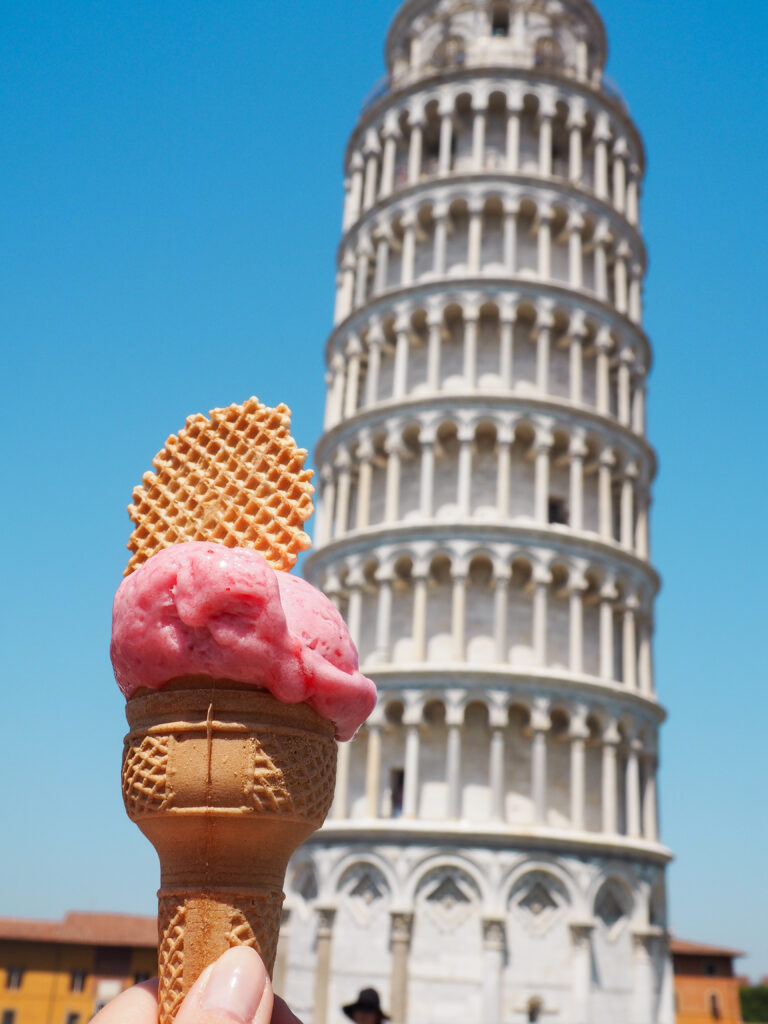
- Gelato. Florence claims to have invented it. Look for muted natural colours, not towering neon mounds.
Where to eat: avoid restaurants with picture menus around the main squares. Walk a few streets away, or cross into the Oltrarno or Santa Croce, where trattorias cater more to locals. For a casual lunch, the food hall at the Mercato Centrale has a bit of everything. For a taste of Tuscan cooking with context, a food tour is a great first evening activity.
Day trip from Florence to Pisa
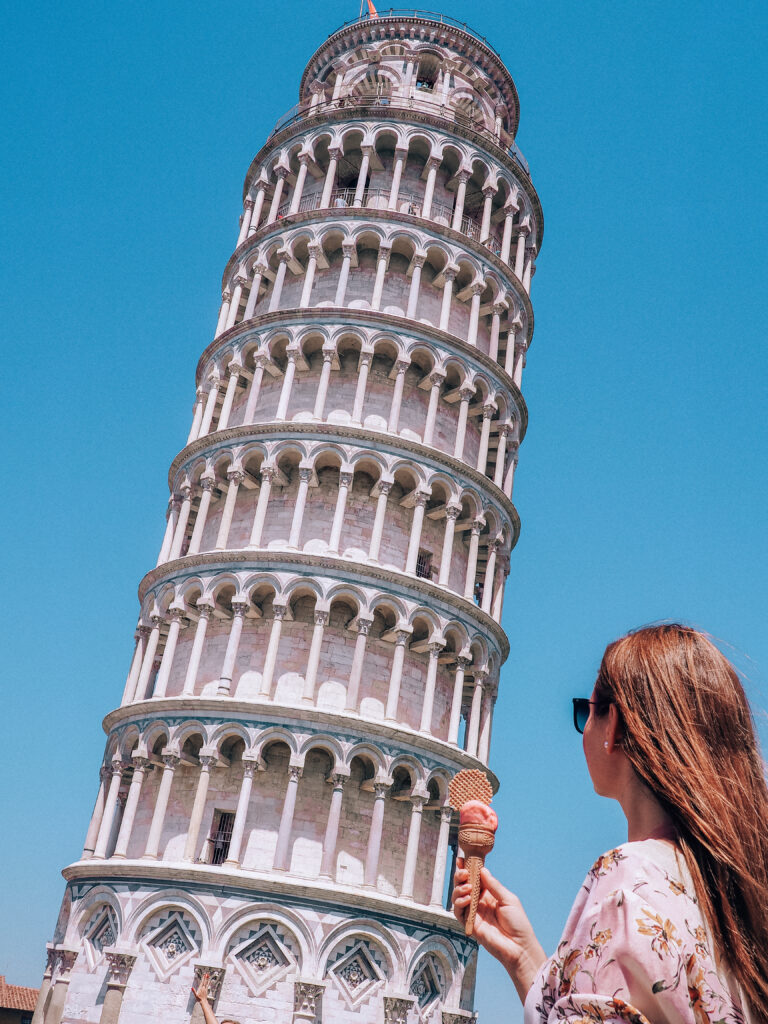
Who isn’t familiar with the Leaning Tower of Pisa? Raise your hand. Anybody? I didn’t think so. After the Eiffel Tower, it’s probably the second most famous tower in Europe.
I’ve been to Pisa on both trips, and this little town deserves more attention than a quick photo with the tower. On my second visit, I walked around the streets and realised I didn’t remember them at all from the first time.
What to see in Pisa
- Piazza dei Miracoli (the Field of Miracles). The tower, the cathedral, the baptistery and the monumental cemetery stand together on a bright green lawn, and it’s even more striking in person.
- Climbing the Leaning Tower. The climb is timed and limited, so book ahead. Book your entry to the tower and cathedral ahead of time.
- The old town. Walk away from the tower towards the Arno, through Borgo Stretto’s arcades and Piazza dei Cavalieri, to see the real Pisa.
How to get there
The easiest way is by train from Santa Maria Novella station, which takes about an hour. From Pisa Centrale it’s a 20 to 25 minute walk across town to the tower, past the old centre. You can also opt for Pisa half day trip from Florence.
My tip: don’t go in summer if you can help it. It’s hot and crowded, and the queue to climb the tower needs a lot of patience. Pisa is busy all year round, but if summer is your only option, book your tower ticket ahead of time.
Practical tips for visiting Florence
Don’t drive into Florence
Learn from our mistake. On the road trip, we drove into Florence and lost around two hours trying to find our way through the labyrinth of tiny streets and looking for parking near the hotel. The historic centre is a limited traffic zone (ZTL), watched by cameras, and driving in without a permit can mean a fine arriving months later. If you’re on a road trip, park outside the centre or at your hotel’s recommended garage, or return your rental car before you arrive.
See also:
- Ultimate Guide to Renting a Car and Driving in Sicily for First-Time Visitors
- Ultimate Italy to French Riviera Road Trip Guide: Best Stops, Tips & Hidden Gems (complete 10-day itinerary)
- My Honest Take: What to Know Before Going to Sicily and Why Parts of It Disappointed Me
- Last Supper Tickets in Milan: How I Booked and How You Can Too
- 2 Days in Milan: The Perfect Itinerary for First Timers
Getting to Florence
High speed trains connect Florence’s Santa Maria Novella station with Rome, Milan, Bologna and Venice, and the station is a short walk from the centre. Florence’s small airport is linked to the station by tram, and Pisa airport is about an hour away by train.
How many days do you need?
Two full days cover the main sights. Three or four let you add Pisa, a Chianti wine trip or simply slow down. With a week, you can live Florence like a local, as I did the first time.
Good to know
- Most state museums, including the Uffizi and the Accademia, close on Mondays.
- Cover shoulders and knees to enter churches, including the Duomo.
- Hotels charge a nightly tourist tax on top of your room rate.
- Carry a refillable bottle. Florence has public drinking fountains, which help in the summer heat.
Use my favourite travel resources to plan your dream trips
- Booking.com for searching best prices on accommodation.
- AirHelp helps to get compensation for cancelled or delayed flights.
- Travel Payouts is my favourite platform for monetizing the blog.
- Discover Cars is a great website as they search both local and international car hire services, so you can choose the best deal for yourself. Make sure though, that the company has a good reputation and reviews.
- Get Your Guide is my place to go for searching and booking tours and excursions, especially when I travel solo.
- World Nomads and EKTA travel insurance. I like them because they have quite extensive coverage of different activities.
- WeGoTrip sends you audio guides to your mobile, so you can visit places while learning history and interesting facts easily and for little money.
- Go City is a perfect site for booking bucket list experiences and attractions all in one to avoid paying for multiple tickets. Easy and saves money. You can even save 50%.
- Trip Advisor– amazing for good quality recommendations.
- Skyscanner is a perfect website for searching flight routes and comparing prices.
- Airalo is my eSim choice for alternative data abroad.
Did you like the post? Pin it for later: