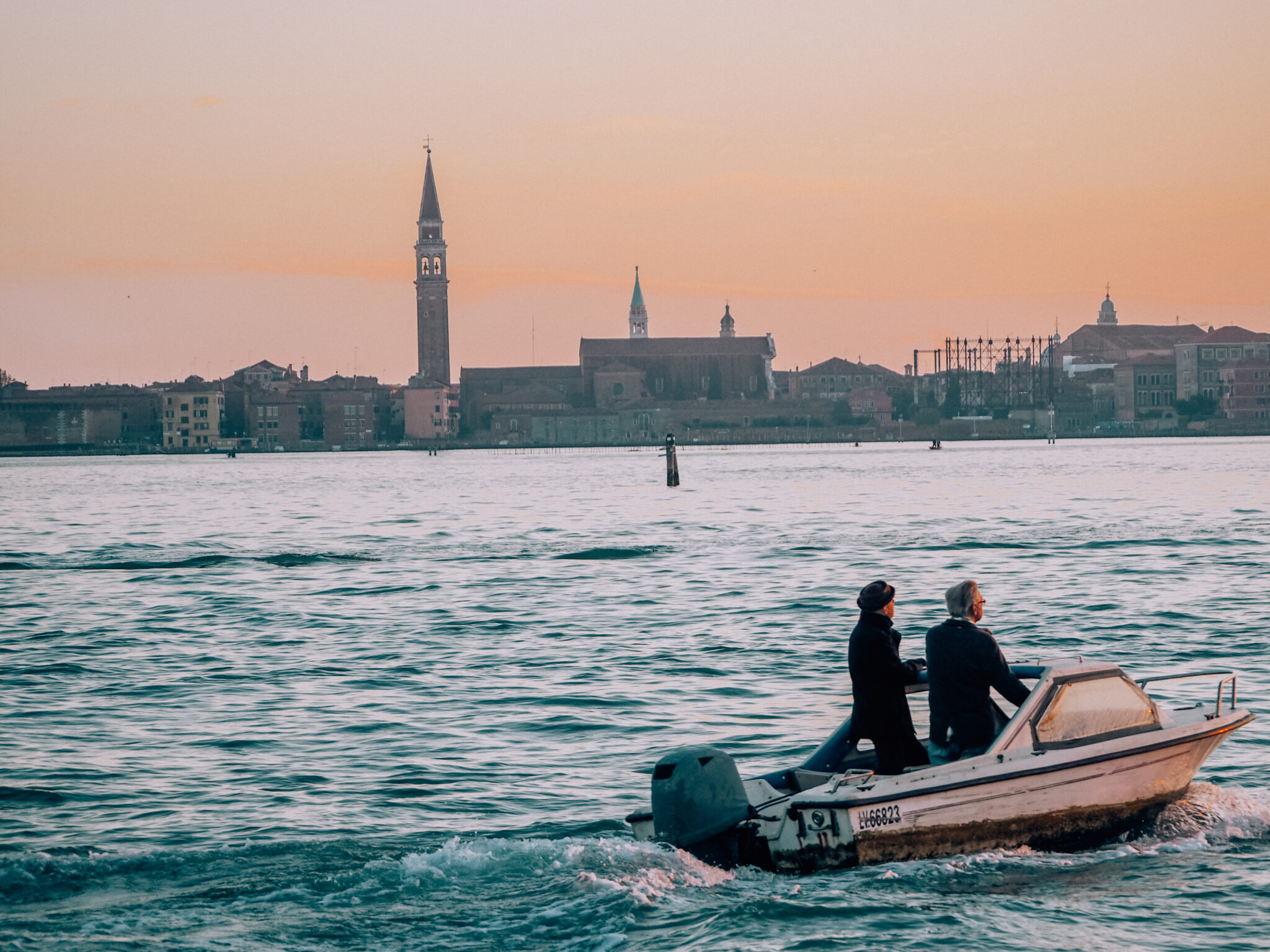
How to Get Around Venice: A Complete Transport Guide
I’ve been to Venice twice: the first time many years ago, in July, on my very first solo trip around Italy, and the second time last October, for three days. The first time I kept getting lost and couldn’t really undertsand how to get around Venice using public transportation. I think I didn’t use vaporetto or the taxi a single time.
The second time I knew much more, did a better research and realized that Venice is actually not that difficult to walk around.
Venice is special because there are no cars, no buses and no metro in the historic centre. You either walk or you go by boat. It sounds complicated, but once you understand the options, it’s actually simple.
In this guide I explain every way to get around Venice: walking, the vaporetto (water bus), the traghetto, gondolas, water taxis, and how to get from the airport, the train station and the car parks into the city.
Please note that this post included affiliate links, when you decide to purchase anything through these links I get a small commission at NO extra cost to you, it helps me to keep running this blog! I only promote products and services I use or would use myself. All images are the property of Postcards from the World and cannot be used without permission.
Getting around Venice: the quick answer
For me it was a bit complicated to use the transportation in Venice, but it is actually quite easy. When it comes to prices and some services, verify them before booking as they may change after writing this post. Here are all the options to move around.
- Walking: the best way to explore the centre, and it’s free. Be prepared for steps and bridges and getting lost, but that’s the whole point of exploring Venice.
- Vaporetto (water bus): for longer distances, the islands and when your feet need a break. It’s also a nice way to see Venice from a different perspective.
- Traghetto: a €2 gondola crossing over the Grand Canal. Short but amazing.
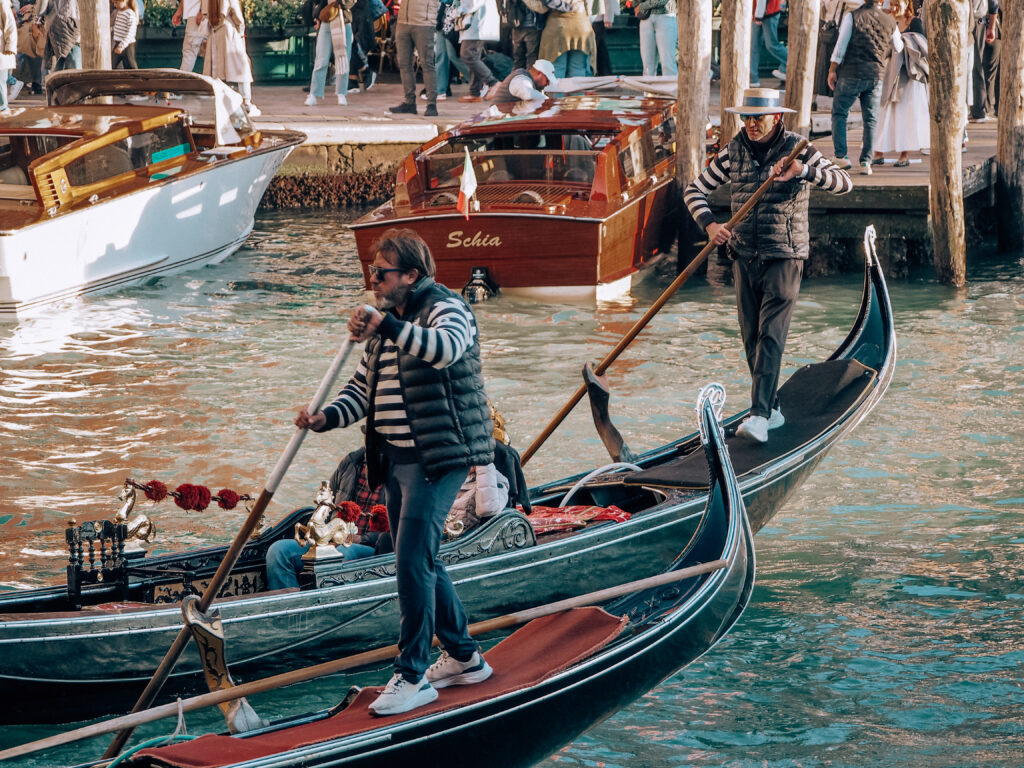
- Gondola: for the experience, not for getting anywhere. Do it once. Best of you travel with someone to get iconic photos.
- Water taxi: fast, private and expensive, great with luggage.
- From the airport: bus to Piazzale Roma, Alilaguna water bus or water taxi.
A Quick Guide to Venice
Where to Stay:
- Numa Venice Forcola in Cannaregio, where we stayed
- The Gritti Palace for Grand Canal luxury in San Marco
- Hotel Moresco for a boutique stay with a garden
Must Do Activities:
Getting Around:
Walking: the best way to see Venice
Walking is the main way to get around Venice, and honestly the best. The historic centre is small: you can cross it from one end to the other in about an hour. Wandering the little streets and finding a quiet canal or a small square is half the fun of Venice.
I cannot imagine a better way to get lost and discover corners that you would never find otherwise. Even though Venice is small, crossing all the bridges will tire you up.
Tips for walking in Venice
You will get lost, and that’s fine. The streets are narrow and confusing, and Google Maps sometimes struggles. Look for the yellow signs on the walls pointing to “Per Rialto”, “Per S. Marco” or “Alla Ferrovia” (to the station). They’re easy to follow. I actually walked from my hotel to the train station.
Wear comfortable shoes. You’ll walk a lot, over many bridges with steps. But Venice is also a place where you’ll want to look nice. I chose loafers: comfortable enough for long walks, but they also look good with nicer clothes for dinner.
Keep to the right. The streets and bridges can be very narrow, so walk on the right and step to the side if you want to stop for a photo. Locals will thank you.
Go early or late. The streets around St Mark’s and the Rialto are packed during the day, but in the early morning and at night they’re quiet, and that’s when Venice is at its most beautiful.
Leave the bike at home. Cycling isn’t allowed in the historic centre, and neither are scooters, so walking really is the way to go.
Walking with luggage in venice
This is where Venice can be hard. There are lots of bridges with steps, and once you leave the train station or Piazzale Roma, there’s almost no help with your bags. You’re on your own, pulling your suitcase up and down bridge after bridge.
My biggest tip is to pack as light as you can. On my last trip, I travelled with hand luggage only, and it was the best decision ever. I did the same years ago, but that time I travelled with a backpack. I could carry my bag easily over the bridges, hop on and off the vaporetto without stress, and even walk from my hotel to the train station at the end of the trip.
It also helps to choose a hotel close to a vaporetto stop. That way, you can take the water bus almost to your door and only walk the last few minutes. My hotel was near the San Marcuola stop, which made arriving and leaving really easy.
If you have more luggage, ask your hotel if they can arrange a porter. Some hotels can send someone to meet you at the vaporetto stop or Piazzale Roma and carry your bags for you. It costs a bit extra, but it’s worth it.
And if you’re travelling with heavy suitcases or in a big group, a water taxi straight to your hotel is the easiest option. It’s expensive, but split between a few people it’s much more reasonable, and it saves you all the struggle.
The vaporetto (water bus)
The vaporetto is Venice’s public transport: big water buses that go along the Grand Canal, around the edge of the city and out to the islands. They’re run by ACTV, the local transport company. It’s the easiest way to cover longer distances, get to Murano, Burano or the Lido, or just rest your feet.
I used the vaporetto a lot on my last trip, and I think it’s amazing. It’s easy to use, it goes everywhere, and with a pass it’s really good value, especially compared to water taxis.
It was especially handy for visiting Murano and Burano. I had a full day for the islands, and going by vaporetto meant I was completely free to decide how to spend my time there. I could stay longer where I liked it, stop for lunch when I wanted, and move on when I was ready, without following a group.
Quick tip: if you’re short on time, I’d suggest a half day tour instead. It takes care of everything, usually includes a glassblowing demonstration in Murano, and you’ll still see the highlights of both islands.
The most useful lines
- Line 1: the slow line along the whole Grand Canal, stopping almost everywhere. Perfect for sightseeing.
- Line 2: a faster line along the Grand Canal with fewer stops, also going to Giudecca.
- Lines 4.1, 4.2, 5.1 and 5.2: circle lines around the outside of the city, useful for Cannaregio, Castello and Murano.
- Line 12: from Fondamente Nove to Murano and Burano.
- N (night line): runs during the night, when the other lines stop.
Vaporetto tickets and prices 2026
Single tickets are expensive, so if you’ll use the vaporetto more than a couple of times, a pass is much better value.
- Single ticket (75 minutes): €9.50
- 24 hour pass: €25
- 48 hour pass: €35
- 72 hour pass: €45
- 7 day pass: €65
- Children under 6: free
If you’re between 6 and 29, look at the Rolling Venice card, which gives you a much cheaper 72 hour pass.
The passes also cover the buses on the Lido and in Mestre, and the People Mover. They don’t include the Alilaguna airport boats or the ACTV services to the airport.
How to buy and use your ticket
You can buy tickets at the machines and ticket booths at the main vaporetto stops, like the train station, Piazzale Roma and the Rialto. You can also buy them online before your trip or through the official app, which saves you queuing when you arrive. I don’t really know why, but it took a me a bit to figure it out.
Once you have your ticket, don’t forget to validate it every time you get on a boat. Just tap it on the card reader on the pier before boarding. You need to do this even if you have a pass, not only with single tickets. Inspectors do check, and the fines are high, so it’s not worth the risk.
If you buy a single ticket, it’s valid for 75 minutes in one direction. That means you can change boats within that time, but you can’t use it to come back. For a return trip, you’ll need another ticket, which is another reason why a pass is usually the better choice.
Vaporetto tips
- Line 1 is very busy in the middle of the day. Go early in the morning or in the evening, and try to get a seat outside at the front or back for the best views.
- Check the direction. Each stop has several piers, often marked with letters, for different lines and directions. Read the signs before you board.
- Big luggage may need its own ticket. One normal suitcase is usually fine, but check the rules if you’re carrying more.
The traghetto: a €2 gondola ride
There are only four bridges over the Grand Canal, so for centuries Venetians have crossed it in a traghetto: a simple gondola that takes you from one side to the other in a few minutes. It’s a practical shortcut, and the cheapest way to try a gondola.
- Price: €2 per person for visitors, usually paid in cash to the gondolier
- Where: there are a handful of crossing points along the Grand Canal, such as Santa Sofia (near the Rialto market) and San Tomà. Look for the yellow “Traghetto” signs.
- Tip: locals often stand during the crossing, but you can sit if you prefer. Some crossings only run at certain times of day.
See also:
- Ultimate Guide to Renting a Car and Driving in Sicily for First-Time Visitors
- Ultimate Italy to French Riviera Road Trip Guide: Best Stops, Tips & Hidden Gems (complete 10-day itinerary)
- Last Supper Tickets in Milan: How I Booked and How You Can Too
- Is Florence Worth Visiting? An Honest Guide After Two Trips.
- 2 Days in Milan: The Perfect Itinerary for First Timers
- Venice in October: Why Autumn Is the Most Magical Time to Visit.
- Where to Stay in Venice for the First Time: Best Areas and Hotels
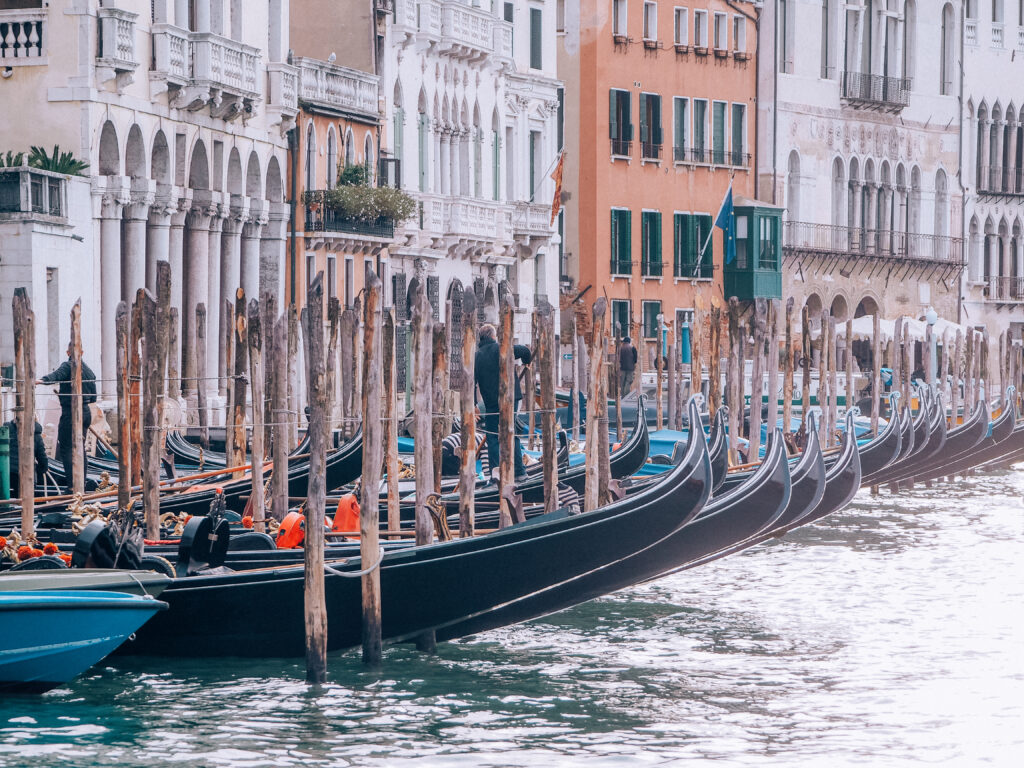

Gondolas: for the experience
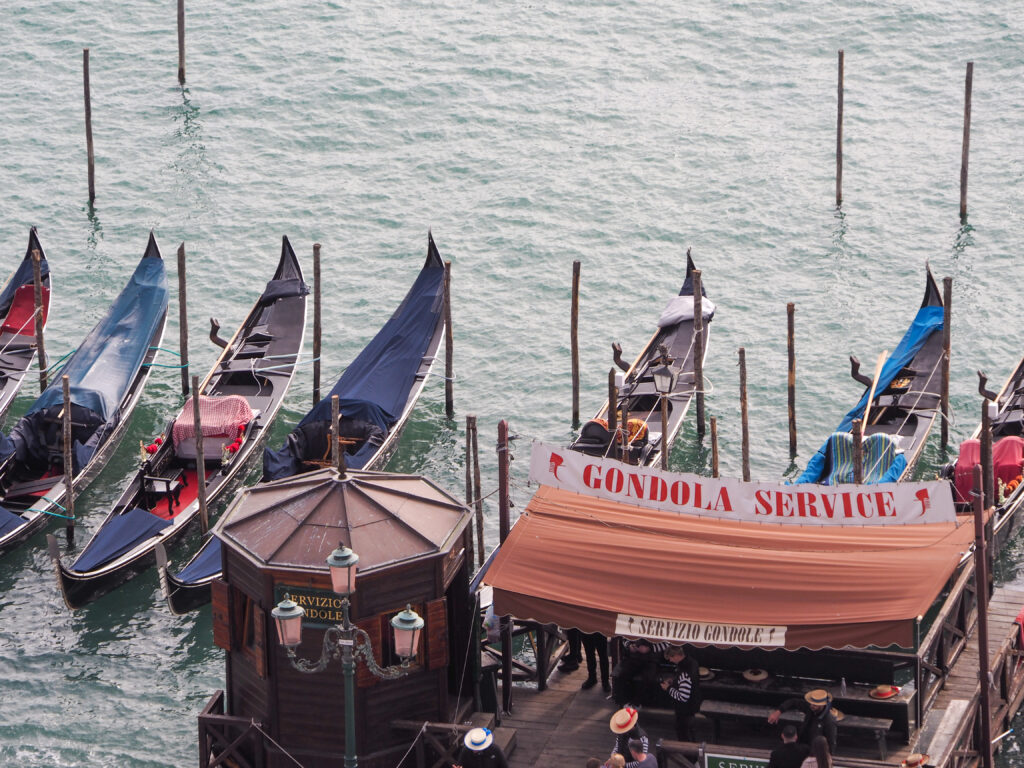
A gondola isn’t really transport, but it’s the most famous way to see Venice from the water. Prices are set by the city and are per gondola, not per person.
- Day rate: around €90 for 30 minutes, for up to 5 people
- Evening rate (after 7pm): higher, around €110
- Extra time: charged in blocks of about 20 minutes
The price is fixed, so there’s no need to negotiate. If you’re travelling alone or as a couple, a shared gondola ride booked online brings the price down to around €30 to €40 per person.
Tip: choose a gondola station away from the busiest areas, like the ones in Dorsoduro or Cannaregio, for a calmer ride through small canals.
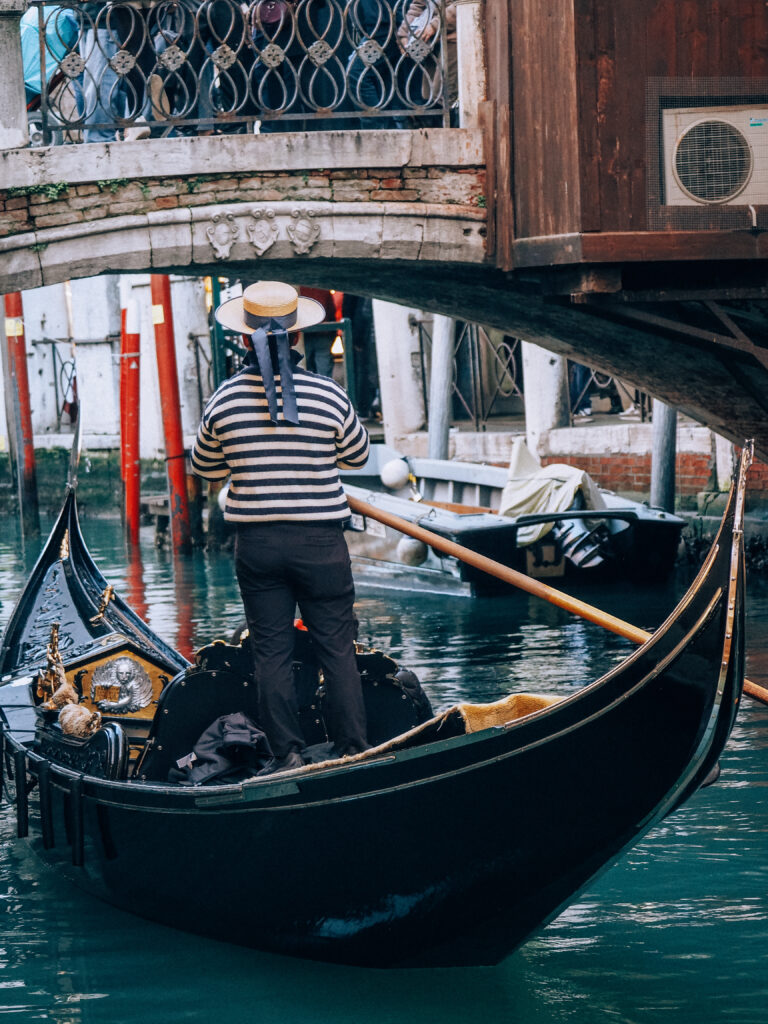

Water taxis: fast, private and expensive
Water taxis are private motorboats that take you directly where you want to go, often right to your hotel’s door. They’re fast and comfortable, and great if you have heavy luggage, a big group, or want a special arrival in Venice.
They’re also expensive. A trip from the airport to the centre costs from around €120 per boat, and a ride within the city easily costs €60 to €100. Prices depend on the distance, the number of people and luggage, and the time of day. I didn’t use a water taxi in Venice since I was travelling alone and the vaporetto to my hotel was very convenient. But I would consider it if traveling as a bigger group. I think the private taxi boats are really pertty and remind of of a scene from a movie.
Getting from the airport to Venice
Most visitors fly into Venice Marco Polo Airport, on the mainland about 13 km from the city. You have four main options.
Airport bus to Piazzale Roma
The cheapest and quickest way. Express buses (ATVO and ACTV) leave from just outside the terminal and take about 20 to 30 minutes to Piazzale Roma, at the edge of the historic centre. A ticket costs around €10 to €12. From Piazzale Roma, you walk or take a vaporetto to your hotel. Years ago when I visisted in July, I took the bus. I don’t remember that much, just that I had to walk later quiet a lot with my luggage…and it was really hot.
Alilaguna water bus
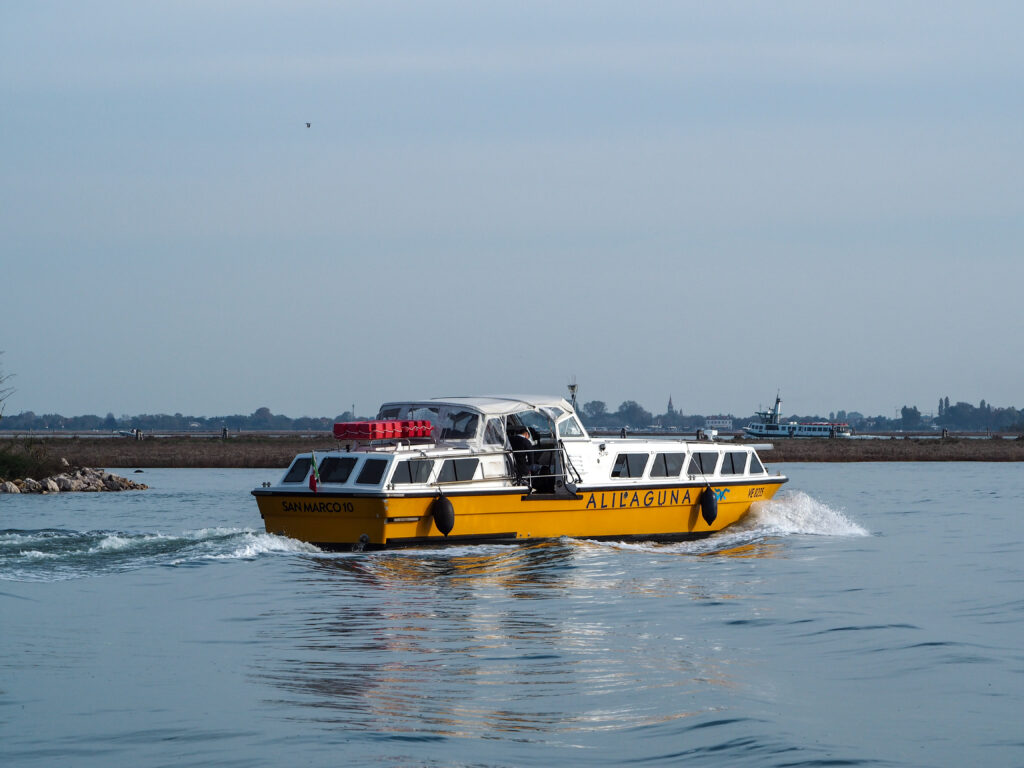
A slower but much more scenic way to arrive, by boat across the lagoon. Alilaguna boats leave from the airport’s water dock, about a 10 minute walk from arrivals along a covered walkway, and stop at Murano, the Lido, San Marco, the Rialto and other points, depending on the line. A ticket to the centre costs around €18, and the trip takes 60 to 90 minutes. Your ACTV vaporetto pass doesn’t cover Alilaguna. This is the option I used this time and I think it is really good. It involved a bit of waiting, but it wasn’t bad at all.
Private water taxi
The most expensive and most memorable option. A water taxi takes you from the airport dock straight to your hotel (or as close as possible) in about 30 minutes. Expect to pay from around €120 per boat. For a cheaper version, look for shared water taxi transfers.
Road taxi to Piazzale Roma
A normal taxi from the airport to Piazzale Roma costs around €40 for up to four people. From there, you continue on foot or by water.
Flying into Treviso? Some budget airlines use Treviso Airport. ATVO buses connect it to Venice in about an hour.
Arriving by train
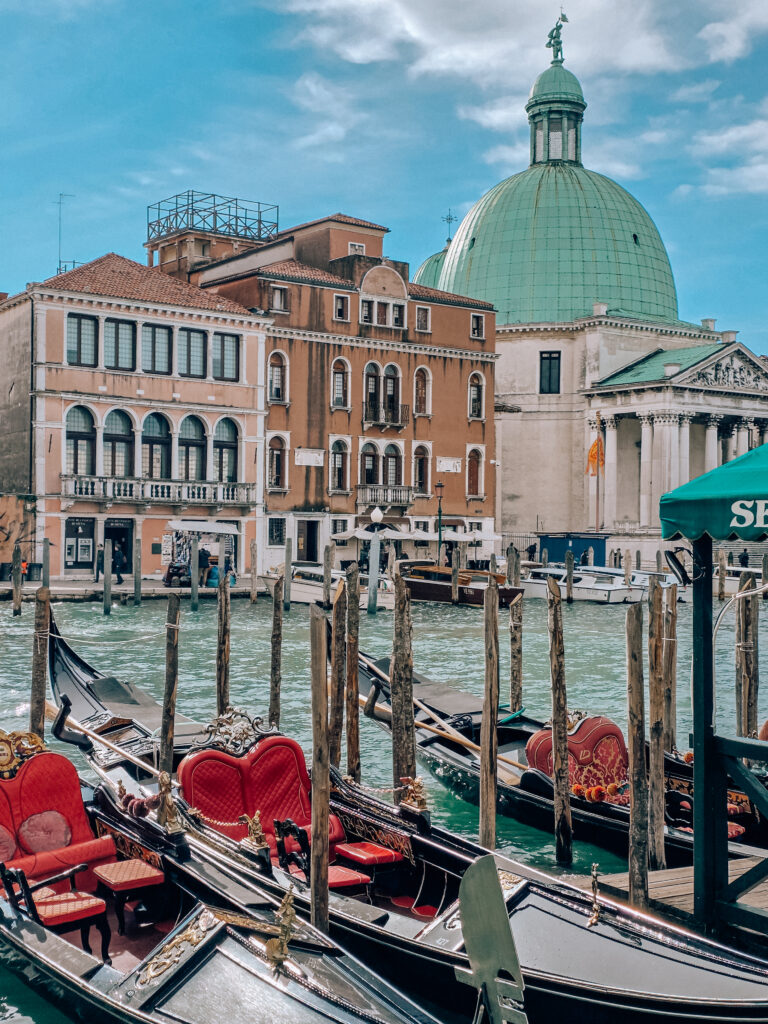
Trains arrive at Venezia Santa Lucia station, right on the Grand Canal. As soon as you walk out, you’re in Venice: the vaporetto stops are right in front of the station, and you can walk to Cannaregio and Santa Croce in a few minutes.
Make sure your ticket goes to Venezia Santa Lucia, not just Venezia Mestre, the mainland station. Trains between the two run very often and take about 10 minutes.
I headed to Milan after Venice and took the train, from Santa Lucia station, which was really convenient.
Arriving by car
You can’t drive into Venice, so you’ll have to park at the edge of the city and continue on foot or by boat.
- Piazzale Roma: the closest car parks to the centre, but the most expensive and often full in high season.
- Tronchetto: a big car park on an artificial island next to Piazzale Roma, usually a bit cheaper.
- Mestre: the cheapest option. Park near the station and take the train or bus into Venice.
Book your parking in advance, especially in summer and at weekends, when the car parks fill up fast. Ideally, don’t bring a car to Venice at all. But if Venice is part of a road trip, you might not have much choice, so park, leave the car for the whole stay and explore on foot and by vaporetto.
The People Mover
The People Mover is a small elevated train connecting Tronchetto (car park and cruise area), the cruise terminal and Piazzale Roma in about three minutes. A ticket costs €1.50, and it’s also included in the vaporetto passes. It’s handy if you park at Tronchetto or arrive by cruise ship.
Getting to the islands
The vaporetto passes cover all the main islands, so it’s easy to visit them on your own.
- Murano and Burano: take line 12 from Fondamente Nove, on the northern side of Cannaregio. It stops at Murano and continues to Burano, about 45 minutes in total. Murano is also served by the circle lines.
- Torcello: a short hop from Burano by vaporetto.
- The Lido: about 15 minutes by vaporetto from the St Mark’s area.
- Giudecca: just across the water from Dorsoduro, served by line 2 and the circle lines.
If you’d rather not plan anything, a boat tour to Murano, Burano and Torcello takes care of everything, often with a glassblowing demonstration included.
I used Vaporetto and spent the full day exploring the islands. I even felt that a night over there could be a good idea…maybe next time.
Practical tips for getting around Venice
- Buy a vaporetto pass if you’ll take more than three or four boats.
- Download an offline map, as signal can be weak in the narrow streets.
- Check the tide forecast in autumn and winter, when acqua alta can flood the lowest areas.
- Allow extra time. Everything takes longer in Venice, especially with luggage.
- Use the night line if you’re out late: the regular lines stop around midnight.

Use my favourite travel resources to plan your dream trips
- Booking.com for searching best prices on accommodation.
- AirHelp helps to get compensation for cancelled or delayed flights.
- Travel Payouts is my favourite platform for monetizing the blog.
- Stay22 is my second favourite platform for monetizing the blog.
- Lyrical Host is the best for hosting my blog: fast, reliable and with genuinely helpful support. Get 10% off with my code POSTCARDS10. Sign up here,
- Discover Cars is a great website as they search both local and international car hire services, so you can choose the best deal for yourself. Make sure though, that the company has a good reputation and reviews.
- Get Your Guide is my place to go for searching and booking tours and excursions, especially when I travel solo.
- WeGoTrip sends you audio guides to your mobile, so you can visit places while learning history and interesting facts easily and for little money.
- Go City is a perfect site for booking bucket list experiences and attractions all in one to avoid paying for multiple tickets. Easy and saves money. You can even save 50%.
- Trip Advisor– amazing for good quality recommendations.
- Skyscanner is a perfect website for searching flight routes and comparing prices.
- Airalo is my eSim choice for alternative data abroad.
Getting around Venice FAQ
Is Venice walkable? Yes. The historic centre is small, and walking is the best way to explore it. You can cross it in about an hour.
Is the vaporetto pass worth it? Usually, yes. A single ticket costs €9.50, so if you take three or more boats in a day, the €25 day pass already saves you money. For a 3 day trip, the 72 hour pass is the best value.
How do I get from the airport to Venice? The cheapest way is the airport bus to Piazzale Roma. The most scenic is the Alilaguna water bus, and the most comfortable is a private water taxi straight to your hotel.
Are there taxis in Venice? Not on the roads, as there are no cars in the centre. Water taxis do the same job, but they’re expensive.
How much is a gondola ride in Venice? Around €90 for 30 minutes during the day, for up to 5 people, and more in the evening. For €2, you can cross the Grand Canal by traghetto instead.
Can I use Uber in Venice? Not in the historic centre. On the mainland, taxis and some ride options are available.
Did you like the post? Pin it for later: