Visiting Gyeongju from Busan, South Korea: A Complete Guide to Korea’s Ancient Capital
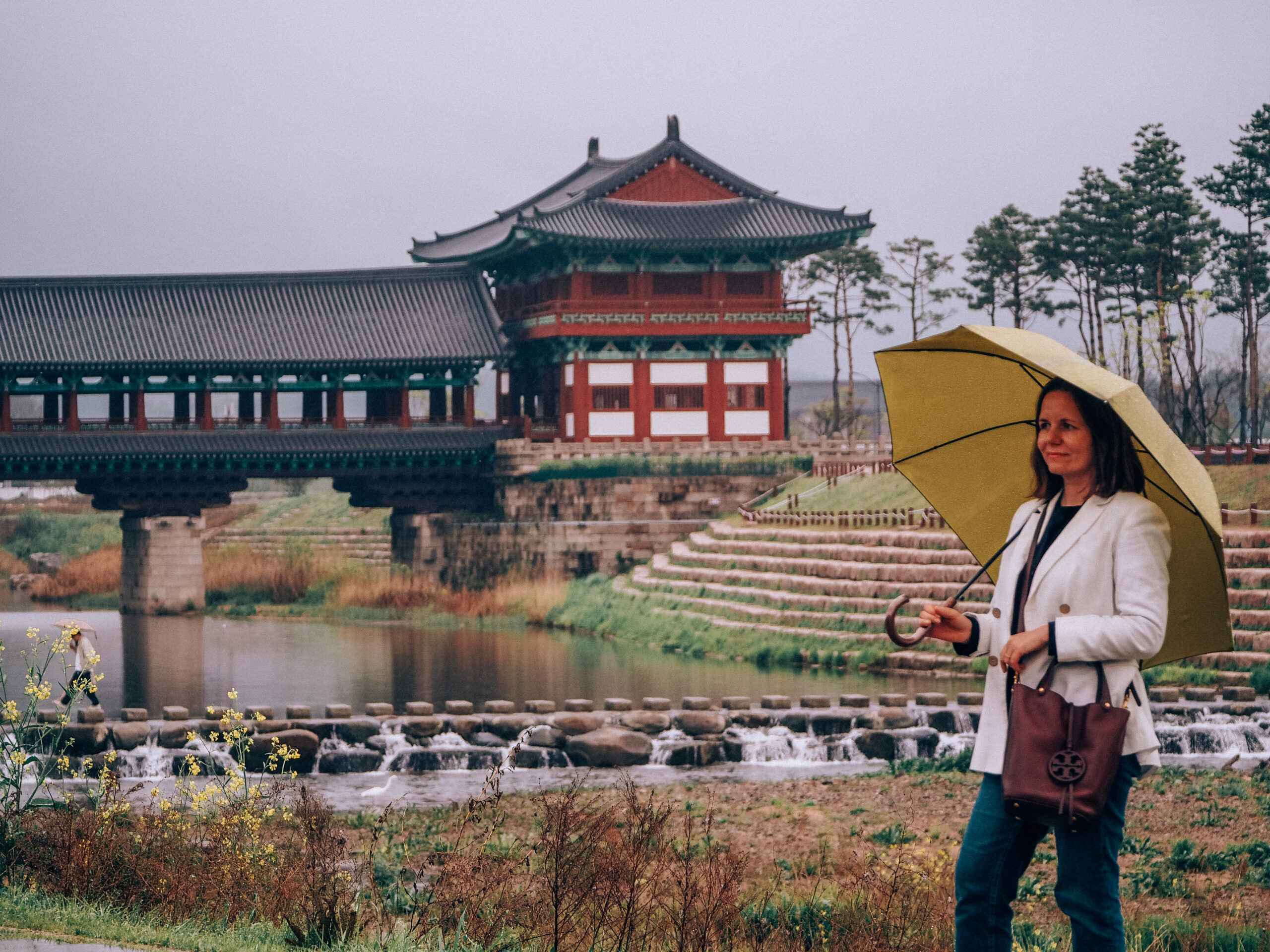
During our 10-day trip to South Korea, Gyeongju was one of the stops I was most looking forward to. After Seoul and Busan, both buzzing, modern, fast-paced cities, Gyeongju is something else: quiet streets, ancient burial mounds, temples carved into hillsides, and the unmistakable feeling of standing in a place that used to matter enormously.
Visiting Gyeongju from Busan turned out to be one of the easiest detours of the entire trip, and one of the most rewarding.
Disclosure: Please note that this post included affiliate links, when you decide to purchase anything through these links I get a small commission at NO extra cost to you, it helps me to keep running this blog! I only promote products and services I use or would use myself. All images are the property of Postcards from the World and cannot be used without permission.
Visiting Gyeongju from Busan: all you need to know
We visited in April, and we caught some genuinely heavy showers during our time there. It didn’t matter in the slightest. It was amazing regardless, and if anything, the rain gave the whole visit a different kind of atmosphere. Even though this trip is not really difficult to plan, it took me a bit of time to do all the research, so I wanted to put it all together, so you don’t have to.
Why visit Gyeongju
So let’s start with the basic: why you should visit Gyeongju?
It seems that most travellers doing a South Korea trip don’t realise how close Gyeongju sits to Busan, just 50 kilometres apart, which makes it an easy, almost obvious addition to any itinerary that already includes the south coast.
Gyeongju was the capital of the Silla Dynasty for nearly a thousand years, from 57 BC to 935 AD. At its peak, around the year 750, it was reportedly the fourth-largest city in the world, with close to a million residents. Today it’s a fraction of that size, a calm, low-rise town rather than a sprawling metropolis, but it’s still home to several UNESCO World Heritage Sites, and the sheer concentration of history packed into such a compact area is genuinely remarkable. Once I learned all of this, visiting wasn’t really a question, even if it meant only going for a short stretch of our trip.
How to get to Gyeongju from Busan
There are several ways to get to Gyeongju from Busan, and which one makes sense depends on where you’re staying in Busan and how much luggage you’re carrying.
By bus (what we did): Buses run from Busan Central Bus Terminal at Nopo Station, the final stop on Busan Metro Line 1, directly to Gyeongju Intercity Bus Terminal. The journey takes roughly 50 minutes to an hour, departures run every 15 to 30 minutes throughout the day, and tickets cost somewhere between 10,000 and 13,000 KRW, very affordable. The bus drops you right in central Gyeongju, within easy walking distance of the main historic sights, which is a genuine advantage over the train.
If you’re staying somewhere like Haeundae or Gwangalli rather than near Busan Station, there’s also a direct bus departing from Haeundae Bus Terminal, which takes slightly longer, closer to 60 to 90 minutes, but saves you the trip across the city to Nopo first.
By train (KTX): The high-speed KTX from Busan Station takes only around 30 minutes, the fastest option by far. The one significant catch: the KTX arrives at Singyeongju Station, which sits roughly 8 kilometres outside the city centre, not at the old Gyeongju Station. From Singyeongju, you’ll need a local bus or a taxi (around 10,000 to 12,000 KRW) to reach the centre, which eats into the time advantage somewhat.
By car: If you want full flexibility, especially to reach sights outside the immediate town centre at your own pace, renting a car is a solid option.
We chose the bus, mainly because it dropped us close to where we needed to be without an extra transfer, and honestly, it made the whole journey feel simple from the moment we sat down.
See also:
- Where to Stay in Seoul for First Time: Best Neighborhoods and Hotels for Every Style
- 4 days in Seoul for first timers: all you need to know to plan a perfect trip
- 2 days in Busan: a quick guide to the coastal city in South Korea
- Guide to South Korea for first timers: 10 days itinerary in spring (would also be great in autumn)
- First time in Hong Kong: all you need to know to plan a stress-free trip.
- All you need to know about renting a hanbok in Seoul: a comprehensive guide for first timers
- Where to Stay in Busan: The Best Neighbourhoods for a Short Trip
Stopping at Bulguksa Temple on the way into town
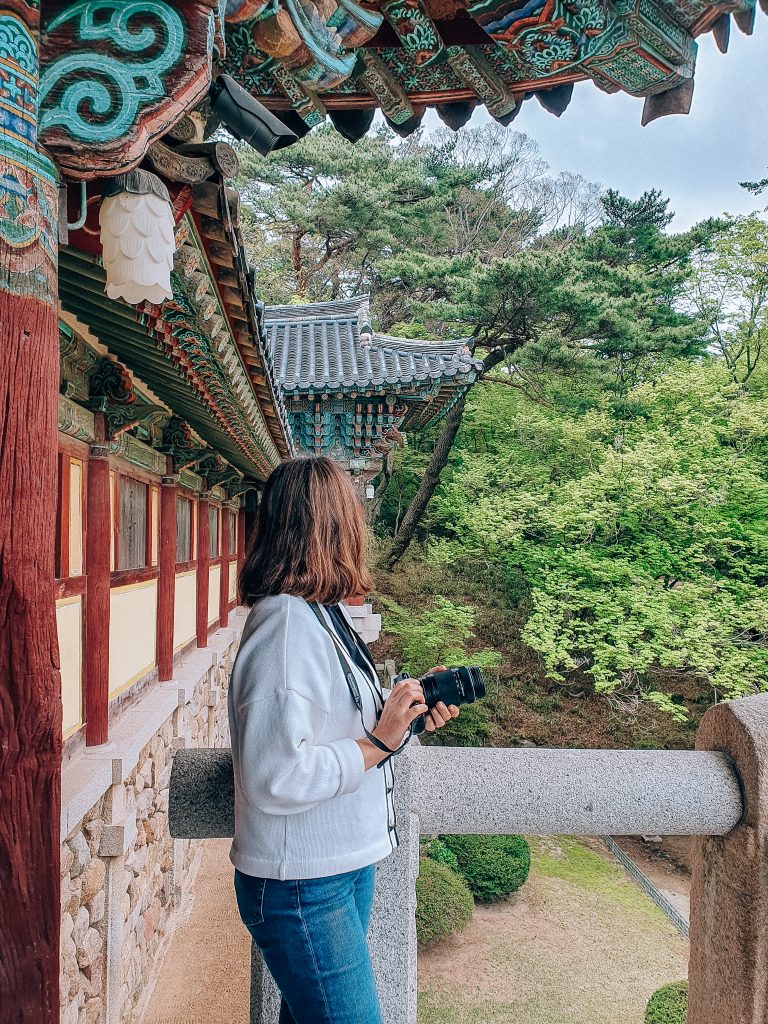
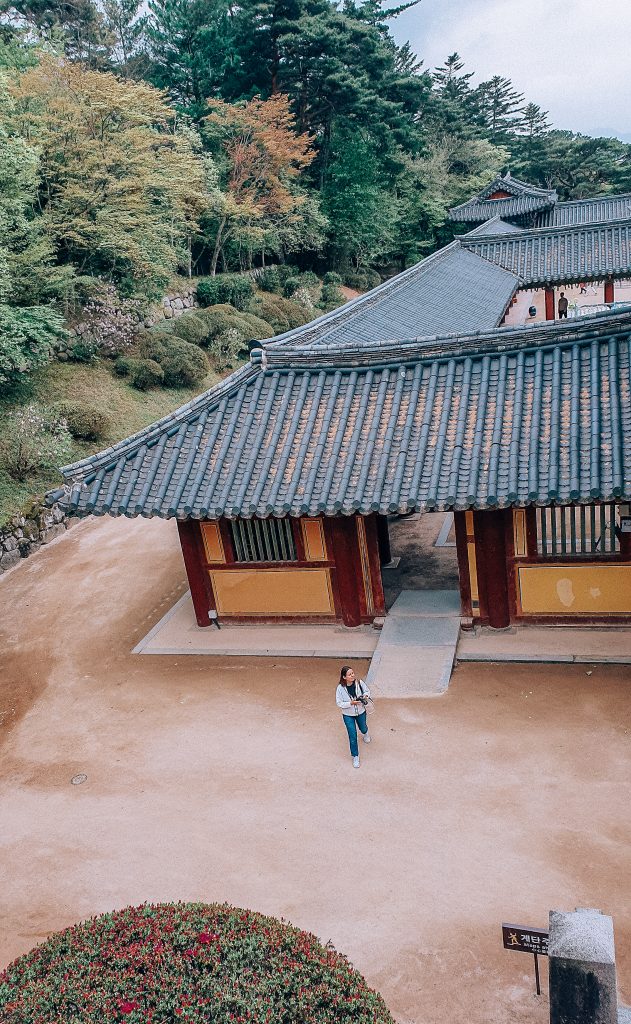
Here’s something worth knowing if you’re arriving by bus from Busan: Bulguksa Temple sits outside the main town, and depending on your route, you can stop there on the way in, before heading to the centre of Gyeongju itself, which is exactly what we did.
One detail that genuinely helped us: at the entrance to the temple complex, there’s an area that functions essentially like a wardrobe, somewhere to store your luggage. There are no locks on it, but it’s entirely safe; everyone visiting does the same thing. We stored our bags there since we were visiting Bulguksa straight off the bus, before continuing on into the town centre, and it made the whole stop far less of a hassle than dragging suitcases around a temple complex.
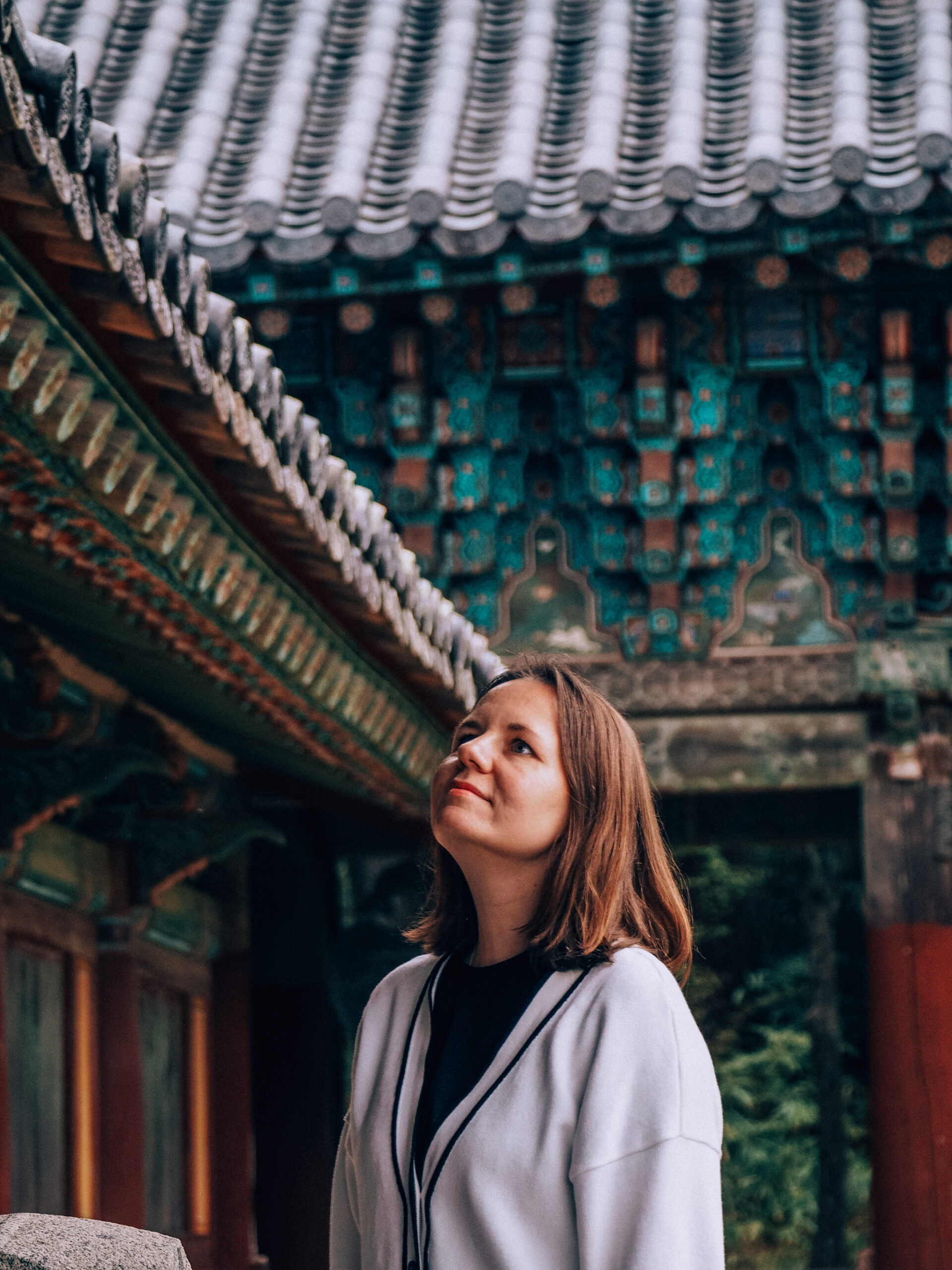
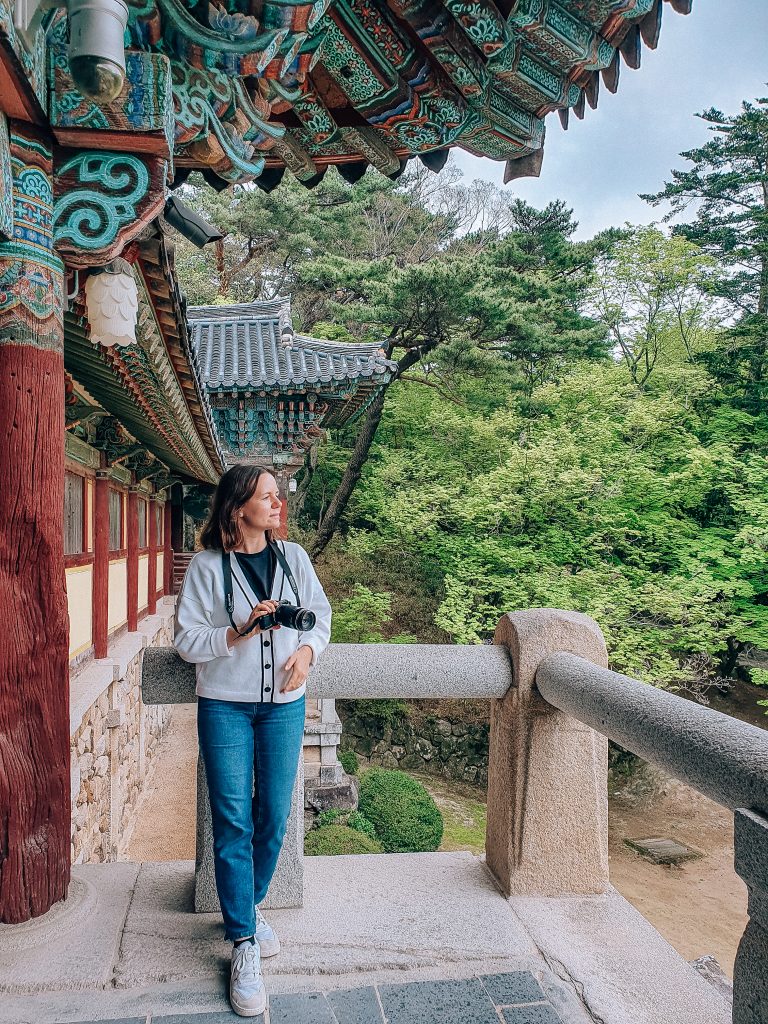
Bulguksa itself is one of Korea’s most celebrated Buddhist temples, and a UNESCO World Heritage Site. The Cheongungyo and Baegungyo stone staircases leading up to the main hall are among the most photographed pieces of architecture in the country, and seeing them in person, even soaked through from the rain, was genuinely moving. The temple is home to several of Korea’s National Treasures, including the Dabotap and Seokgatap stone pagodas.
About 4 kilometres further up the hillside sits Seokguram Grotto, also UNESCO-listed, a carved granite chamber housing a seated Buddha statue considered one of the finest pieces of Buddhist art in the country. We visited both on the same outing, which I’d genuinely recommend, since they’re closely linked both physically and historically.
The umbrella
This is the moment that’s stayed with me most from the entire stop. The rain that day was relentless, properly heavy, the kind that soaks through everything within minutes. As we were leaving the temple grounds, drenched, a group of locals who’d clearly decided they no longer needed their umbrellas simply gave us one.
No fuss, no expectation of anything in return, just a small, genuinely kind gesture from strangers who saw two soaked travellers and decided to help. That umbrella saved the rest of our day, and it’s exactly the kind of moment that ends up meaning more than half the sights on any itinerary.
What to see in Gyeongju town centre
Once you’re in the centre, Gyeongju is compact and genuinely walkable, with most major sights within a 10 to 20 minute stroll of each other.
Tumuli Park (Daereungwon) – A park right in the city centre containing 23 large Silla Dynasty royal burial mounds, some up to 22 metres high. Walking among them, especially early in the day before the crowds build up, gives you a real sense of scale and history that photographs don’t quite capture.
Cheomseongdae Observatory – The oldest surviving astronomical observatory in East Asia, built between 632 and 647 AD. It’s a deceptively simple-looking stone structure, but knowing its age and purpose makes it genuinely fascinating to stand in front of.
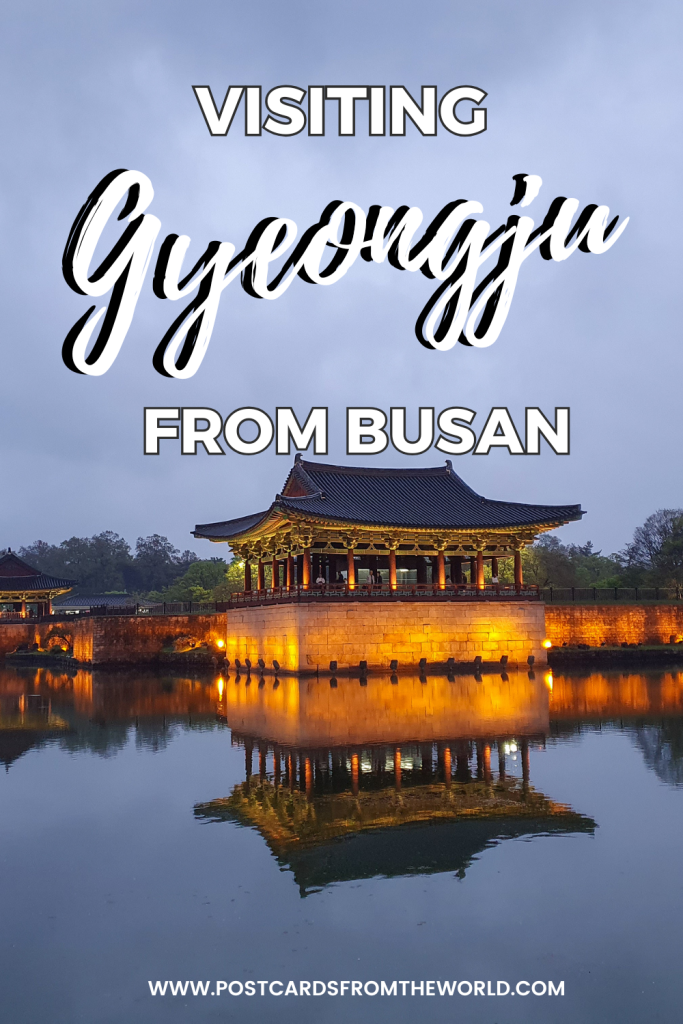
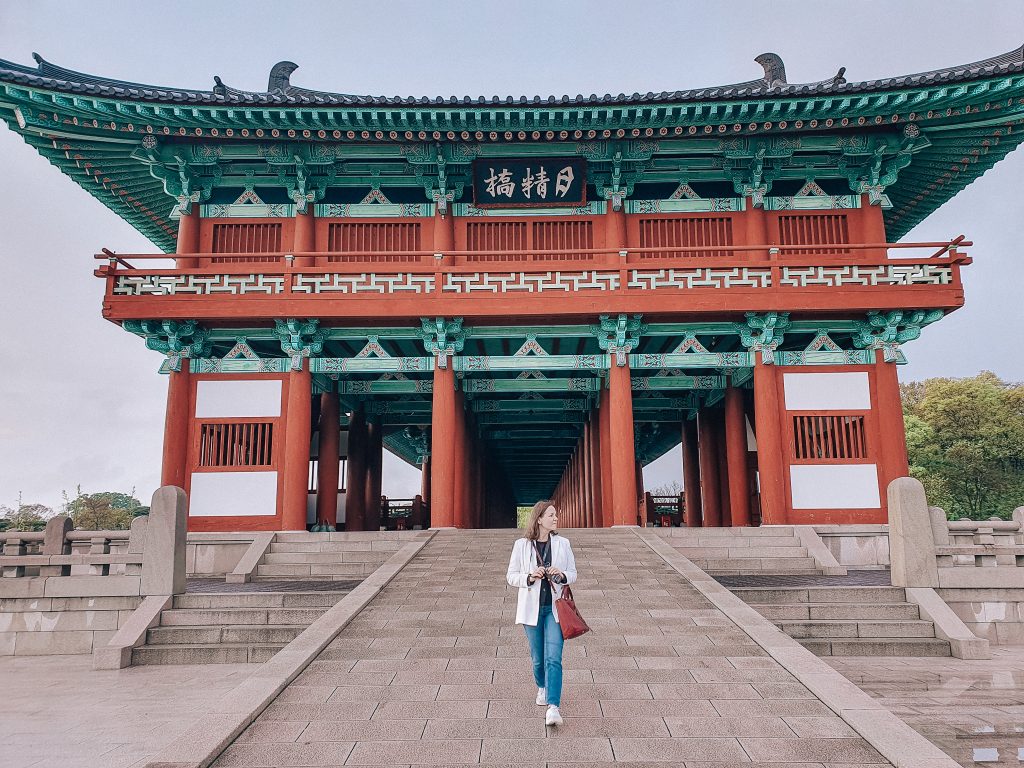
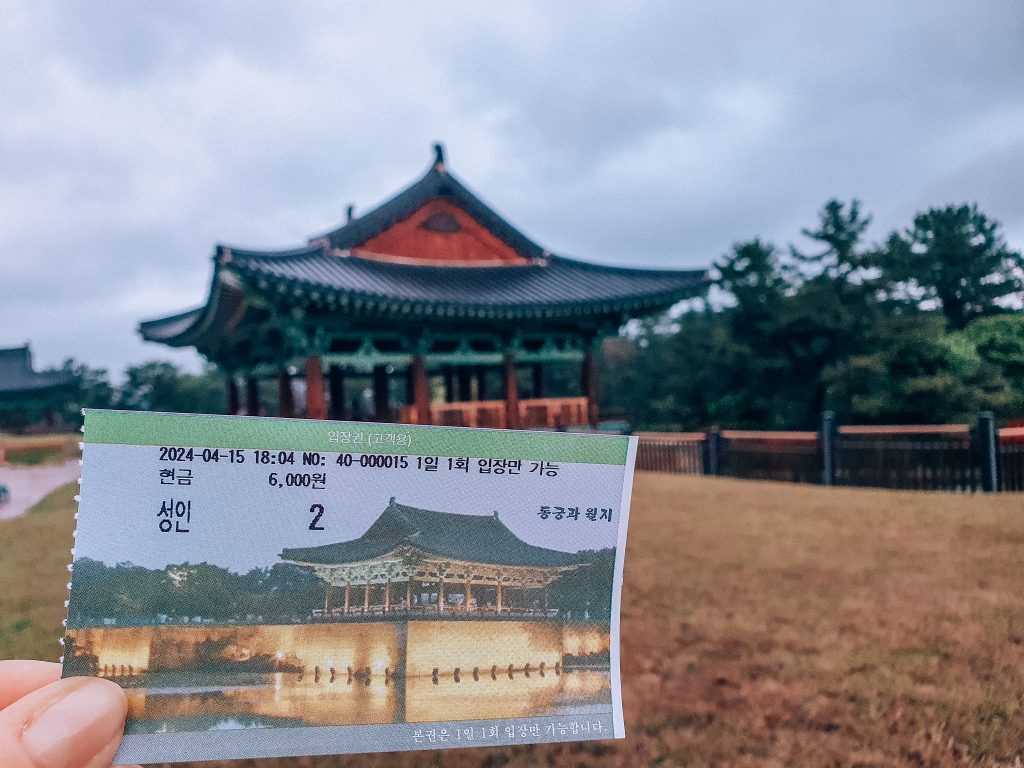
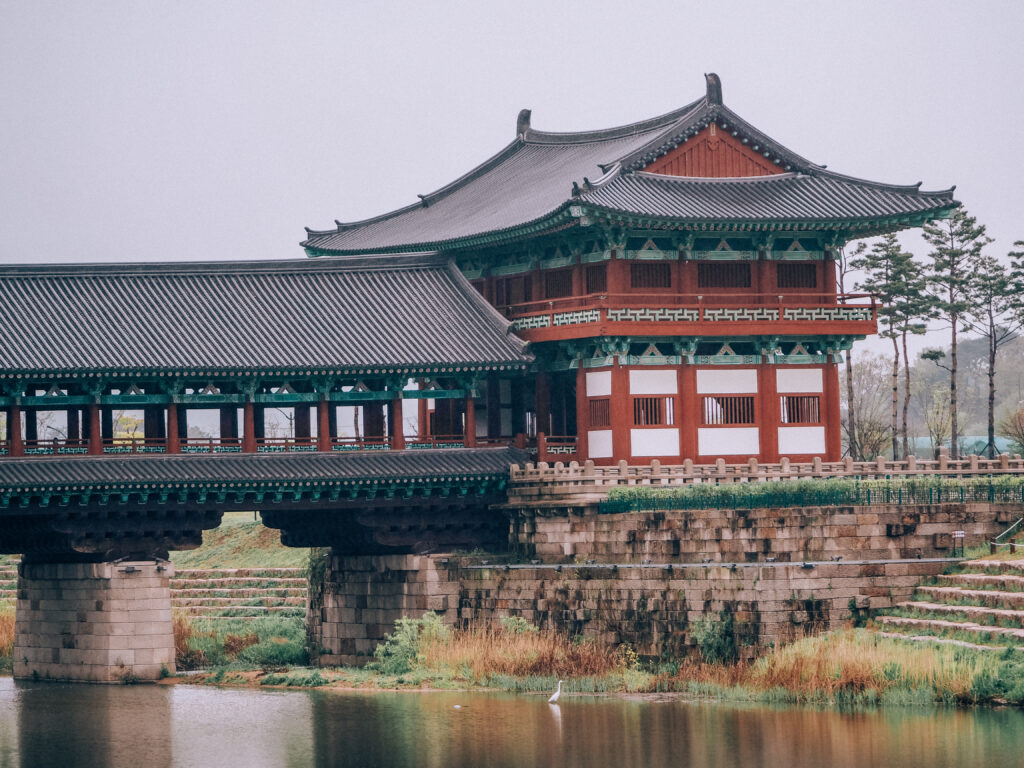
Donggung Palace and Wolji Pond (formerly Anapji) – A restored Silla Dynasty royal garden and pond, open until 10pm. The evening illumination here, pavilions reflected perfectly in the still water, is one of the most beautiful sights in the whole city, and arguably the best reason on this list to stay overnight rather than rush through on a day trip.
Gyeongju National Museum – Largely devoted to relics of the Silla Kingdom, this is a genuinely worthwhile stop if you want context for everything else you’re seeing around the city.
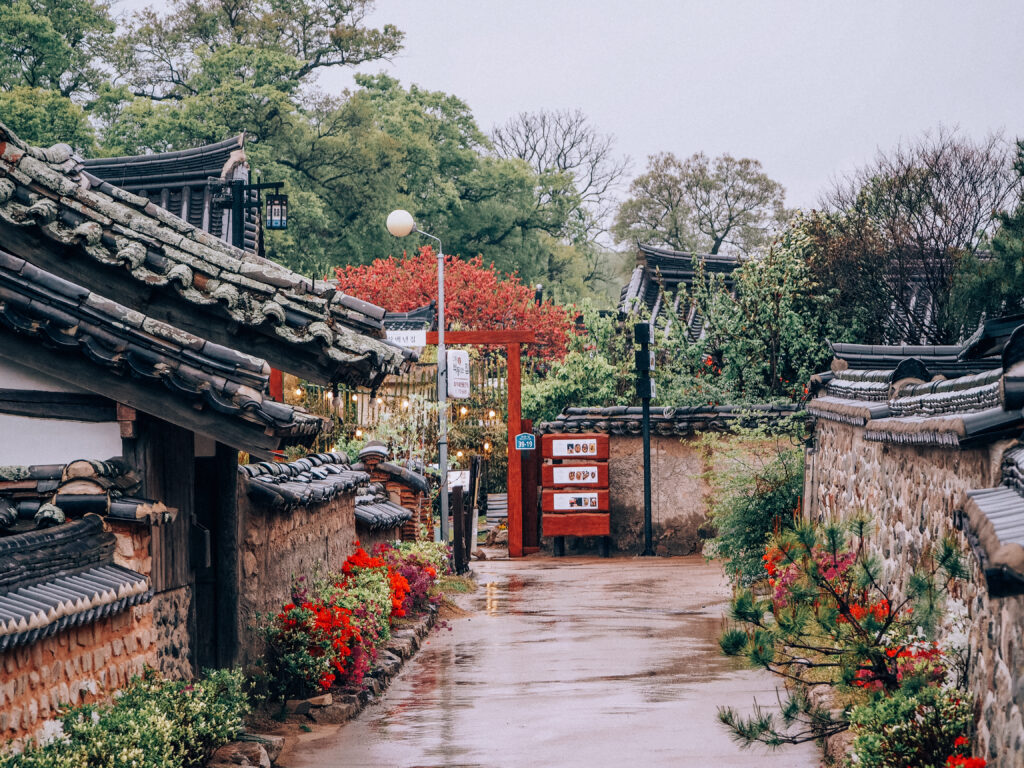
Gyeongju Gyochon Traditional Village (Hwangnidan-gil area) – Traditional architecture, local cafes, and slow streets, a nice contrast to the bigger historic sites and a good spot to wander without an agenda.
![Why we stayed overnight, and why you should too
Gyeongju absolutely works as a day trip from Busan, but having stayed overnight ourselves, I'd genuinely recommend it if you can manage the extra night. The evening light at Wolji Pond, the quieter, almost meditative morning atmosphere at Tumuli Park before the tour groups descend, these are experiences that simply require being there outside standard day-trip hours. Trying to fit Bulguksa, Seokguram, and the town centre sights into a single rushed day from Busan does the whole place a disservice.
Where to stay in Gyeongju
Gyeongju's accommodation generally clusters into a few distinct areas.
Old Town / Hwangnidan-gil area — The best base if it's your first visit and you want everything within walking distance: the tomb complex, Cheomseongdae, and Wolji Pond are all close by. This area has fewer big hotel brands than other Korean cities, so options can sell out, book early, especially around cherry blossom season (late March to mid-April) or autumn foliage (mid to late October).
For a genuinely memorable stay, consider a hanok, a traditional Korean guesthouse. Hwangnamgwan, sitting at the end of Hwangnidan-gil, is the largest hanok property in Old Town, built around a koi pond with a beautifully lit courtyard at night, and includes a free hanbok experience for guests. Siwoowadang, right in the heart of the hanok village, is another well-reviewed option, known for warm, family-run hospitality and genuinely high-quality rooms for the style. [Browse hanok stays in Gyeongju →]
One practical note if you go the hanok route: traditional Korean sleeping is on floor mats over heated ondol floors. Many hanoks now offer Western beds too, but not all do, worth checking the listing carefully if that matters to you.
Near Gyeongju Station / city centre — More conventional hotel options if a hanok isn't for you. Commodore Hotel Gyeongju is a reliable, well-located mid-range choice. [Browse hotels in central Gyeongju →]
Bomun Lake area — Gyeongju's resort cluster, roughly 4km from the historic centre, built around a lake with mountain views, golf courses and bigger hotel infrastructure. Hilton Gyeongju is particularly well-reviewed for families, with a kids' pool and babysitting services. Good if you want resort comforts alongside the history, though it's a short taxi or bus ride from the main sights rather than walking distance.
Near Bulguksa Temple — A quieter option if you'd rather wake up close to the temple itself, ideal for a slower, more reflective pace. Several properties here also offer seasonal temple stay programmes if you want a deeper cultural experience.](https://postcardsfromtheworld.com/wp-content/uploads/20240415_185131-1024x768.jpg)
Why we stayed overnight, and why you should too
Gyeongju absolutely works as a day trip from Busan, but having stayed overnight ourselves, I’d genuinely recommend it if you can manage the extra night. The evening light at Wolji Pond, the quieter, almost meditative morning atmosphere at Tumuli Park before the tour groups descend, these are experiences that simply require being there outside standard day-trip hours. Trying to fit Bulguksa, Seokguram, and the town centre sights into a single rushed day from Busan does the whole place a disservice.
Where to stay in Gyeongju
Gyeongju’s accommodation generally clusters into a few distinct areas.
Old Town / Hwangnidan-gil area — The best base if it’s your first visit and you want everything within walking distance: the tomb complex, Cheomseongdae, and Wolji Pond are all close by. This area has fewer big hotel brands than other Korean cities, so options can sell out, book early, especially around cherry blossom season (late March to mid-April) or autumn foliage (mid to late October).
For a genuinely memorable stay, consider a hanok, a traditional Korean guesthouse. Hwangnamgwan, sitting at the end of Hwangnidan-gil, is the largest hanok property in Old Town, built around a koi pond with a beautifully lit courtyard at night, and includes a free hanbok experience for guests.
Siwoowadang, right in the heart of the hanok village, is another well-reviewed option, known for warm, family-run hospitality and genuinely high-quality rooms for the style.
One practical note if you go the hanok route: traditional Korean sleeping is on floor mats over heated ondol floors. Many hanoks now offer Western beds too, but not all do, worth checking the listing carefully if that matters to you.
Near Gyeongju Station / city centre — More conventional hotel options if a hanok isn’t for you. Commodore Hotel Gyeongju is a reliable, well-located mid-range choice.
Bomun Lake area — Gyeongju’s resort cluster, roughly 4km from the historic centre, built around a lake with mountain views, golf courses and bigger hotel infrastructure. Hilton Gyeongju is particularly well-reviewed for families, with a kids’ pool and babysitting services. Good if you want resort comforts alongside the history, though it’s a short taxi or bus ride from the main sights rather than walking distance.
Use my favourite travel resources to plan your dream trips
- Booking.com for searching best prices on accommodation.
- AirHelp helps to get compensation for cancelled or delayed flights.
- Travel Payouts is my favourite platform for monetizing the blog.
- Discover Cars is a great website as they search both local and international car hire services, so you can choose the best deal for yourself. Make sure though, that the company has a good reputation and reviews.
- Get Your Guide is my place to go for searching and booking tours and excursions, especially when I travel solo.
- World Nomads and EKTA travel insurance. I like them because they have quite extensive coverage of different activities.
- WeGoTrip sends you audio guides to your mobile, so you can visit places while learning history and interesting facts easily and for little money.
- Go City is a perfect site for booking bucket list experiences and attractions all in one to avoid paying for multiple tickets. Easy and saves money. You can even save 50%.
- Trip Advisor– amazing for good quality recommendations.
- Skyscanner is a perfect website for searching flight routes and comparing prices.
- Airalo is my eSim choice for alternative data abroad.
Did you like the post? Pin it for later: