
The Best Whale Watching in Chiloé: Everything You Need to Know Before You Book
If whale watching in Chiloé was not already on your list, let me tell you why it should be. Chiloé is one of the few places in the world where you can watch whales and penguins on the same boat trip, in the same hour, from a small wooden boat bobbing on the Pacific while salty water splashes your face and everyone on board is grinning like an idiot. I know this because I was one of those people, and it was one of the happiest mornings of my travels in Chile.
I should give you some context. I have been chasing penguins and whales across South America for years with very mixed results. From the desert coast of Atacama to the cold winds of Patagonia, the list of fruitless trips is long and slightly embarrassing. I eventually found king penguins in Tierra del Fuego on a cold afternoon on the way to Ushuaia, which felt like a personal victory. But Chiloé was where everything finally came together at once: penguins, whales, and a blue sky that appeared right on cue just as we pushed off from the shore.
I would recommend to arrive for the early tour as it sometimes depends on weather conditions if they are able to work, so if you leave it till the end of the day you might get disappointed. Moreover seeing whales is not always possible, but they check if any whales have been spotted that day or not, so the chances are higher for tourists to see them too. Like everywhere, whale watching needs some patience.
Please note that this post included affiliate links, when you decide to purchase anything through these links I get a small commission at NO extra cost to you, it helps me to keep running this blog! I only promote products and services I use or would use myself. All images are the property of Postcards from the World and cannot be used without permission.
Where It Happens: Pingüinera Puñihuil
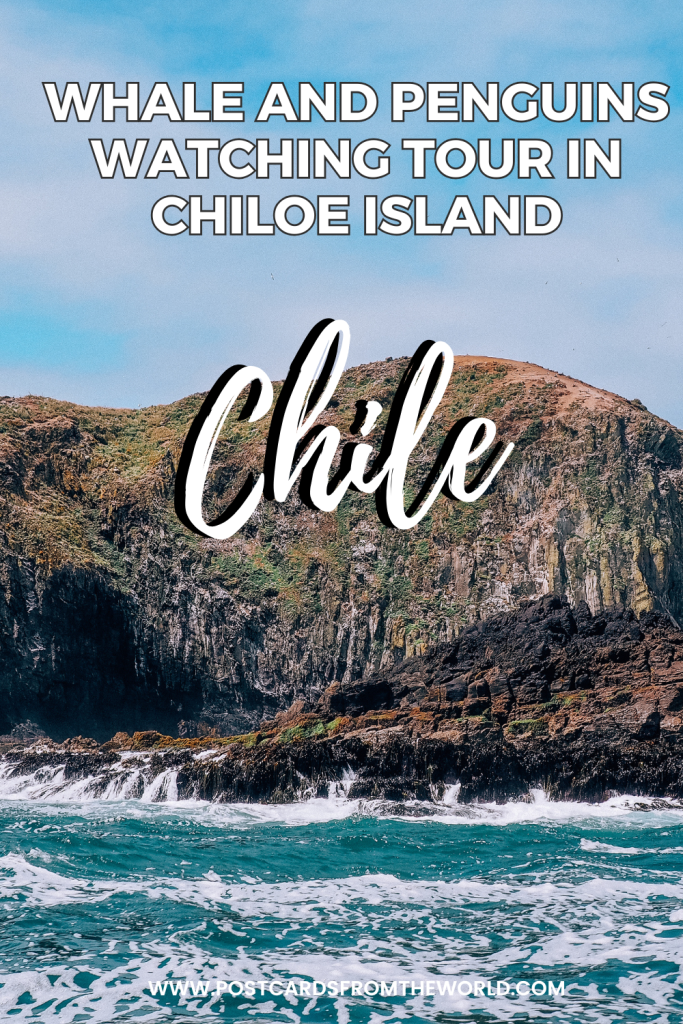
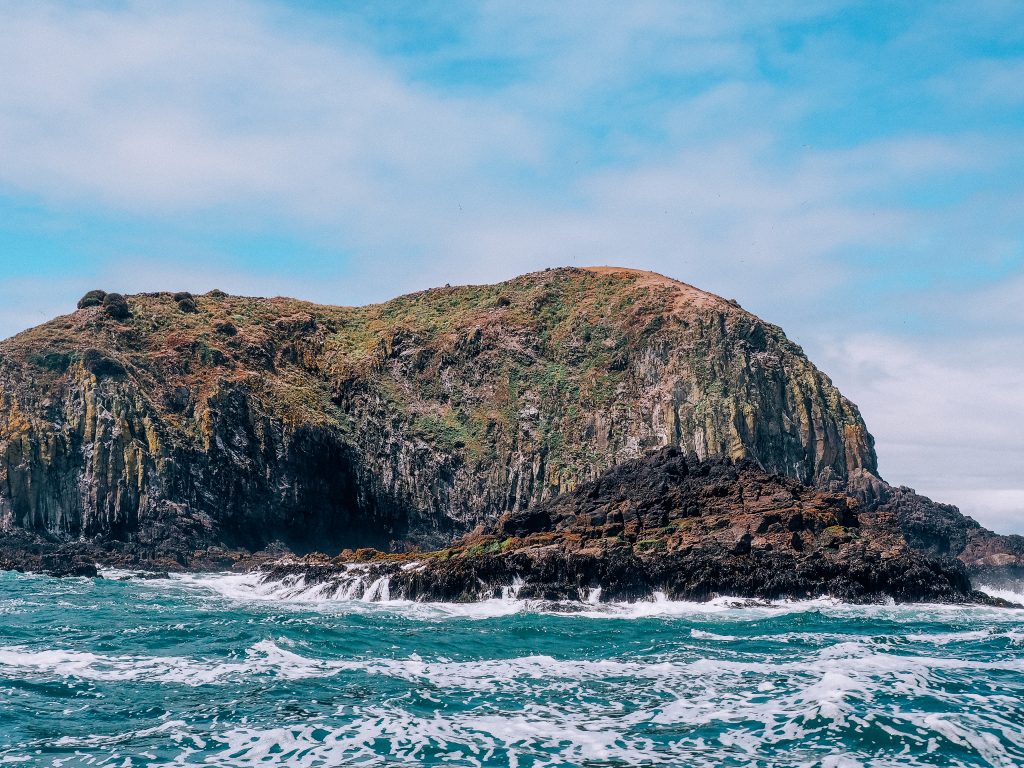
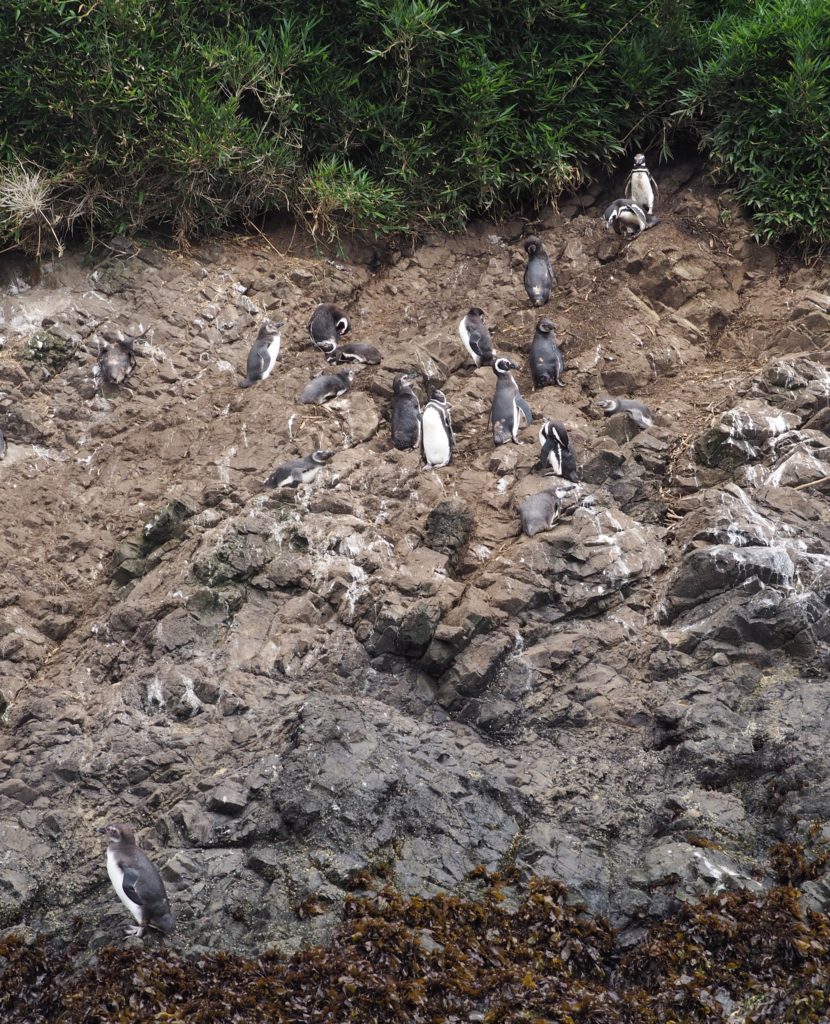
The place to go for whale watching and penguin spotting in Chiloé is Pingüinera Puñihuil, a beach in the northern part of the island about 28 km from Ancud. Three small rocky islands just offshore are home to colonies of both Humboldt and Magellanic penguins (one of the very few places in the world where both species nest together) and the surrounding waters are feeding grounds for whales that pass through the area.
It is not a polished tourist setup. The beach is wild and the boats are small and the whole thing feels appropriately unscripted, which is part of why it works so well.
We were driving to Ancud after a road trip through the lake region of Chile and the Bariloche area in Argentina. After the ferry crossing and a long day of driving, we checked into the most peculiar B&B I have ever stayed in- the owner had an extraordinary collection of Santa Claus figures in every conceivable shape, colour and size, covering every available surface. Hundreds of them, possibly more. We ate breakfast the next morning under the watchful eyes of approximately fifty ceramic Santas and then drove to Puñihuil, slightly unsettled but very excited.
You might also like:
- Ultimate Guide to San Pedro de Atacama: Insider Tips from a Long-Term Local
- Pan de Azúcar National Park Chile: The Complete Guide to This Atacama Hidden Gem
- An ultimate guide to Geyseres del Tatio in the Atacama- a wonder at high altitude.
- How to see La Mano del Desierto- A Rising Hand in Atacama
- How to Plan the Perfect Bariloche Trip: Things to Do, Best Time to Visit & Tips
- Road trip to Lago Chungará.
- Chilean bucket list. What to see and do in Chile.
- A quick guide to Valparaiso. Chilean city painted by a rainbow.
- Chiloé Island Road Trip: UNESCO Churches, Whales & Everything You Need to Know
How to Get to Pingüinera Puñihuil
By car — this is the easiest option and gives you the flexibility to go at whatever time suits you. From Ancud, take road W-20 (Camino Lechagua) for around 12 km, then turn onto road W-220. The second road is unpaved but perfectly manageable in a standard car. You will arrive at a beach with parking, where the boat tour operators are based.
By transfer from Ancud — if you are not driving, operators in Ancud offer transfers to Puñihuil for around CLP 15,000 per person, not including the boat trip itself. It is a straightforward option and worth considering if you are based in Ancud without a car.
By tour from Castro or other parts of the island — organised day tours that include transport from Castro and other towns are available and make sense if Puñihuil is one stop on a longer day of exploring the island. As we were driving ourselves, we got to the point by car, but still had to buy a tour without transport.
What Tours Are Available
When we arrived at the beach, someone from one of the boat companies spotted us before we had even parked properly and came over to explain the options. There are three tours available at Pingüinera Puñihuil:
Penguin tour — focuses on the penguin colonies on the three islands. Shorter and slightly cheaper.
Whale watching tour — focuses on finding whales in the surrounding waters.
Combined penguin and whale watching tour — both in one trip. This is the one to take. It costs a little more but the experience of doing both together in a single hour on the water is completely worth it.
We took the combined tour with Huaihuen III, one of the local operators. Tours depart daily at the following times:
11:30 / 13:15 / 15:00 / 16:45 / 18:30
My strong recommendation is to go on one of the earlier departures. Tours can be cancelled or shortened due to weather and sea conditions, and if you leave it until the last slot of the day and conditions deteriorate, you will be disappointed. Going early also gives you better light for photographs and more time to explore the beach and surrounding area afterwards.
What to Expect on the Water
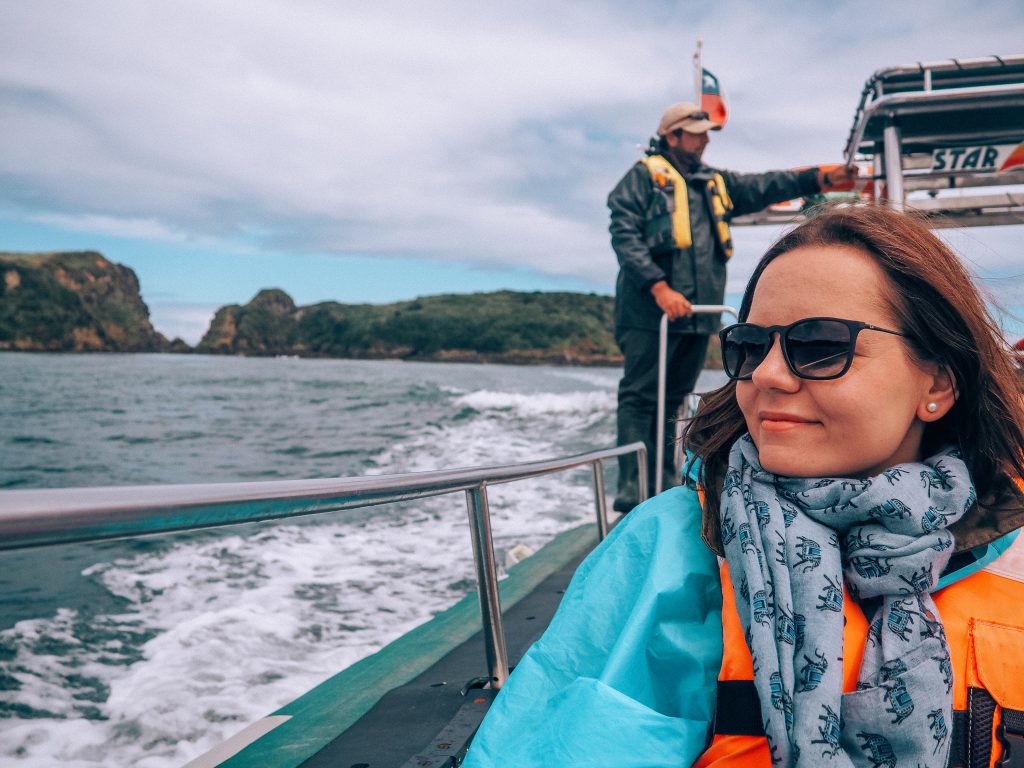
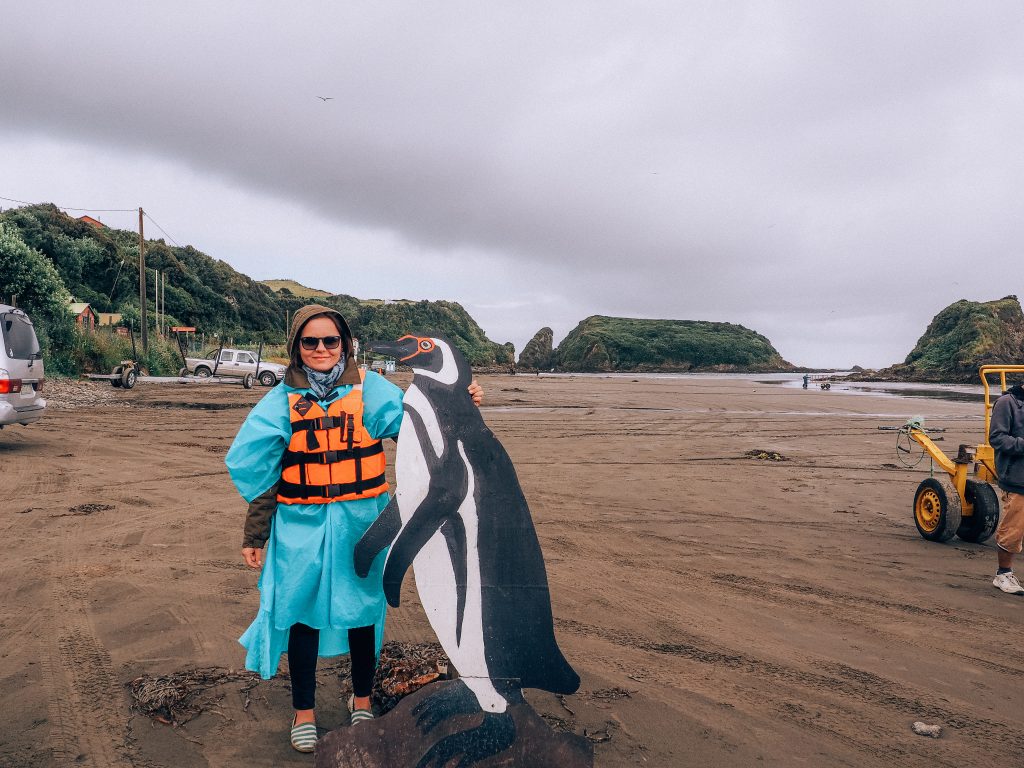
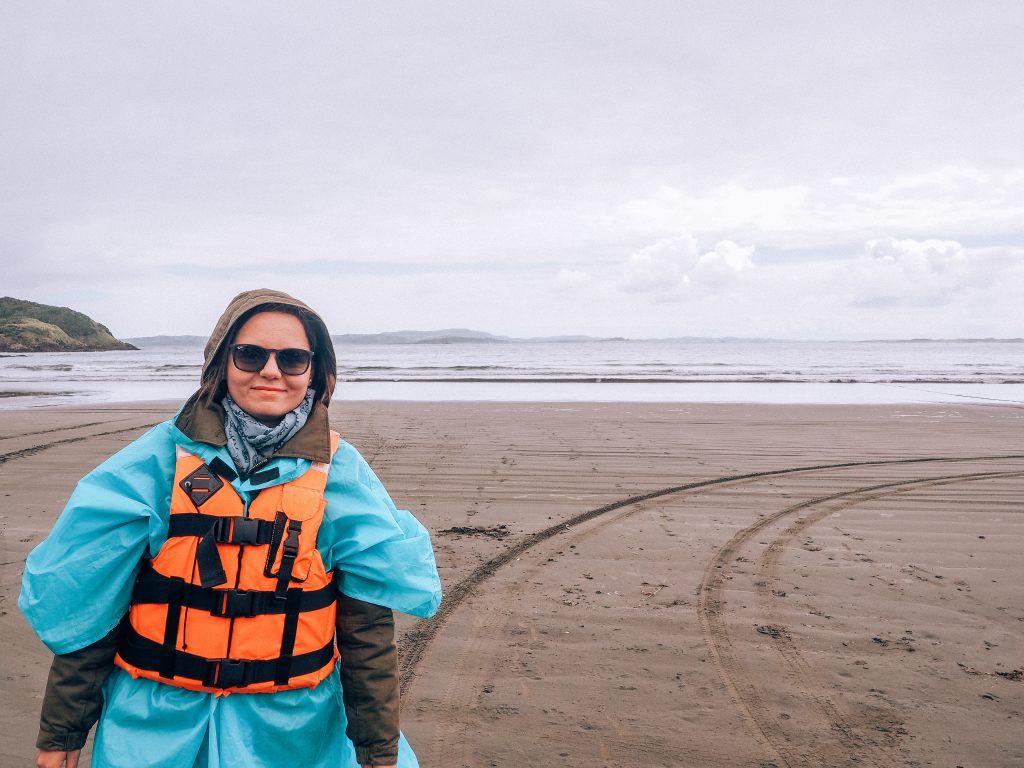
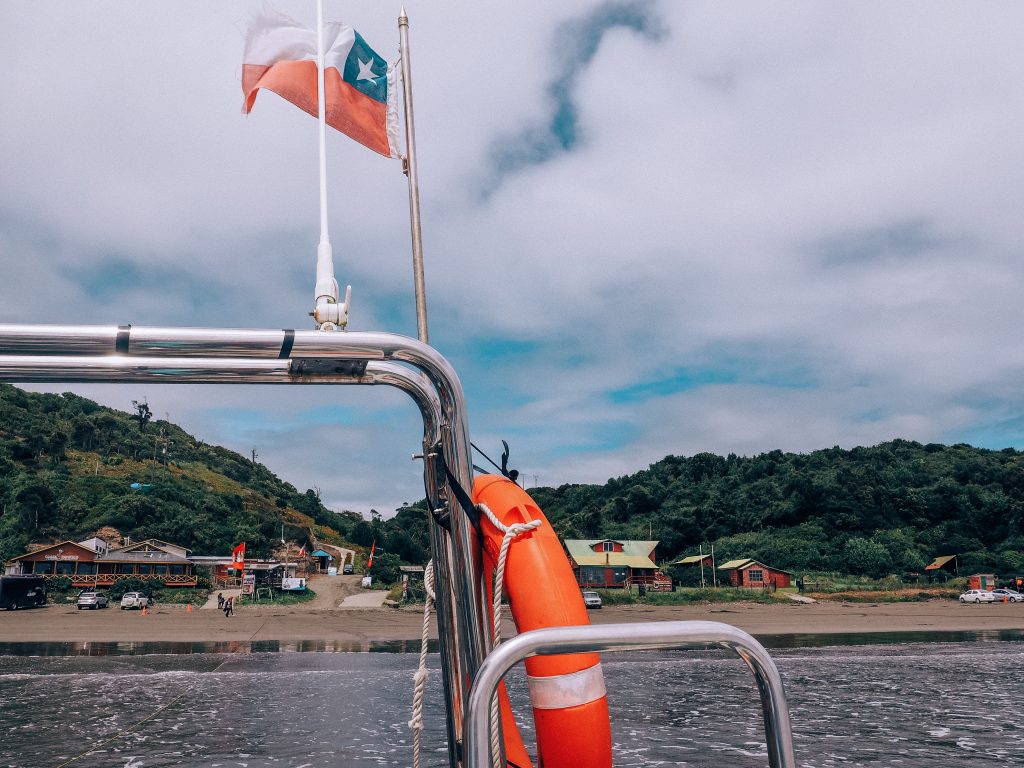
Before boarding the boat, we were transported from the beach to the water’s edge in a small cage on wheels pulled by a tractor — one of the more unexpected things I have experienced on a boat tour anywhere. Practical, slightly absurd, and oddly charming.
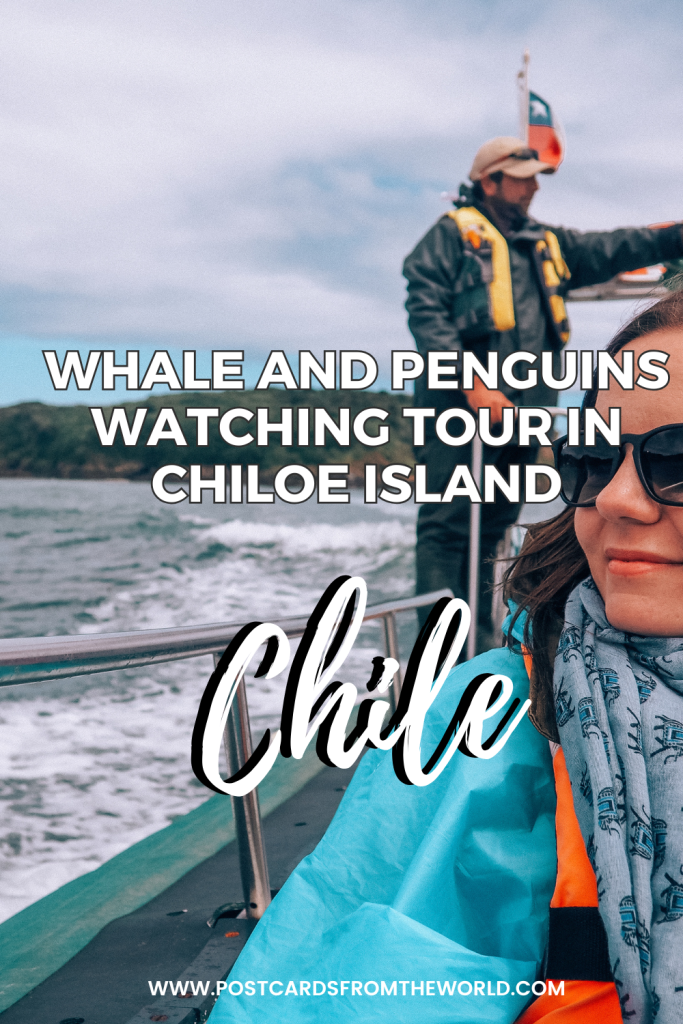
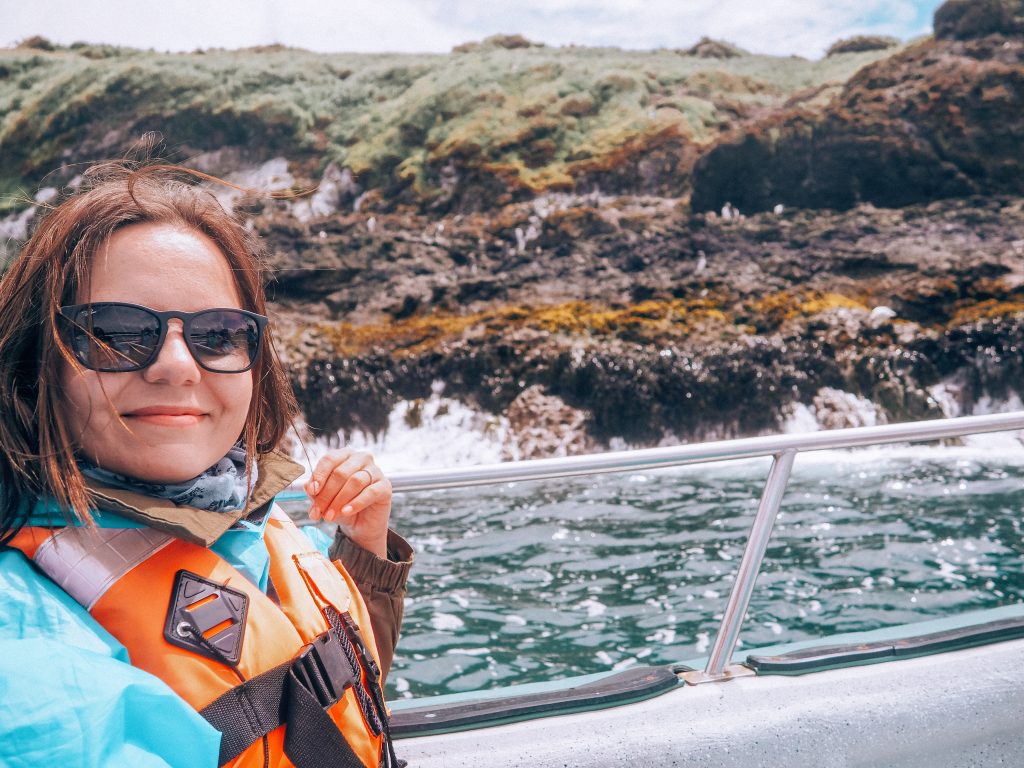
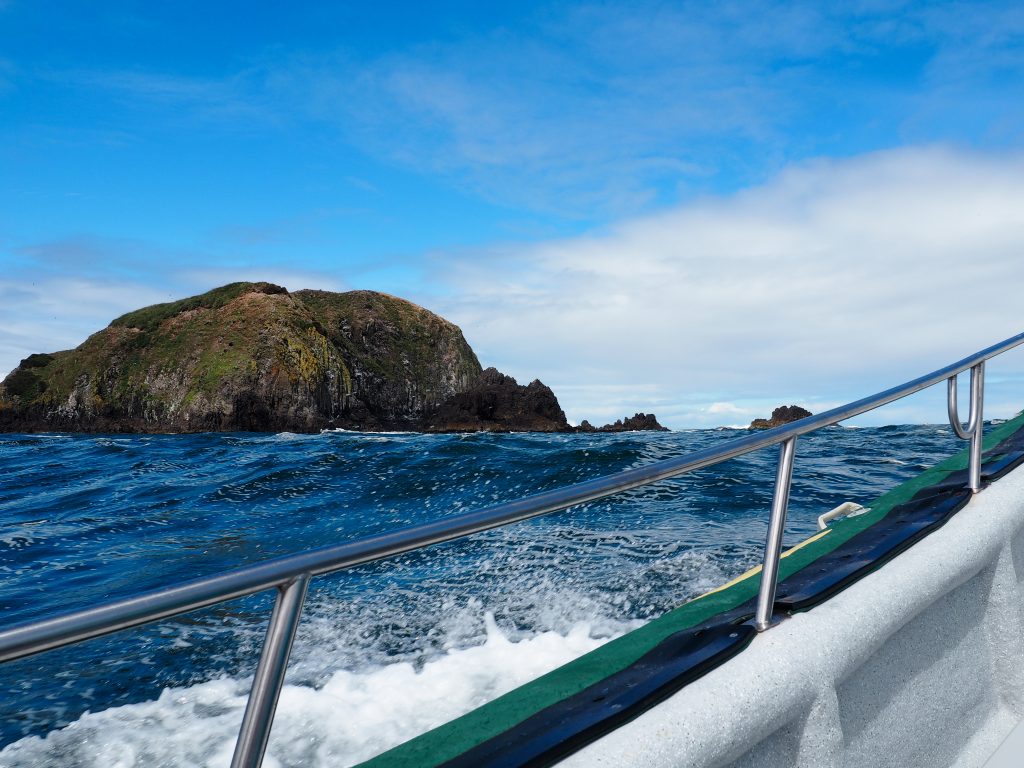
The waves were calm at first and then very quickly demonstrated that they were not going to stay that way. Salty water splashed over the sides of the boat, people laughed, someone shrieked. It was chaotic and brilliant.
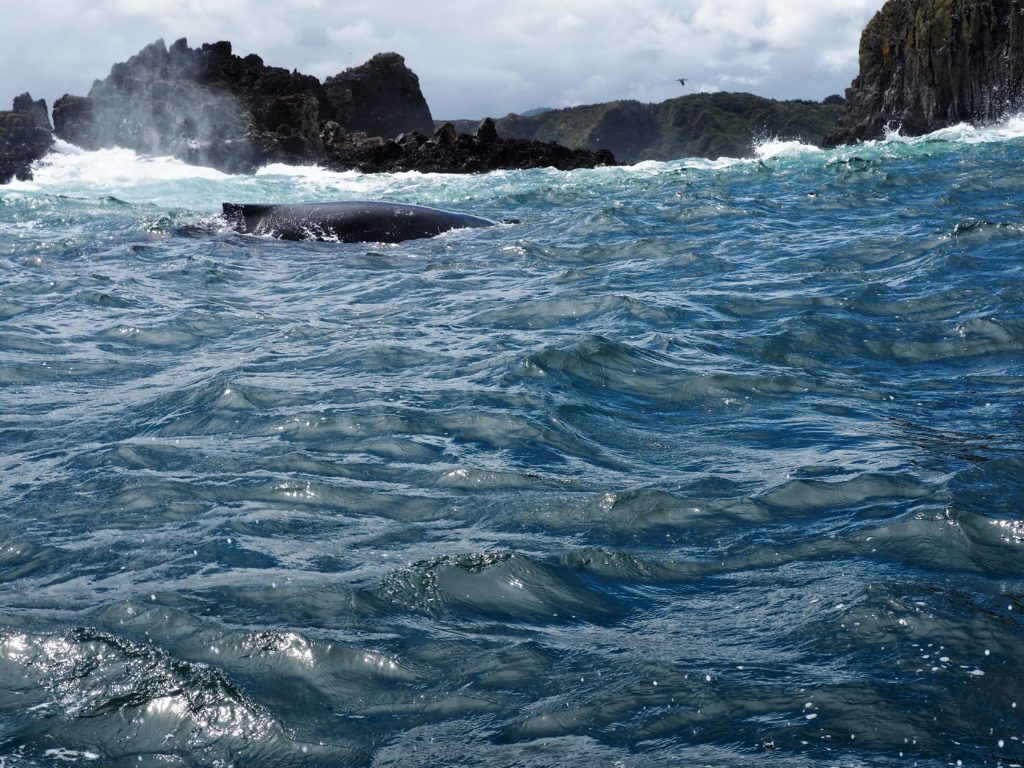
We had no idea that within minutes we would be sitting a few metres away from a whale. It surfaced close to the boat — close enough that the scale of it was genuinely startling — and stayed near us long enough for everyone to absorb what they were seeing. I had my camera ready and managed to take approximately three usable photographs before deciding that I would rather watch it properly than through a lens. I do not regret that decision at all. Some moments are better kept as memories than as files on a hard drive.
After the whale, the boat moved to the islands where the penguins live when they are not out hunting. We spotted many of them in the water, sleek and fast and completely transformed from the waddling, slightly clumsy creatures we watched hauling themselves up onto the rocks. Both versions are wonderful. We kept a respectful distance so as not to disturb the colony, which made the whole thing feel more like an encounter than a performance.
I was a very happy person on the boat ride back to the beach.
Use my favourite travel resources to plan your dream trips
- Booking.comfor searching best prices on accommodation.
- AirHelp helps to get compensation for cancelled or delayed flights.
- Travel Payouts is my favourite platform for monetizing the blog.
- Discover Cars is a great website as they search both local and international car hire services, so you can choose the best deal for yourself. Make sure though, that the company has a good reputation and reviews.
- Get Your Guide is my place to go for searching and booking tours and excursions, especially when I travel solo.
- World Nomads and EKTA travel insurance. I like them because they have quite extensive coverage of different activities.
- WeGoTrip sends you audio guides to your mobile, so you can visit places while learning history and interesting facts easily and for little money.
- Go City is a perfect site for booking bucket list experiences and attractions all in one to avoid paying for multiple tickets. Easy and saves money. You can even save 50%.
- Trip Advisor– amazing for good quality recommendations.
- Skyscanner is a perfect website for searching flight routes and comparing prices.
- Airalo is my eSim choice for alternative data abroad.
Tips for Getting the Most Out of Your Visit
Book in advance in high season — December to February is peak season on Chiloé and tours fill up. Booking ahead online saves you the risk of arriving at the beach and finding no availability.
Check whale conditions on the day — the operators check daily whether whales have been spotted in the area before tours depart. If whales have been active that morning, your chances of seeing them on an afternoon tour are considerably higher. Ask when you arrive or when you book.
Dress for the water not the beach — even on a warm day the wind on the water is cold and the spray is guaranteed. Bring a waterproof layer, secure any loose items, and if you are prone to seasickness take something before you board. The boat is small and the swell can be significant.
Arrive early — give yourself time to park, talk to the operators about conditions that day, and choose your tour calmly rather than rushing onto the first boat leaving. Twenty minutes of buffer makes the whole experience more relaxed.
Camera versus experience — I say this as someone who travels with a camera and uses it constantly. There are moments on a boat watching a whale surface a few metres away where the best thing you can do is put the camera down and just be there. You will remember it more clearly for it. Take a few shots and then let yourself be present. The whale does not wait for good framing.
Whale watching requires patience — sightings are never guaranteed. The operators do their best to find active areas based on that day’s reports, but the ocean makes its own decisions. Go with realistic expectations and the penguins alone will make the trip worthwhile. The whale, if it appears, is everything else.
When to Go for Whale Watching in Chiloé
Whale watching in Chiloé is best between December and April, when whale activity in the waters around the island is at its highest. The penguin colonies are present from October through March. For the best chance of seeing both on the same trip, aim for the overlap between November and March.
Where to Stay for Pingüinera Puñihuil
Ancud is the closest town to Puñihuil and the most practical base if you are specifically planning around this tour. It is a pleasant, manageable town with good accommodation options and far fewer tourists than Castro.
Castro is the island’s capital and the most popular base overall, better connected, more accommodation choice, and a good starting point for exploring the whole island. From Castro, Puñihuil is about an hour’s drive.
Did you like the post? Pin it for later: