4 Days in Shanghai: The City That Surprised Me More Than Beijing
I was just as excited about visiting Shanghai as I was about Beijing, if not more so. Before the trip, so many people had warned me that Beijing was overrated, too crowded, too heavy with history, not that nice. I loved Beijing anyway, a lot, actually, for exactly those reasons, and I’d go back in a heartbeat.
So many people told me how much they liked Shangahi and planted in me a seed of curiosity about my 4 days in Shanghai and what a completely different side of China might feel like.
Shanghai is really a special city. I imagined it to be a concrete jungle, but it wasn’t only that. Where Beijing carries the weight of imperial history in every street corner, Shanghai feels forward-facing, cosmopolitan, and restless in the best possible way.
The architecture alone tells a story: Art Deco buildings from the 1920s and 1930s sitting in the shadow of the world’s second-tallest skyscraper. Old French Concession streets lined with plane trees and boutique cafes, a ten-minute walk from one of the most dramatic modern skylines on earth. This is what probably surprised me the most- how green it was. I did not expect streets in the centre of the city to be lined with trees making some sort of tunnels over the streets and low rise cute buildings. It looked like many streets in European cities.
I spent 4 days in Shanghai and could have stayed longer. Actually, I wouldn’t mind to go again, maybe I’d take my mum next time (since we go somewehere new every year).
Here’s everything you need to know about making the most of your time in Shanghai.
Disclosure: Please note that this post included affiliate links, when you decide to purchase anything through these links I get a small commission at NO extra cost to you, it helps me to keep running this blog! I only promote products and services I use or would use myself. All images are the property of Postcards from the World and cannot be used without permission.
Getting around Shanghai: How it differs from Beijing
If you’re coming to Shanghai from Beijing , as I did, there are a few practical differences worth knowing upfront. I hope this tips are also useful for you if you go to Beijing afterwards instead.
The two cities are both modern, both well-connected, and both covered by excellent metro systems, but the way you pay and move around differs in ways that might catch off guard.
The metro payment system
In Beijing, you can tap a foreign contactless Visa or Mastercard directly at the metro turnstile, the first metro in mainland China to offer this (apparently). Shanghai works differently. The Shanghai Metro does not currently support the same tap-and-go contactless foreign card system that Beijing does. Instead, your options are:
- Alipay transit QR code — the easiest option if you’ve set up Alipay before arriving. Open Alipay, tap the transport icon, select Shanghai, and a QR code appears. Scan it at the turnstile to enter and exit. Fast, seamless, and the same system locals use.
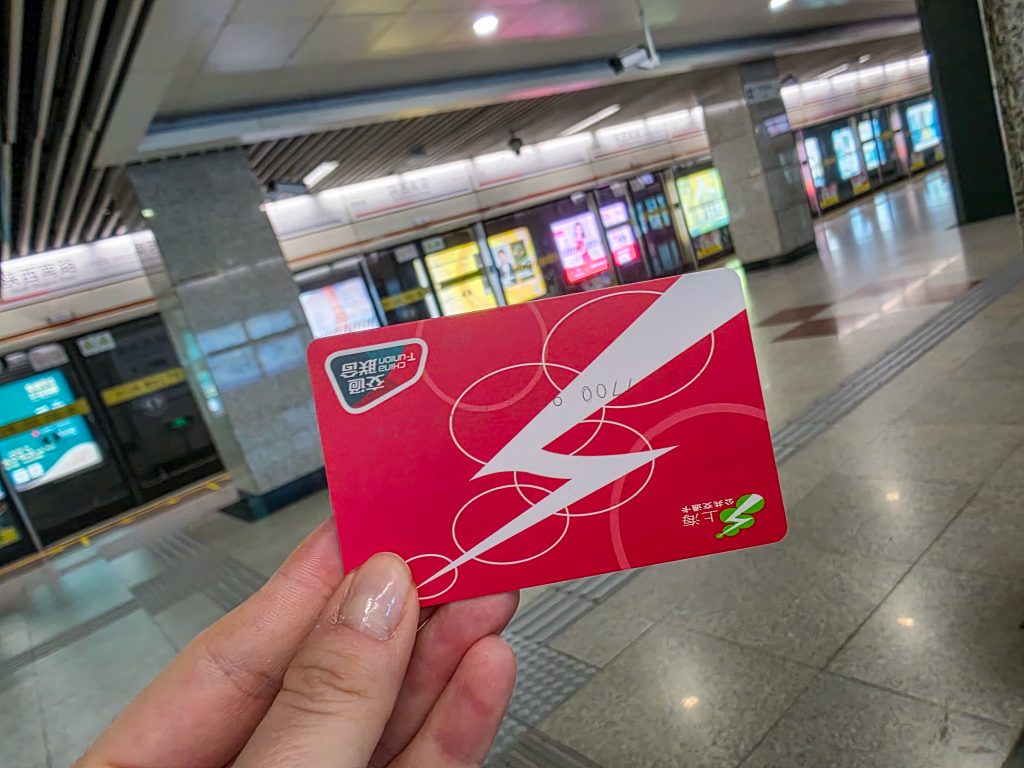
- Shanghai Public Transportation Card (SPTC) — a physical stored-value card similar to London’s Oyster or Tokyo’s Suica. It costs ¥20 for the card itself plus however much you load onto it, and works on the metro, buses, ferries and taxis. Look for the red “China T-Union” logo on the card, which means it works in over 330 cities across China, including Beijing, so if you buy it in Shanghai it’s also useful for any other cities you visit. Buy it at metro station service centres or convenience stores like FamilyMart and Lawson.
- Day and multi-day passes — a one-day unlimited metro pass costs ¥18 and a three-day pass ¥45, both valid on all Shanghai Metro lines. Useful if you’re planning to move around a lot.
- The Shanghai Metro app (DADUHUI) — the official metro app, which supports Alipay and WeChat Pay directly and is the most commonly used option by locals. Foreigners can use it by linking an international Mastercard through the app. My honest advice: if you’ve already set up Alipay for Beijing, just use the transit QR code function. It works immediately, requires no new card or app, and is genuinely the smoothest option for a short visit. This is how I managed around Shanghai.
- The scale difference. Shanghai’s metro is the world’s largest by track length, spanning over 800 kilometres. It’s enormous. The good news is that the tourist areas are fairly well concentrated, and you can cover most of what’s on this list using a handful of lines. The metro map looks intimidating at first glance, but in practice you’ll use maybe four or five lines across four days.
- Didi works exactly the same as in Beijing, accessible through Alipay. Use it for anything outside the metro’s reach or when you’re tired and the idea of another transfer feels like too much. Shanghai traffic can be significant during peak hours, so factor that in if you’re trying to reach somewhere by a specific time.
- Getting between Puxi and Pudong. Shanghai is divided by the Huangpu River into two distinct areas: Puxi (the historic west bank, where most of the Old Town, French Concession and Bund areas are) and Pudong (the modern east bank, home to the famous skyline of skyscrapers). Several metro lines cross between the two, and there’s also a tourist ferry that connects them directly across the river, which is a genuinely pleasant way to make the crossing while taking in the view. The ferry takes about 10 minutes and costs a few yuan.
- Security checks. Unlike Beijing, where security checks near major attractions can be lengthy and intensive, Shanghai’s day-to-day security checks are lighter and less frequent. You’ll still go through bag X-ray at metro stations, but the process is noticeably faster and less involved than what you’ll have experienced at Tiananmen Square or around the Forbidden City. It’s one of the ways Shanghai simply feels easier to navigate on a short trip.
Maglev Train
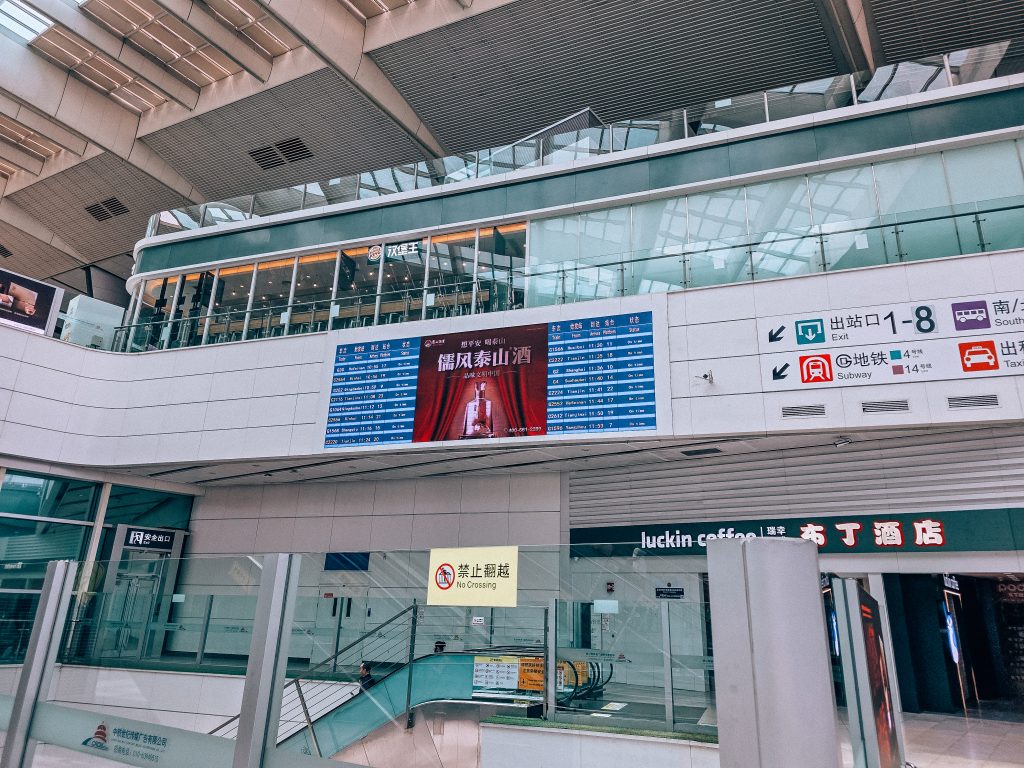
Maglev train– If you’re flying into or out of Shanghai via Pudong International Airport, take the Maglev. Full stop. The Shanghai Maglev is the world’s fastest commercial passenger train, hitting up to 431 km/h and covering the 30 kilometres between the airport and Longyang Road Station in roughly 8 minutes. The ride is eerily quiet, you barely feel the acceleration until you glance at the speedometer climbing past 300 km/h and realise you’re moving faster than almost anything else on earth. It’s one of those travel moments that genuinely makes you stop and think about what humans have built.
A one-way ticket costs ¥50, dropping to ¥40 if you show your same-day boarding pass. One practical note: the Maglev terminates at Longyang Road, not the city centre, so you’ll need to transfer to metro Line 2 or grab a Didi for the remaining stretch to wherever you’re staying. It adds a step, but the experience more than justifies it. Sit in the front carriage if you want the best view of the speedometer.
A few practical notes specific to Shanghai
- Humidity and rain in June: I visited in June, and Shanghai was humid and rainy for stretches of my stay. It was manageable and didn’t stop me from doing anything on my list, but a compact umbrella is genuinely essential in summer rather than optional, and light breathable clothing matters more here than in Beijing’s drier heat. Luckily, my hotel provided umbrellas, so I didn’t need to worry about buying one.
- Tipping: not customary in China generally, and Shanghai is no exception. You don’t tip in restaurants, taxis, or hotels. If you want to acknowledge good service, a genuine thank you is the right move.
- English: more widely spoken in Shanghai than in Beijing, particularly in the French Concession, Xintiandi and the Bund area, and in international hotels and upscale restaurants. You’ll still need a translation app for local restaurants and street food, but the language barrier is generally less acute than in the capital.
- Museums: I didn’t visit museums on this trip, but for anyone who wants to add culture beyond the sights above, the Shanghai Museum (free, People’s Square) and the Power Station of Art (contemporary art, converted power station near the Bund) are the two most consistently recommended. Both are worth knowing about even if you’re short on time.
Where to stay in shanghai
I stayed at Moller Villa Hotel in Jing’an, and it was one of the best hotel decisions I’ve made for my 4 days in Shanghai. .
When you have limited vacation days, the hotel isn’t just where you sleep. It’s part of the experience itself, and choosing somewhere genuinely special rather than a reliable but anonymous high-rise can be the difference between a trip you remember and one that blurs into all the others. Moller Villa is the kind of place that stays with you.
The building is extraordinary: a fairy-tale Nordic castle built in 1936 by Swedish shipping magnate Eric Moller, set in its own private garden right in the middle of one of Shanghai’s most vibrant, fast-moving districts. Walking through the gates and into that garden after a day in the city feels like stepping into a completely different world, which in a metropolis of 24 million people is not something you expect. It shouldn’t exist here, and that’s exactly what makes it so memorable. So many tourists wanted to enter to take pictures (but are not allowed in), but even if you don’t tstay there, you can walk up to the overpass nearby to get an excellent view.
Only 53 rooms, which means it feels intimate rather than corporate. The rooms are beautiful, genuinely so, the kind of interiors that make you want to spend an extra hour over breakfast rather than rushing out to the next sight. And the breakfast itself was excellent, another small thing that matters more than it sounds when you’re making the most of every day you have.
It’s not on the Bund, and it’s roughly 25 to 30 minutes on foot from the waterfront, though the metro is close. But the French Concession is within easy walking distance, Xintiandi is nearby, and Tianzifang and Nanjing Road are both easily reachable. For anyone spending real, hard-earned vacation days on Shanghai, this hotel is worth every yuan.
If you specifically want to be on the Bund itself, The Waldorf Astoria Shanghai is one block from the waterfront and offers palatial Art Deco interiors and five restaurants. The Peninsula Shanghai, in the 1928 North China Daily News building at the northern tip of the Bund, is consistently cited as the benchmark for luxury on the waterfront, with a rooftop bar and what many consider the finest afternoon tea in China.
Food in Shanghai
Shanghai’s food is extraordinary, and significantly different from Beijing’s. Where Beijing leans on hearty northern Chinese cuisine, roast duck, dumplings, noodle dishes and lamb, Shanghai’s is lighter, sweeter, more coastal, and more internationally influenced.
Xiaolongbao (soup dumplings) are the essential Shanghai dish. Thin-skinned, filled with seasoned pork and hot broth, eaten carefully by biting a small hole to release the soup before eating the rest. The area around Yu Garden has several well-known spots, and Din Tai Fung (Taiwanese chain with Shanghai outposts) is one of the more reliable options for a first-timer who wants a guaranteed good version without navigating a purely Chinese-language menu.
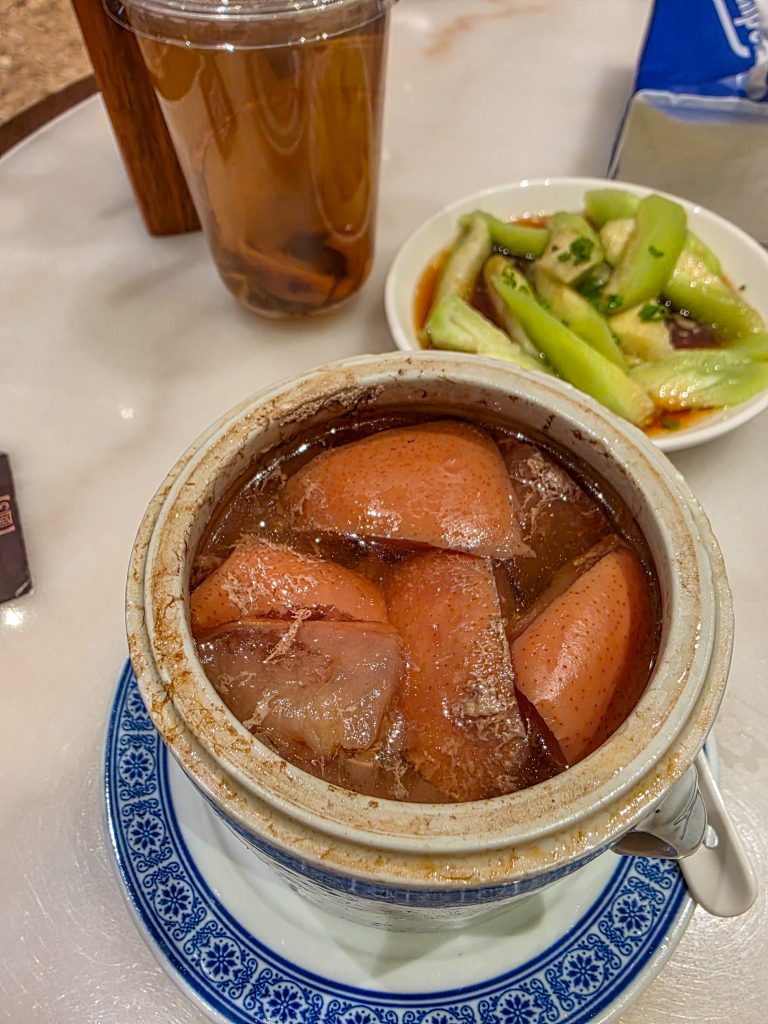
Cantonese food is also excellent in Shanghai, with a higher concentration of quality Cantonese restaurants than you’d find in most Chinese cities outside Guangdong. Worth seeking out if this is on your list. I had a few really unique dishes (like beef soup with pears) in Shanghai, very different from anything I have ever tasted.
The pastries deserve a section of their own.
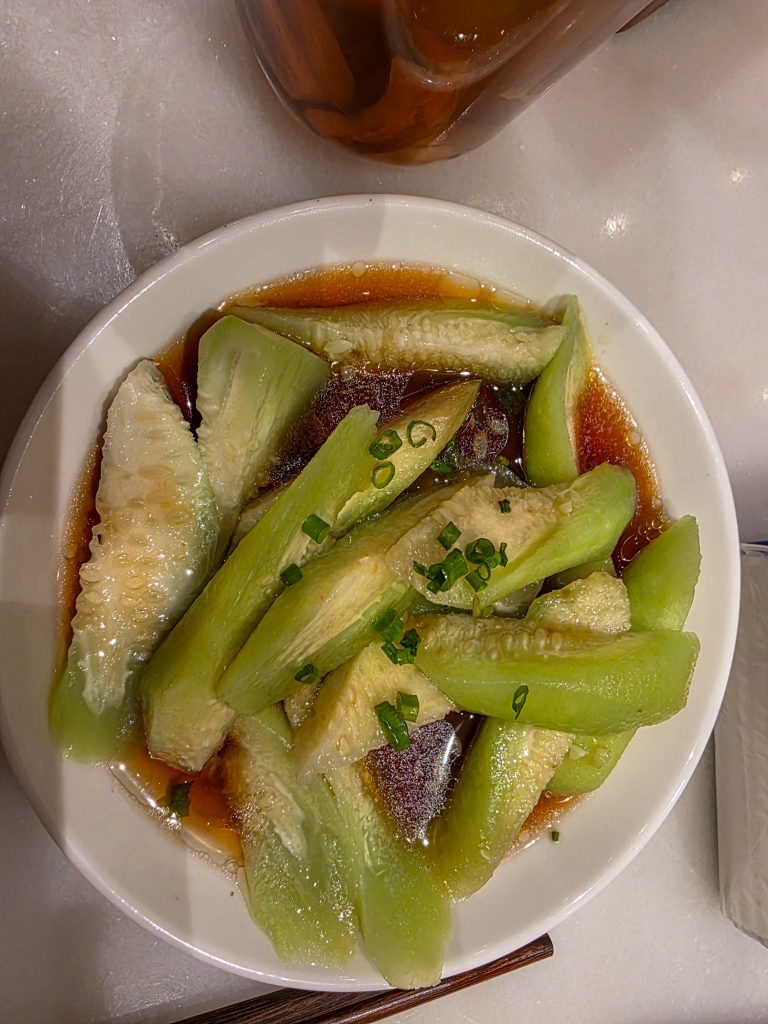
Shanghai’s pastries
I visited several pastry shops in Shanghai and they turned out to be some of the best pastries I’ve eaten anywhere in the world. And I am not a big fan of pastries, I hardly ever eat any. Shanghai has developed an extraordinary pastry culture that blends traditional Chinese flavours with French technique in ways that feel genuinely original rather than imitative.
A few pastry shops worth knowing about:
Shen Da Cheng — on Nanjing Road, open since 1875, and still one of the most local-feeling pastry stops in central Shanghai. Famous for traditional chewy glutinous rice pastries filled with red bean paste, including the classic 条头糕 (long rectangular mochi-style pastry) and 青团 (green mugwort pastry with sweet or savoury filling, particularly popular around spring). Not sweet and heavy in the Western sense, light, precise, and genuinely delicious. Recommended by locals and consistently highly reviewed.
Park Hotel Deli — famous for its butterfly pastries, light, buttery, crispy palmier-style biscuits that draw long queues. One person is typically limited to six packs per visit. The queue moves faster than it looks. Located on Huanghe Road, near People’s Square, making it easy to combine with a walk down Nanjing Road.
Pain Chaud — a French-influenced local chain with multiple locations, well-reviewed for croissants and café items, consistently mentioned by both locals and expats as one of the better everyday pastry options in the city.
BasdBan — if you want something more creative and contemporary, BasdBan’s croissants are widely considered among the best in Shanghai, with an inventive rotating menu of flavours. Expect a queue.
Some of the best things I ate were from shops I stumbled into rather than planned. Budget time to simply walk through the French Concession and Old Town with no specific destination and see what catches your eye. The standard is high enough that it’s difficult to go badly wrong.
See also:
- Where to Stay in Busan: The Best Neighbourhoods for a Short Trip
- Where to Stay in Seoul for First Time: Best Neighborhoods and Hotels for Every Style
- 10 Days in South Korea in Spring: The Complete First-Timer’s Itinerary
- 10 cool photo spots in Hong Kong: a perfect place for travellers and photographers
- 1 day in Macau: what to see and how to get there from Hong Kong
- Visiting the Forbidden City and Tiananmen Square in beijing: Everything You Need to Know
- Travelling to China for the First Time: Why Beijing and Shanghai Should Be on Your List
- Hiking the Great Wall at Jinshanling: Why I Chose the Crowd-Free Section (And What to Expect)
- 3 Days in Beijing for First Timers: An Honest Guide to China’s Ancient Capital
- Xuyan Shanghai Immersive Tang Dynasty Banquet Review: The Most Unforgettable Evening in China
- Zhujiajiao Day Trip from Shanghai: From Skyscrapers to Ancient Canals in One Metro Ride
What to see in 4 days in Shanghai
The Bund and the waterfront
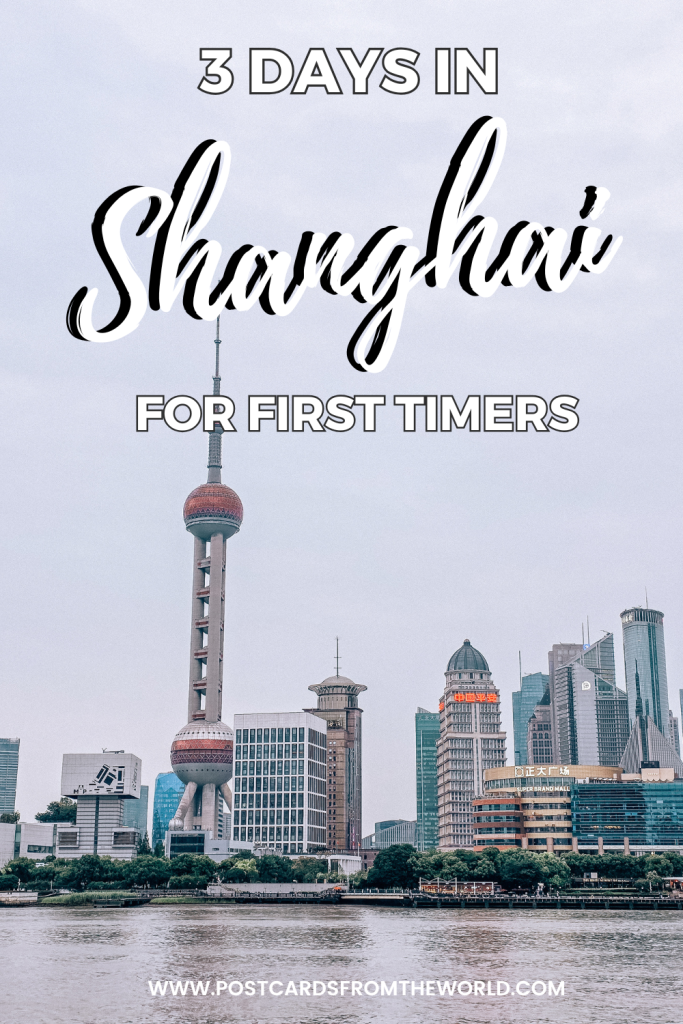
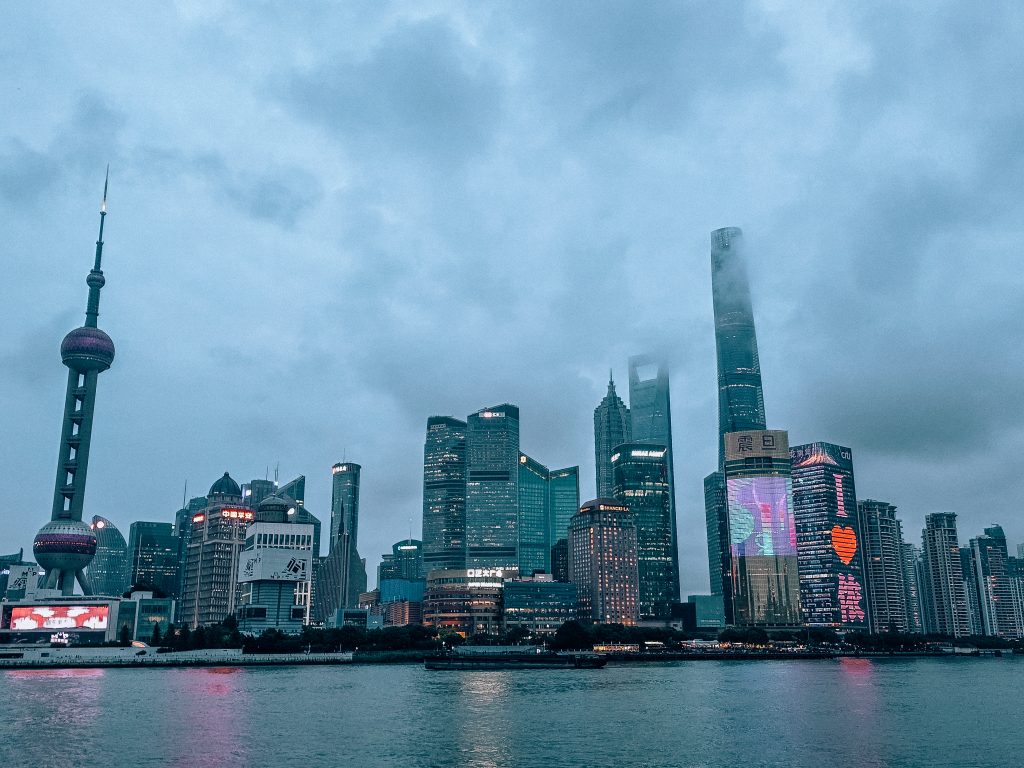
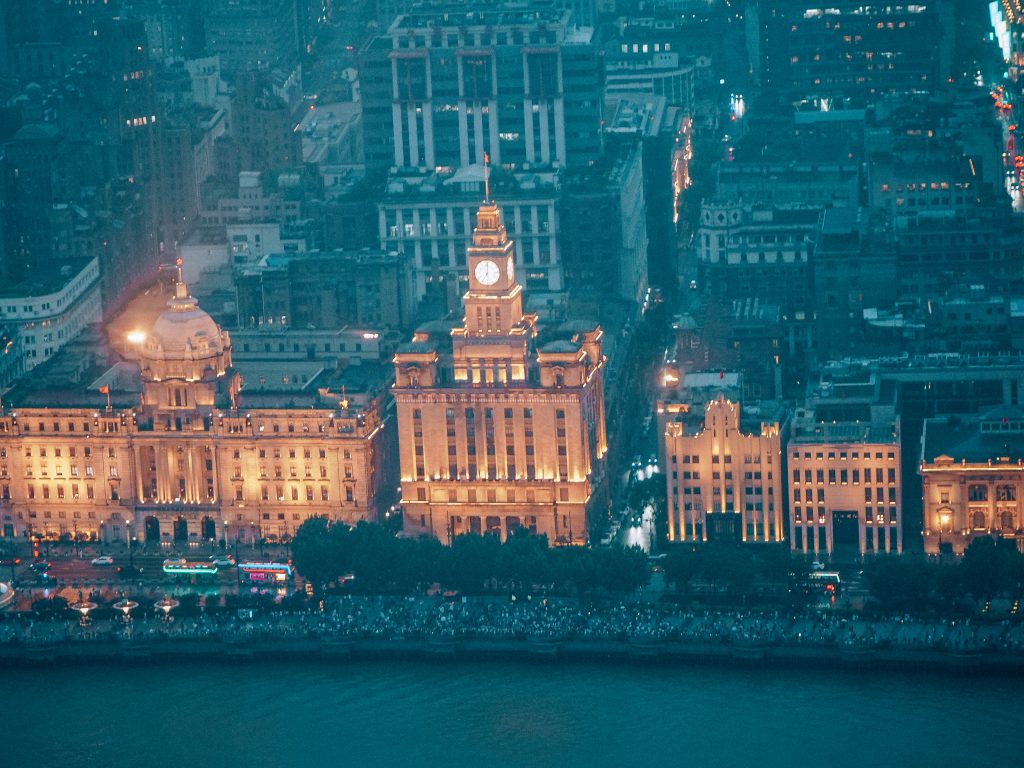
The Bund is the obvious starting point, and rightfully so. The stretch of early 20th-century European-style buildings along the western bank of the Huangpu River, with the Pudong skyline dramatically framed on the opposite bank, is one of the genuinely iconic views of Asia.
Go in the evening when both sides are lit up and the contrast is at its most dramatic, but also go in the morning when the crowds are thinner and you can actually walk along the promenade at a reasonable pace.
The Bund sits in the Huangpu district and connects naturally to Nanjing Road East, which leads you directly into the heart of the city.
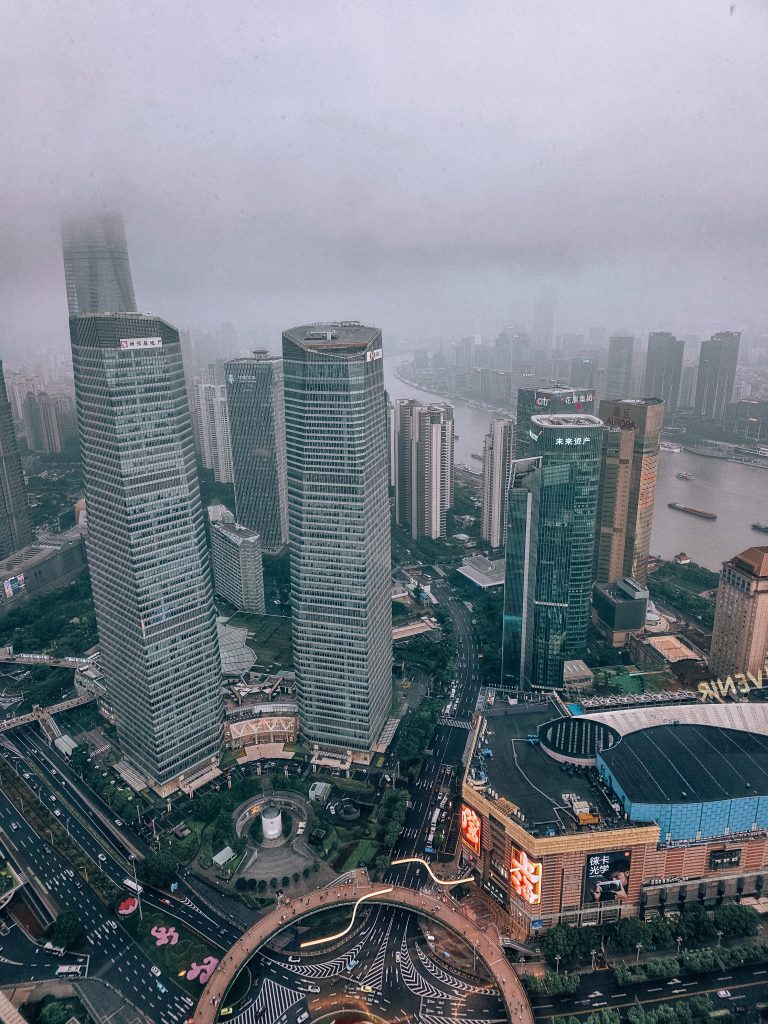
When I visited in June, it was gloomy most of the time with some rain, so the the whole skyline was either barely visible or just dimply grey. A bit disappointing, but it is what it is. I guess it is part of the charm of Shanghai.
Nanjing Road
Shanghai’s famous pedestrian shopping street runs east to west from the Bund toward People’s Square and beyond. It’s busy, loud, and completely unsubtle, not the place to come for quiet exploration, but an essential slice of Shanghai’s commercial energy. Walk it at least once, particularly in the evening when the neon comes on. Several of the city’s most famous pastry and street food spots are dotted along or just off this road.
People’s Square and the surrounding area
The area around People’s Square is central Shanghai’s civic hub. The Shanghai Museum, one of the city’s best and free to enter, sits here, with a permanent collection spanning ancient bronzes, ceramics, calligraphy and jade across several floors. Worth knowing about even if you don’t go in, since it’s adjacent to most of what you’ll be walking through anyway. The Shanghai Urban Planning Exhibition Center is also here for anyone interested in seeing how the city has transformed and where it’s headed.
Yu Garden and the Old Town
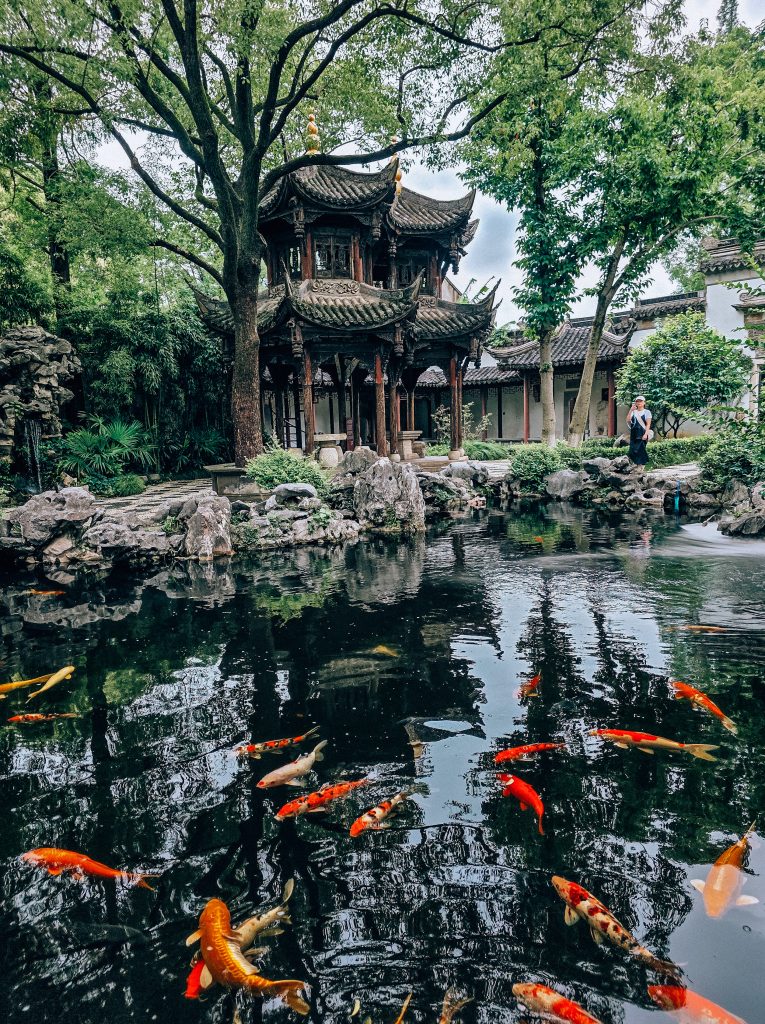
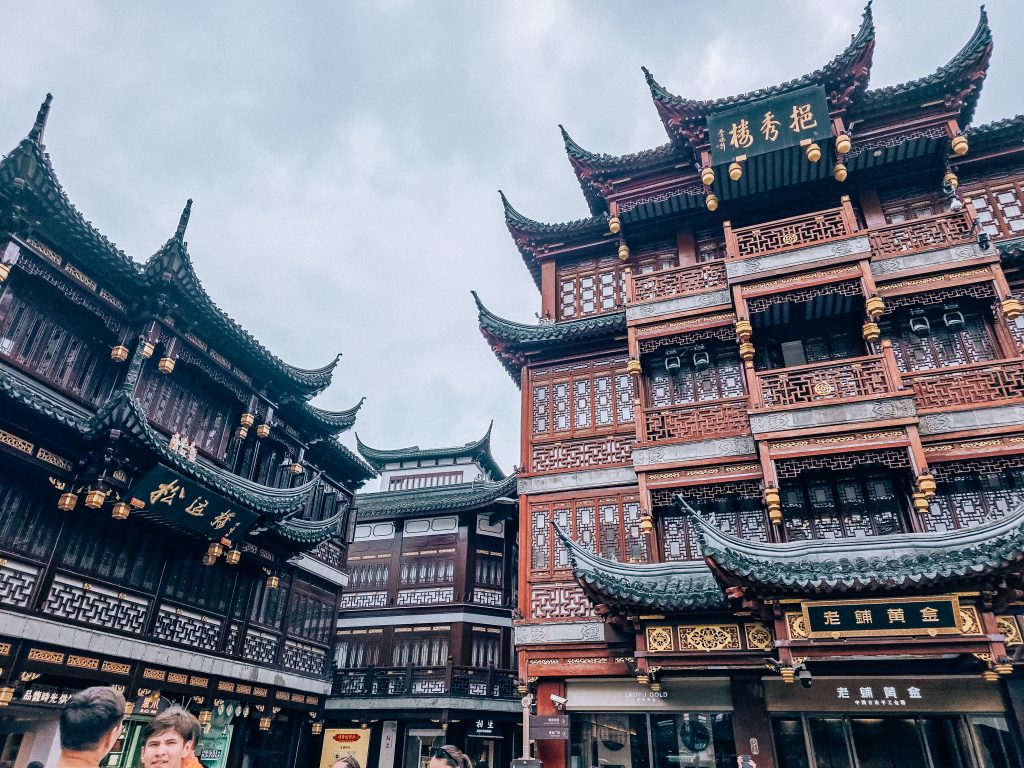
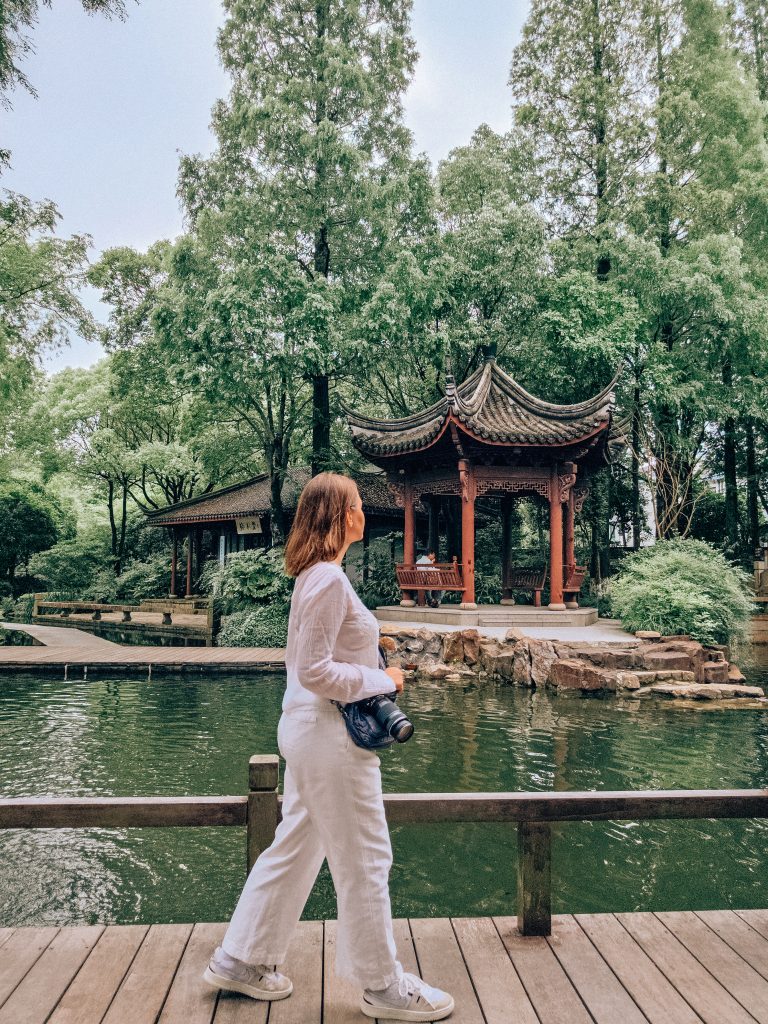
Yu Garden (Yuyuan Garden) is a classical Chinese garden built during the Ming Dynasty in the 16th century, right in the heart of the city. It’s beautiful, meticulously designed, and genuinely worth an hour or two inside.
I’d recommend that you purchase your ticket in advance as it is a popular place and the lines might get long.
The surrounding bazaar area is touristy but has its uses, particularly for finding traditional Shanghai snacks and street food. The soup dumplings (xiaolongbao) shops in this area are famous, and deservedly so.
The Old Town surrounding the garden gives you a sense of what Shanghai looked like before the colonial architecture and skyscrapers arrived, though much of it has been restored and commercialised to varying degrees. Yu Garden and the Old Town sit close together and are best done in a single outing, then walk north toward the Bund, which is roughly 15 minutes on foot.
Xintiandi
A beautifully preserved neighbourhood of shikumen (stone-gate) houses from the early 20th century, converted into an upscale dining, shopping and entertainment district. It’s polished and slightly self-conscious, but the architecture is genuinely lovely and the restaurant and cafe options here are among the best in the city.
Worth an evening, especially combined with a wander through the French Concession, which sits directly adjacent.Xintiandi and the French Concession connect seamlessly, so treat them as one half-day rather than two separate stops.
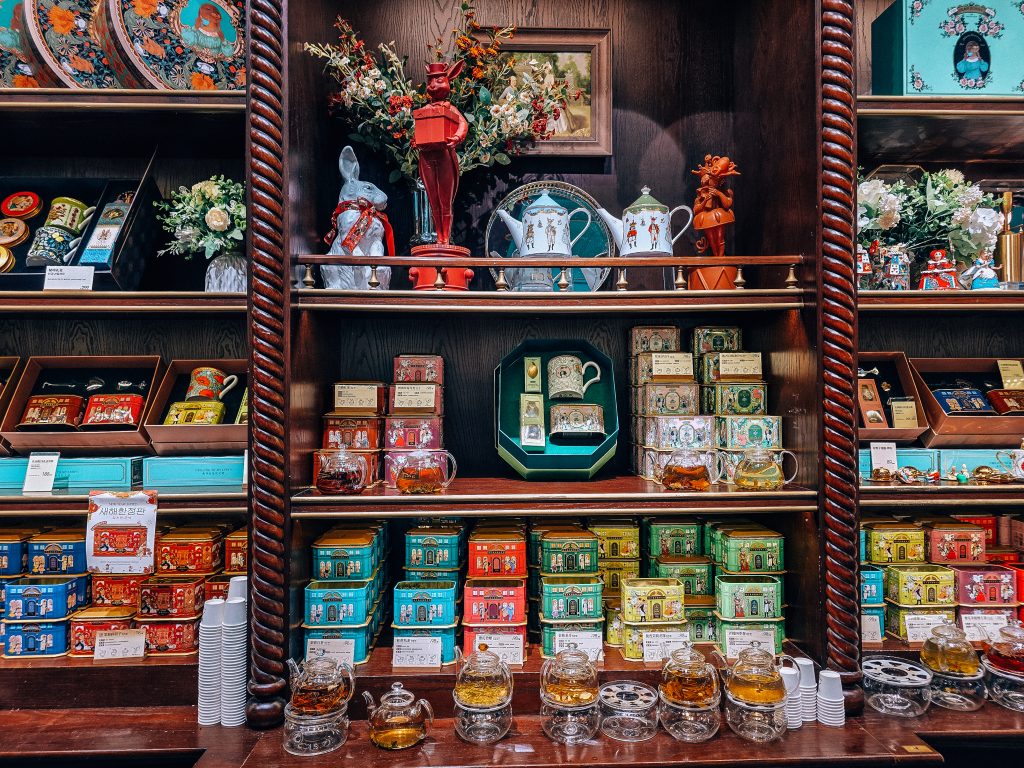
Tea souvenirs: Tianzifang
One of the most enjoyable hours I spent in Shanghai was wandering through Tianzifang, a labyrinthine enclave of narrow alleys in the French Concession lined with small shops selling tea, teaware, handcrafted goods and local art. Every turn revealed another tiny shop, and the smell of different teas drifted from almost every doorway.
It’s the kind of place where you should slow -wander. Some shops are serious about their tea, with knowledgeable owners who’ll let you smell and taste before buying. I bought a couple of teas for myself and as gifts as the packaging is really pretty.
Others lean more toward souvenirs and trinkets. The mix works, and the architecture alone, traditional shikumen stone-gate houses converted into boutiques and cafes, makes it worth visiting regardless of whether you buy anything.
For tea specifically, Shanghai sits close to some of China’s most famous producing regions, and you’ll find Longjing (Dragon Well green tea), Biluochun and Tieguanyin in abundance. A quality loose-leaf tea or a small Yixing clay teapot makes one of the most genuinely useful souvenirs you can bring home from China, compact, light, and the kind of thing you’ll actually use. One practical note before you stock up: check your home country’s customs rules on importing tea, since some countries have restrictions on plant matter that can catch you out at the border.
Tianzifang connects naturally with a visit to Xintiandi, which sits nearby and has a similar vibe but more polished, with better restaurant options for lunch or dinner afterwards.
The French Concession
This is, for me, one of the most beautiful urban neighbourhoods in Asia. Tree-lined streets, Art Deco villas, independent boutiques, excellent coffee shops, and the kind of lived-in elegance that feels genuinely special. I walked through the French Concession multiple times during my four days and found something new each time.
The main streets worth exploring are Huaihai Road (the main artery), Fuxing Road, Wukang Road (famous for its distinctive Art Deco building at the junction, and perpetually busy with photographers), and the quieter side streets around Anfu Road and Changle Road. This is also where some of Shanghai’s best cafes and independent restaurants are concentrated. Slow down here. Don’t rush it
Pudong– The modern skyline up close
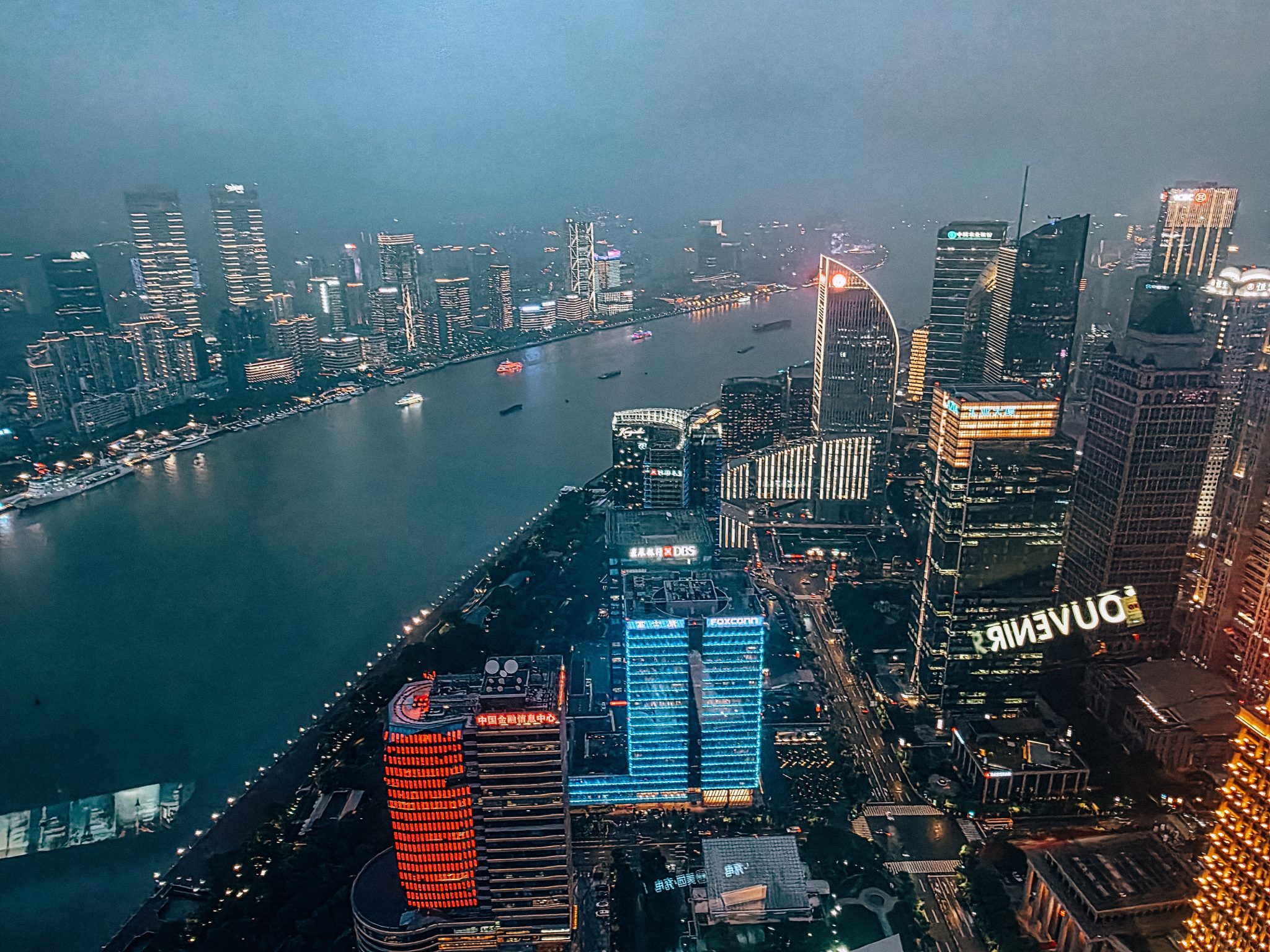
Most people experience Pudong from across the river on the Bund. I went up into it, which gives you an entirely different understanding of the scale.
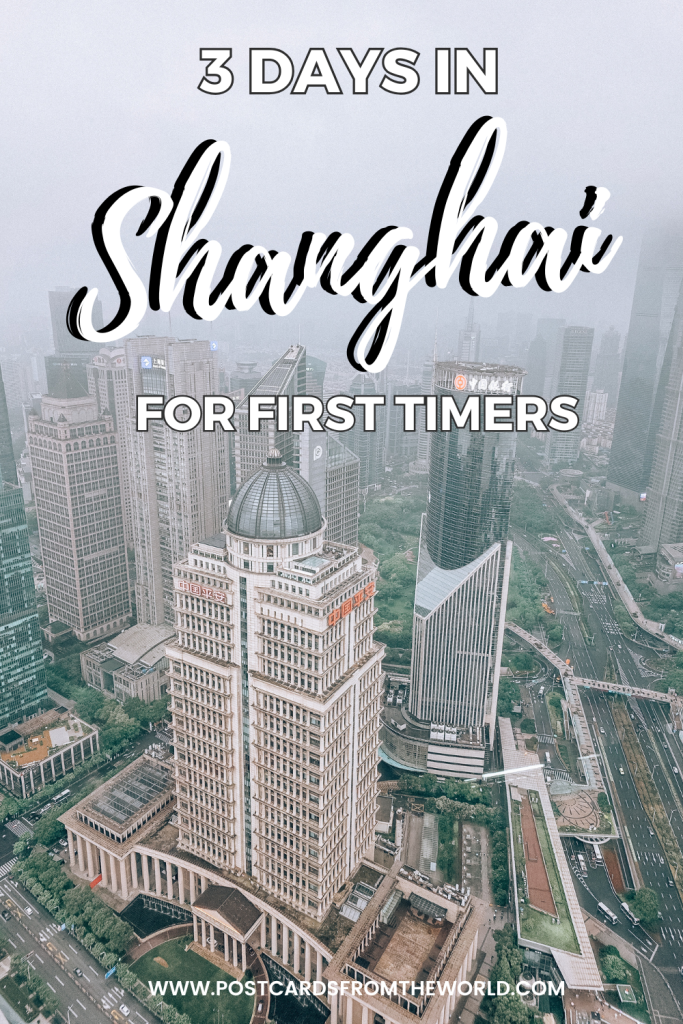
Shanghai Tower is the world’s second-tallest building at 632 metres, and the observation deck at level 118 (about 546 metres up) offers an unobstructed 360-degree view across the city, the river, and on a clear day, far beyond. The experience of being that high up in a building that moves perceptibly in the wind is genuinely surreal. Tickets need to be booked in advance, especially in summer.
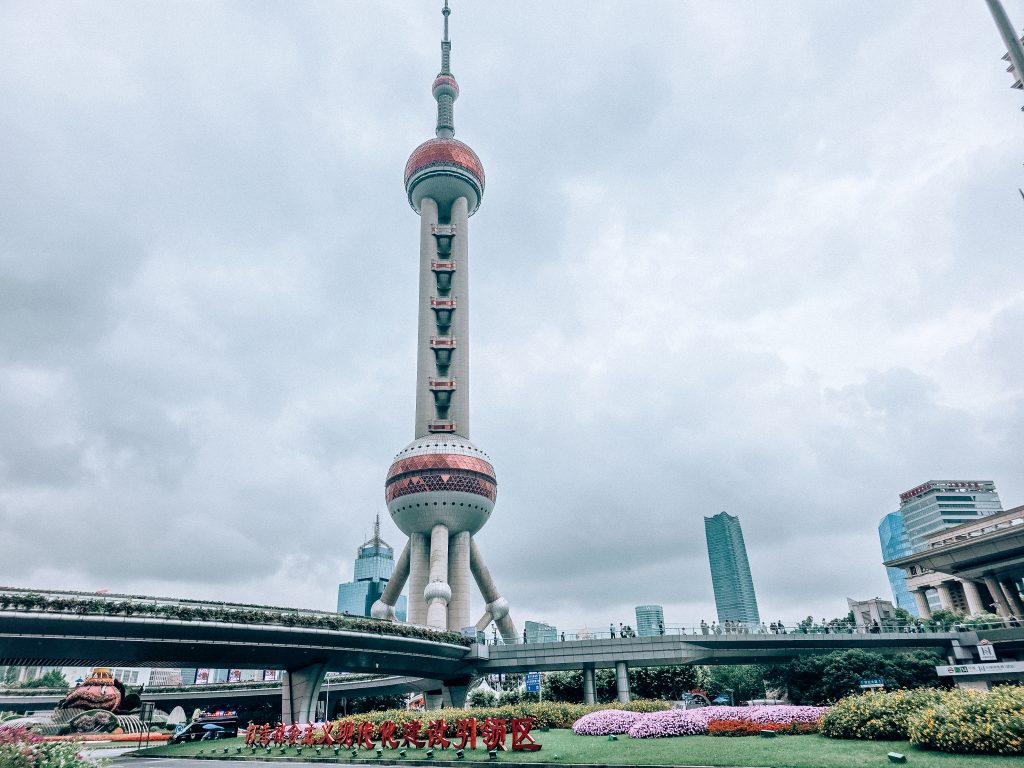
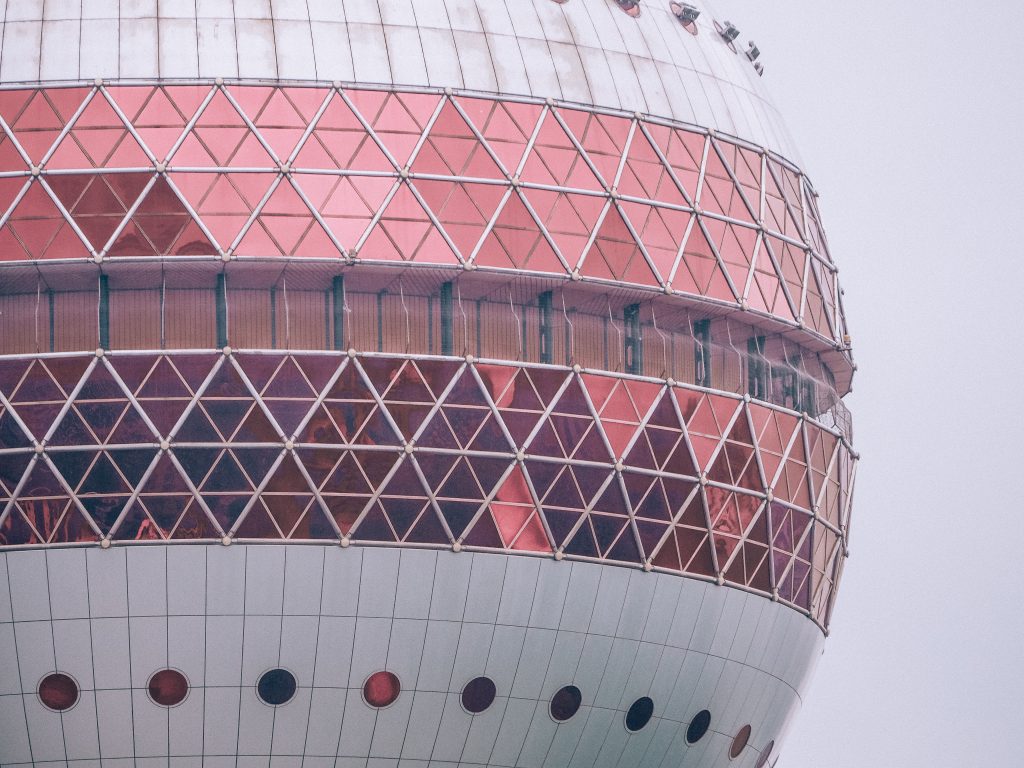
Oriental Pearl Tower is the older, instantly recognisable structure with its distinctive pink spheres, and remains one of Shanghai’s most photographed landmarks. The observation decks here include a glass-floored section which gives you a vertigo-inducing view straight down to the city below.
It’s slightly more touristy in feel than the Shanghai Tower but worth visiting for the contrast: looking out from the Oriental Pearl gives you the whole modern Pudong skyline in front of you, whereas from the Shanghai Tower you’re inside that skyline looking out. But to be honest, I did not enjoy the experience that much. There was a lot of waiting, very little space, nowhere to sit and quite crowded.
Doing both on the same day makes geographic sense since they’re within easy walking distance of each other in Lujiazui, Pudong.
Take the metro to Lujiazui Station (Line 2) and walk between them.
Zhujiajiao: ancient water town day trip
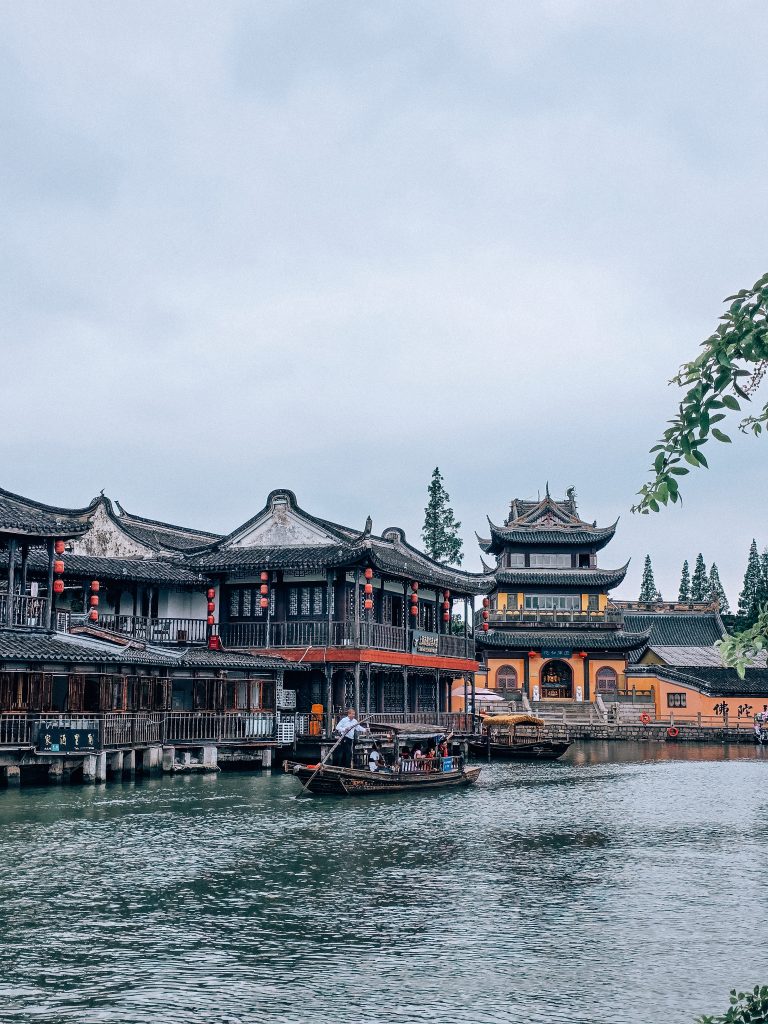
About an hour from central Shanghai, Zhujiajiao is an ancient water town built around a network of canals, stone bridges and Ming and Qing Dynasty houses.
It’s connected directly to Shanghai by metro Line 17, which makes it one of the most straightforward day trips you can do from any major Chinese city. Take the line to its terminus, and you’re there.
The town is small enough to cover on foot in a few hours, walking along the canals, crossing the old stone bridges, and watching traditional boat traffic move between the houses. It gets busy on weekends but remains far quieter than the city you just came from, and the contrast is a genuine palate cleanser after the intensity of central Shanghai. Go on a weekday if your schedule allows. I really liked it there and it makes a great day trip from Shanghai.
Imperial banquet dinner show: Xuyan (叙宴)
This was one of the most unexpected highlights of my entire Shanghai visit, and something I’d genuinely never experienced anywhere else in the world quite like it. Maybe the time I rented a hanbok in Seoul and visited the palace, but it was a bit different.
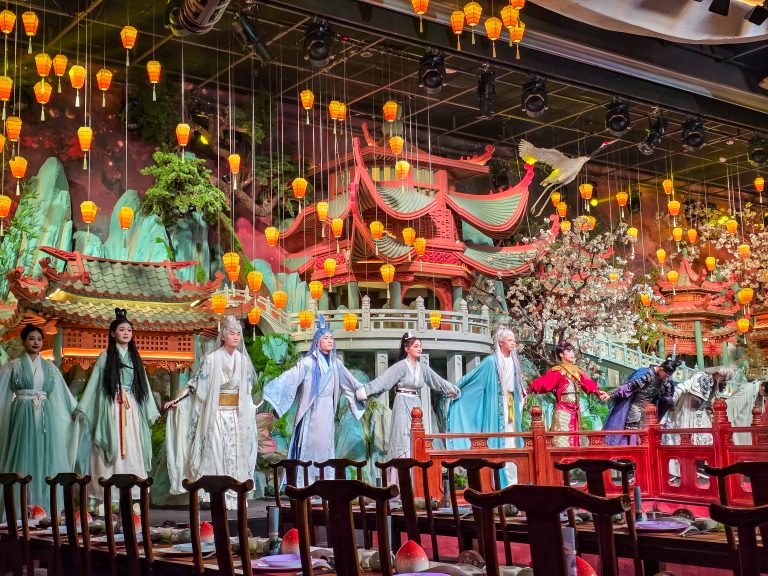
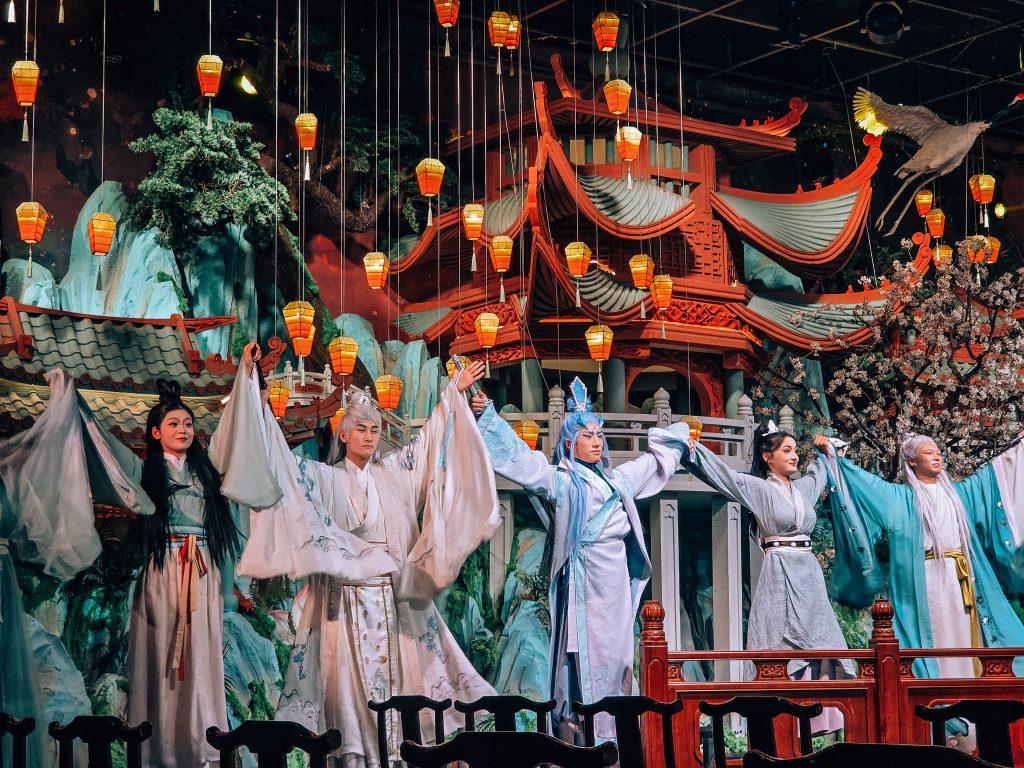
Xuyan is an immersive Tang Dynasty royal banquet experience, and it is extraordinary. Before the show, you choose your traditional costume from an extensive collection of dynasty clothing (if you choose that option), then sit in the styling chair while professional artists do your hair and makeup. I had both done, and the transformation alone was worth the visit. Walk in looking like yourself, walk out looking like you’ve stepped straight out of an imperial court. Allow at least 90 minutes before the show starts if you want the full hair and makeup experience, since it runs on a first-come, first-served basis and the queue moves quickly but the process takes time. One tip- book it in advance because it’s cheaper.
There are two show options to choose from when you book. The banquet hall itself is stunning, decorated in elaborate Tang Dynasty style from floor to ceiling, and from the moment you enter in costume, the immersion is complete. The ceremonial performance during the meal covers eight ritual elements (welcome rites, musical performances on traditional instruments including guzheng and pipa, dance, and a tea ceremony) woven between courses of a multi-course Chinese feast. Every performance was incredible. You can read my full review here.
Xuyan has 4.6/5 from 487 reviews and over 20,000 bookings, which tells you everything about how consistently it delivers. Book on Klook from €53.90
Practical tips before you go: Book at least three to four weeks in advance, it sells out, particularly at weekends. Arrive 2 hours early if you want hair and makeup. Wear white covered shoes, open-toed footwear doesn’t work with the costumes. Bring reference photos of the makeup style you want or they just do whatever they see fir. VIP seats on stage left in the centre give you the best view of the performers, but I don’t think it’s necessary to pay for them, I have a great visibility on a standard seat. And take photos in the hall before it fills up, the early window before the show starts is your best chance for unobstructed shots.
Even though it is directed towards tourists, it is a genuinely special evening and one of the most memorable things I did in China.
Use my favourite travel resources to plan your dream trips
- Booking.com for searching best prices on accommodation.
- AirHelp helps to get compensation for cancelled or delayed flights.
- Travel Payouts is my favourite platform for monetizing the blog.
- Discover Cars is a great website as they search both local and international car hire services, so you can choose the best deal for yourself. Make sure though, that the company has a good reputation and reviews.
- Get Your Guide is my place to go for searching and booking tours and excursions, especially when I travel solo.
- World Nomads and EKTA travel insurance. I like them because they have quite extensive coverage of different activities.
- WeGoTrip sends you audio guides to your mobile, so you can visit places while learning history and interesting facts easily and for little money.
- Go City is a perfect site for booking bucket list experiences and attractions all in one to avoid paying for multiple tickets. Easy and saves money. You can even save 50%.
- Trip Advisor– amazing for good quality recommendations.
- Skyscanner is a perfect website for searching flight routes and comparing prices.
- Airalo is my eSim choice for alternative data abroad.
Did you like the post? Pin it for later: