
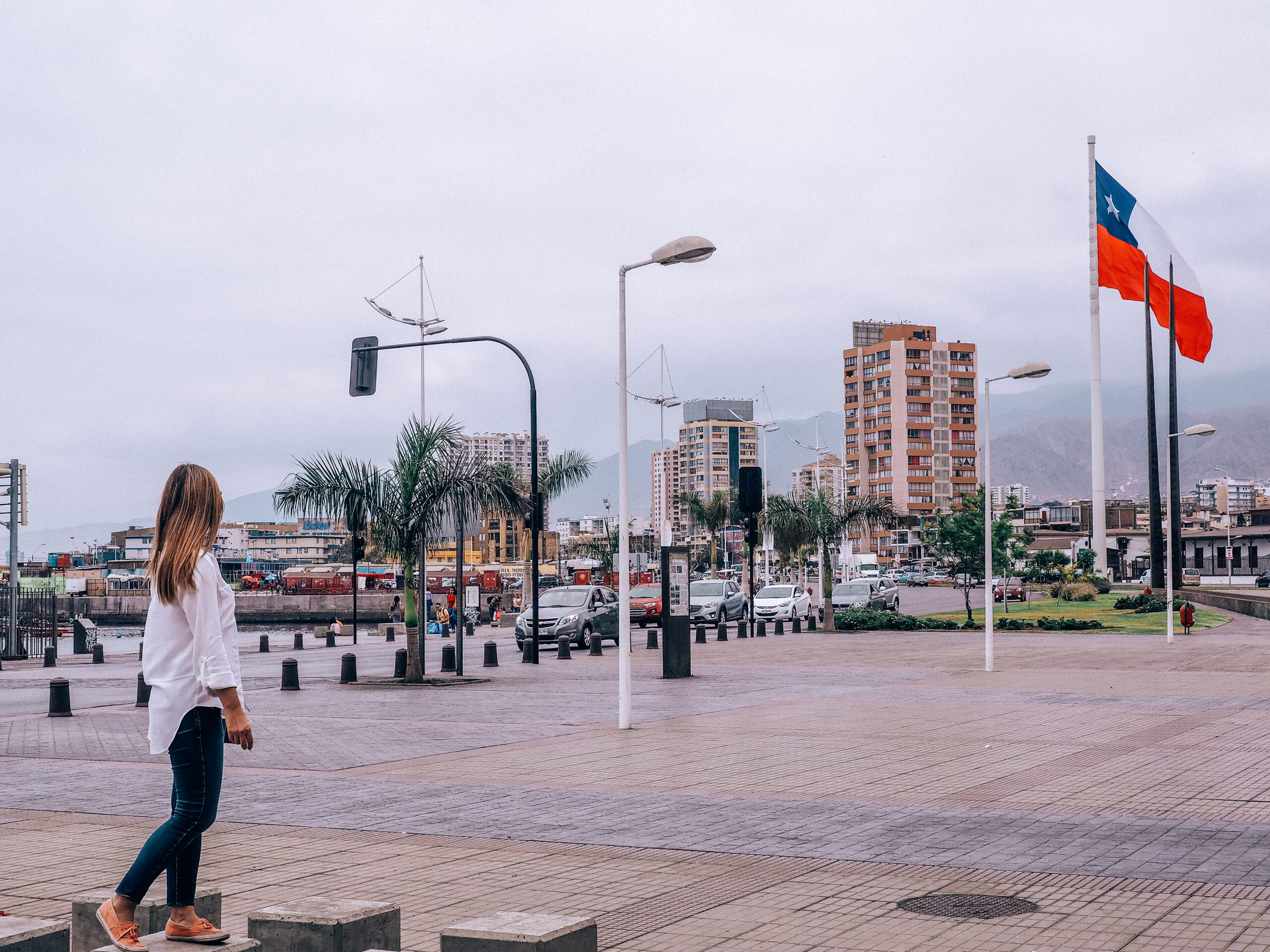
One Day in Antofagasta: What to See in Chile’s Overlooked Desert Capital
One day in Antofagasta is genuinely enough, and I say that as someone who lived there for nearly four years. Knowing what to do in Antofagasta makes the difference between a forgettable overnight stop and a day that actually adds something to your trip. I did not choose Antofagasta. It chose me, in the way that expat life sometimes does — you end up somewhere unexpected and spend years discovering its quiet surprises.
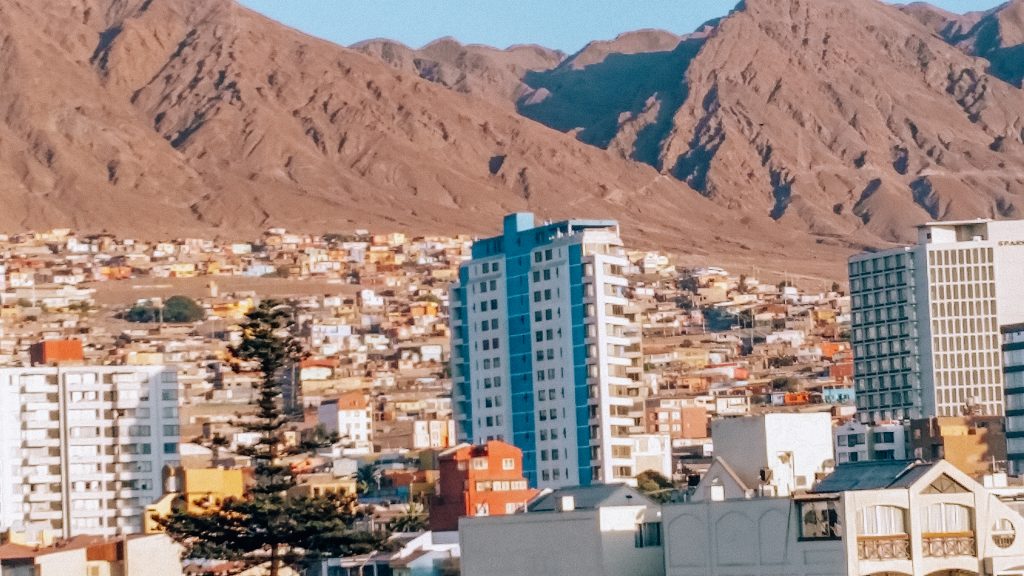
It is not a beautiful city. I will not pretend otherwise. Mining built it and mining still runs it, and that is visible in everything from the skyline to the mood of the place.
Most travellers pass through without stopping, or use it purely as a jumping-off point for San Pedro de Atacama and the surrounding desert. That is understandable. But after nearly four years of living there, exploring its coastline, eating at its fish market, and watching the light change over the Pacific from the Costanera on weekend mornings, I can tell you that Antofagasta has more to offer than its reputation suggests. You just need to know where to look.
Please note that this post included affiliate links, when you decide to purchase anything through these links I get a small commission at NO extra cost to you, it helps me to keep running this blog! I only promote products and services I use or would use myself. All images are the property of Postcards from the World and cannot be used without permission.
A Little History First
Antofagasta has an interesting backstory that most visitors never hear. The city did not always belong to Chile. It was part of Bolivian territory until the War of the Pacific (1879–1884), when Chile took control of the region along with what is now northern Chile and parts of Peru. Bolivia lost its coastline entirely as a result — a wound that remains politically sensitive to this day and explains why Bolivia still has a navy despite having no access to the sea.
The British also left their mark here. During the nitrate boom of the late 19th century, British companies poured investment into the region and the community they built is still visible in parts of the city. The most obvious reminder is the Torre Reloj on Plaza Colón — a clock tower built as a smaller replica of London’s Big Ben, decorated with tiled flags of both Great Britain and Chile on its base. It sounds like it should be kitsch. In person it is oddly charming, sitting in the middle of a Chilean desert city as if it arrived by accident and decided to stay.
one day in Antofagasta: What to Do in the capital of atacama
La Portada: The One Thing Everyone Comes For
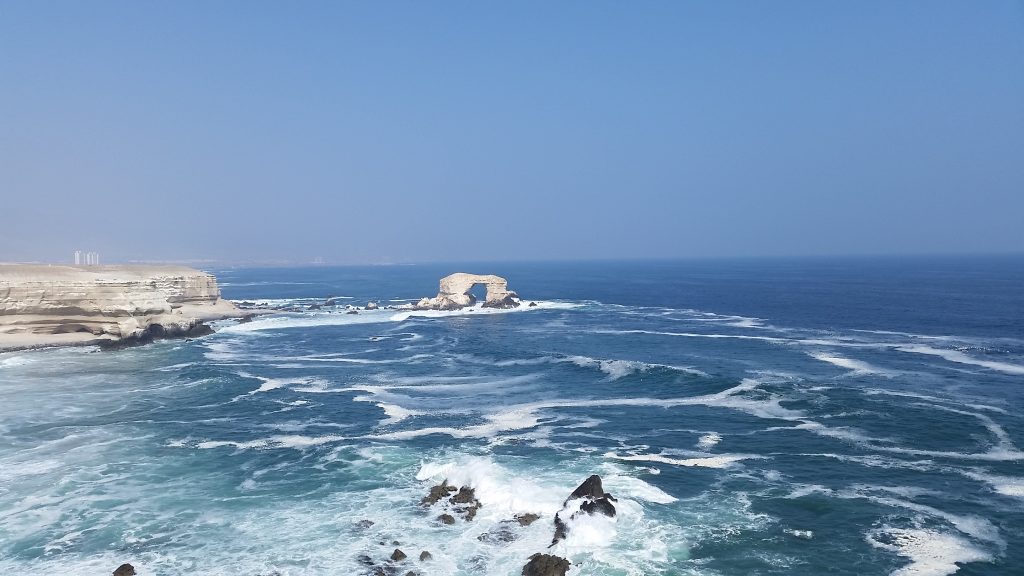
La Portada is a natural rock arch rising from the Pacific Ocean about 18 km north of the city centre, and it is genuinely impressive. The arch has been carved by centuries of wave erosion into a shape that looks almost deliberate — a great stone doorway standing in the sea with nothing behind it. It is one of Chile’s most photographed natural landmarks and on a clear day with the right light it is easy to see why.
There is a viewing platform above the cliff with good sightlines, and the surrounding coastline is dramatic enough to justify spending some time there beyond the standard photograph. Go in the late afternoon if you can — the light on the rock and the ocean at that hour is considerably better than midday.
Getting there requires a car or taxi as there is no direct public transport from the city centre. It is a short drive and easy to combine with other stops on the coastal route.
Plaza Colón and the Clock Tower
The main square is the heart of what passes for the historic centre in Antofagasta. It is a pleasant enough place to spend an hour, the Torre Reloj sits at its centre, the surrounding buildings have some architectural interest, and it gives you a feel for the everyday rhythm of the city in a way that the coastal road does not.
The clock tower is the main draw. The British connection to Antofagasta’s mining history is not well known outside Chile, and seeing this very specific piece of Victorian England transplanted into a desert city on the Pacific coast of South America is one of those small, odd travel moments that sticks with you.
The Fresh Market: Food, Music and a Bit of Chaos
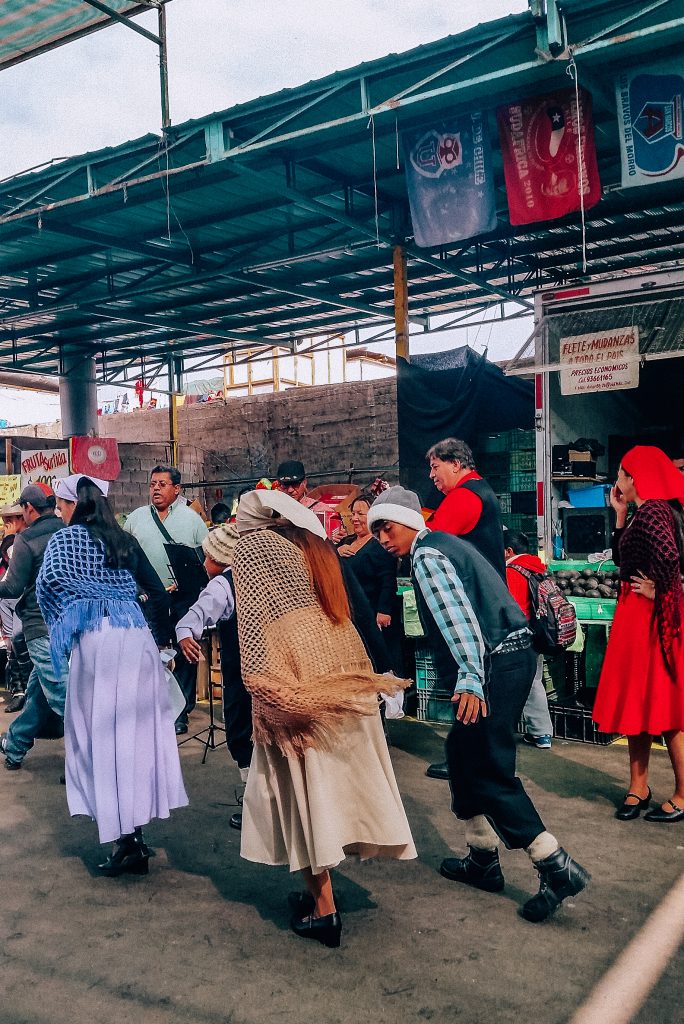
The fresh market in Antofagasta is one of those places that rewards you for showing up without a plan. Stalls packed with fruit, vegetables, dried goods, cheap clothing and everything in between — the kind of market that feels like it exists for the city rather than for anyone passing through. Go on a weekend morning when it is busiest and loudest and most itself.
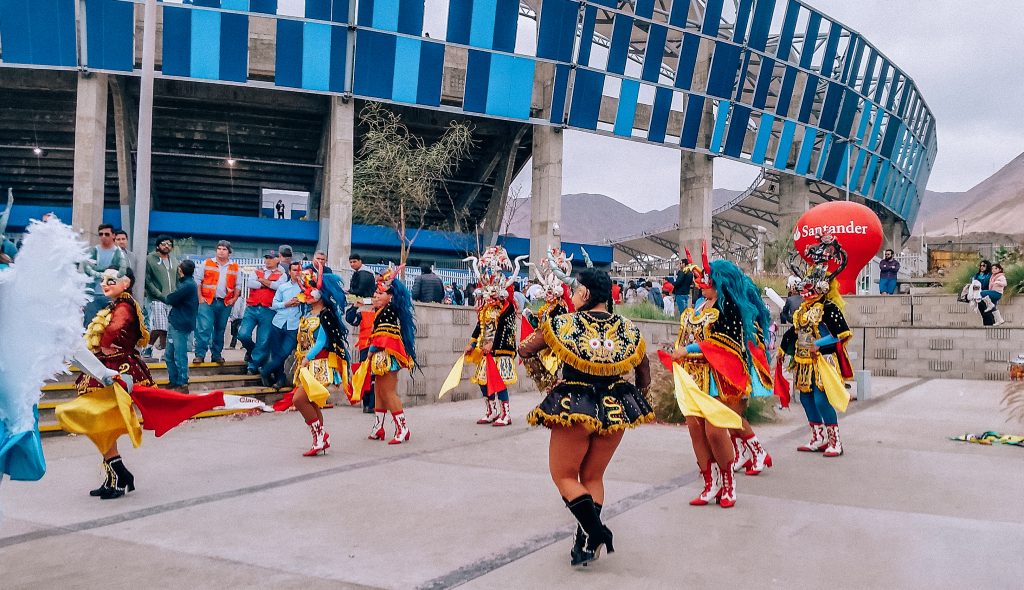
What makes it worth mentioning beyond the food is the atmosphere. On a good day you will find dancers performing cueca, Chile’s national dance, and almost certainly a chinchinero, one of Chile’s most distinctive and increasingly rare street performers. The chinchinero straps a large bass drum vertically to his back, tucks long drumsticks under his arms, and connects a rope from a set of cymbals to his foot, playing all of it simultaneously while dancing with an energy that stops people mid-step.
It is one of those things that is uniquely, unmistakably Chilean, and seeing one at a busy market rather than a staged performance makes it feel like a genuine slice of local life rather than a tourist attraction. I always stopped when I heard one coming.
The Costanera: A Walk Along the Ocean
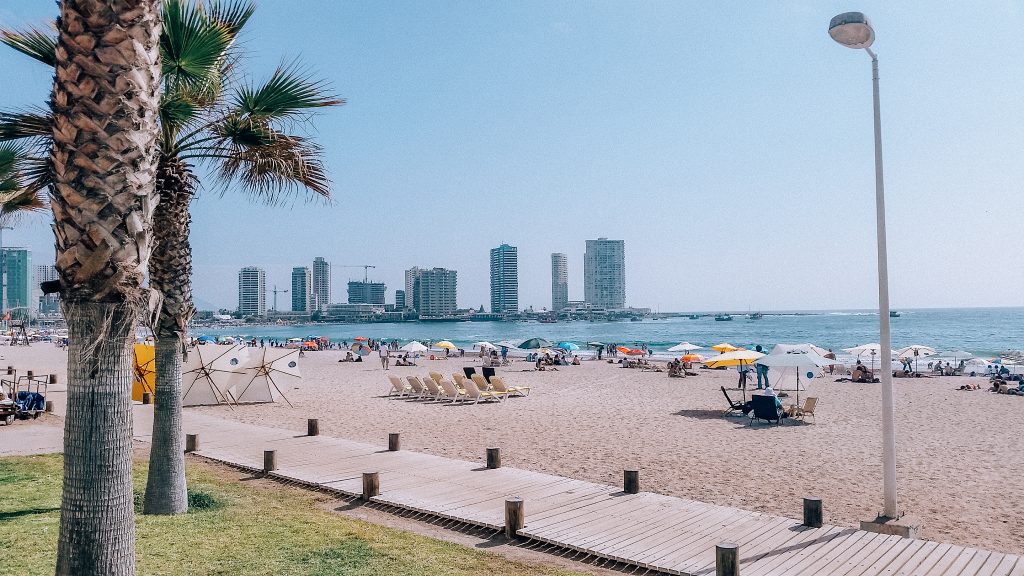
The Costanera is Antofagasta’s seafront promenade and the most pleasant part of the city to walk around. The views across the Pacific are good, the ocean breeze makes the heat bearable, and the stretch of coastline here is more attractive than the industrial city behind it would suggest. I must say that some of the best sunsets I have ever seen were in Antofagasta overlooking the ocean. We lived in an apartment just a few meters from the coast and had an amazing views from the balcony.
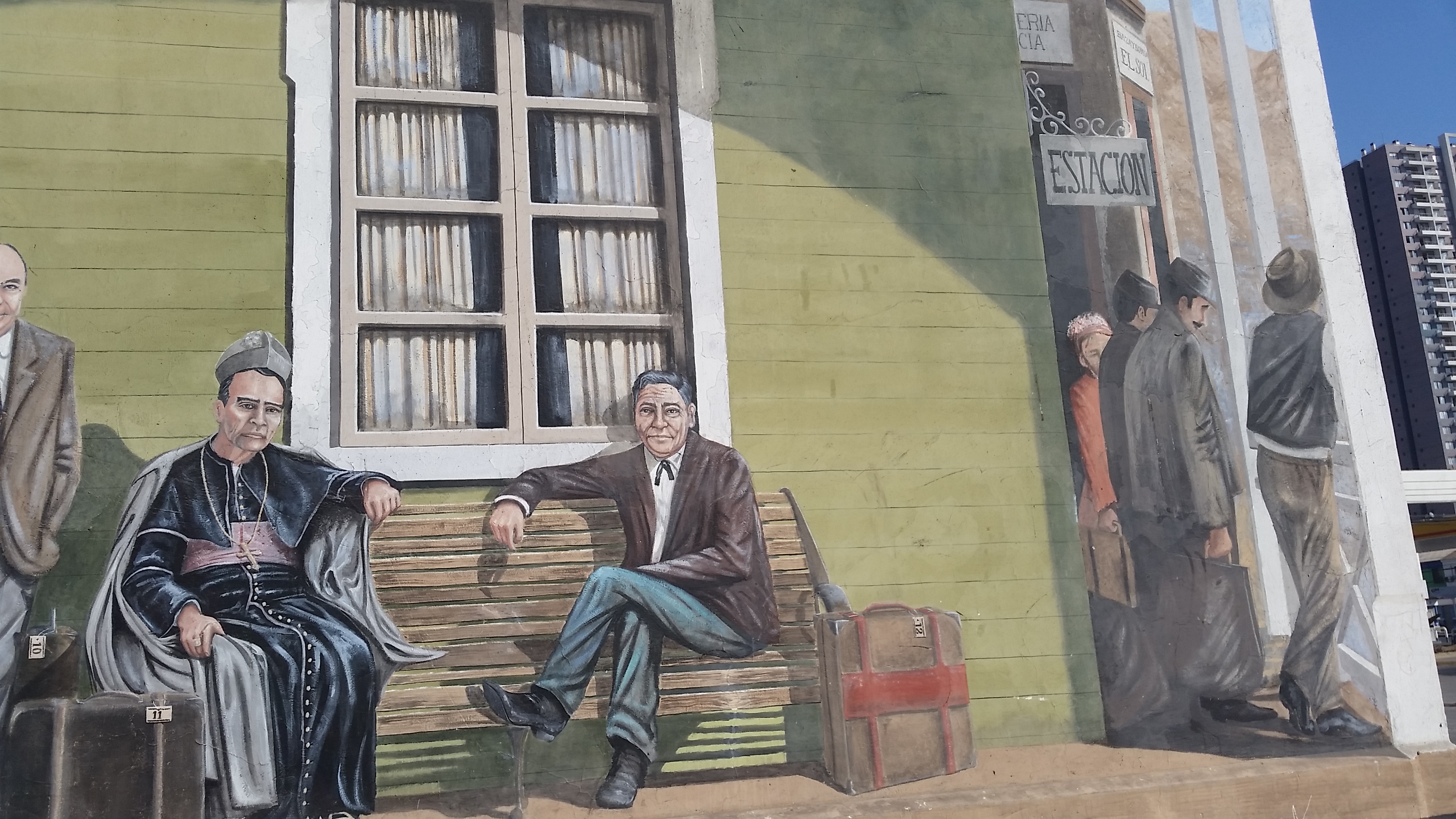
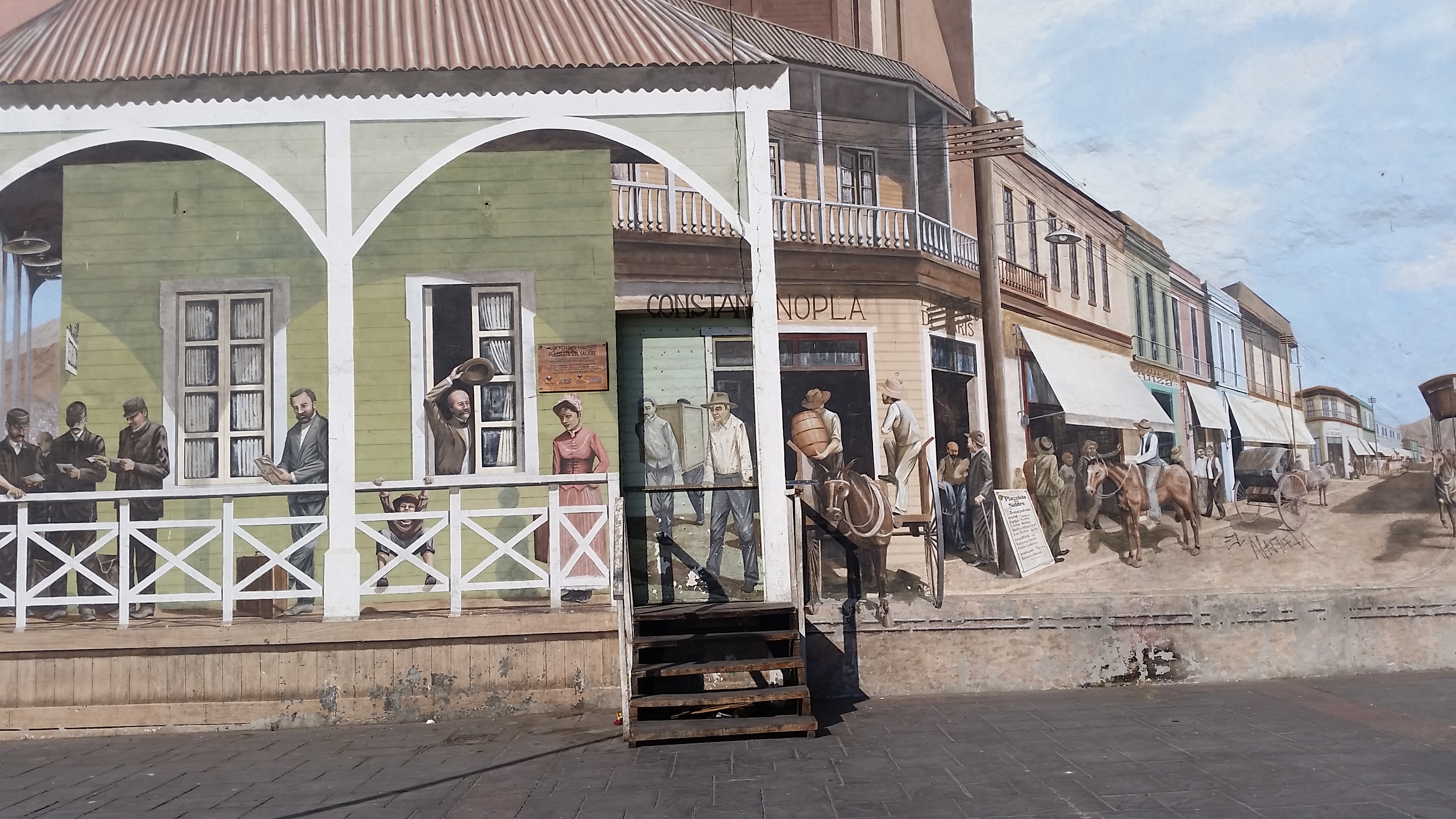
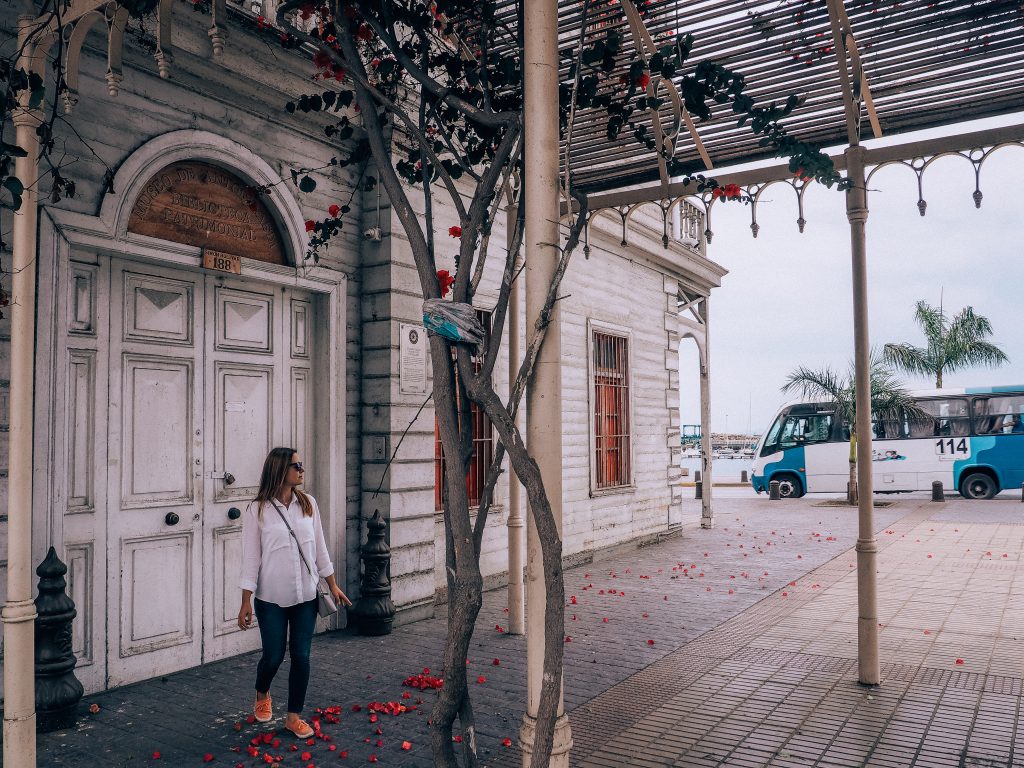
Along the promenade you will find mosaics decorating the walls, colourful, detailed, and worth stopping for. Street art appears throughout Antofagasta in varying degrees of ambition and quality, but the mosaics along the waterfront are the most consistent and the most visually interesting. The city has invested in public art in ways that are easy to miss if you are just passing through.
You might also like:
- Ultimate Guide to San Pedro de Atacama: Insider Tips from a Long-Term Local
- Pan de Azúcar National Park Chile: The Complete Guide to This Atacama Hidden Gem
- An ultimate guide to Geyseres del Tatio in the Atacama- a wonder at high altitude.
- How to see La Mano del Desierto- A Rising Hand in Atacama
- How to Plan the Perfect Bariloche Trip: Things to Do, Best Time to Visit & Tips
- Road trip to Lago Chungará.
- Chilean bucket list. What to see and do in Chile.
- A quick guide to Valparaiso. Chilean city painted by a rainbow.
The Street Art
Antofagasta has a genuinely vibrant street art scene that runs well beyond the promenade. Football stadium walls, school buildings, underpasses — the city uses its surfaces in interesting ways. Some of it is beautiful. Some of it is strange. A few pieces fall into the category of things you photograph and think about later without quite being able to explain why.
It is not a walking street art tour in the organised sense — you find it as you move around the city, which is part of what makes it feel authentic rather than curated. Keep your eyes open and give yourself time to wander off the main routes.
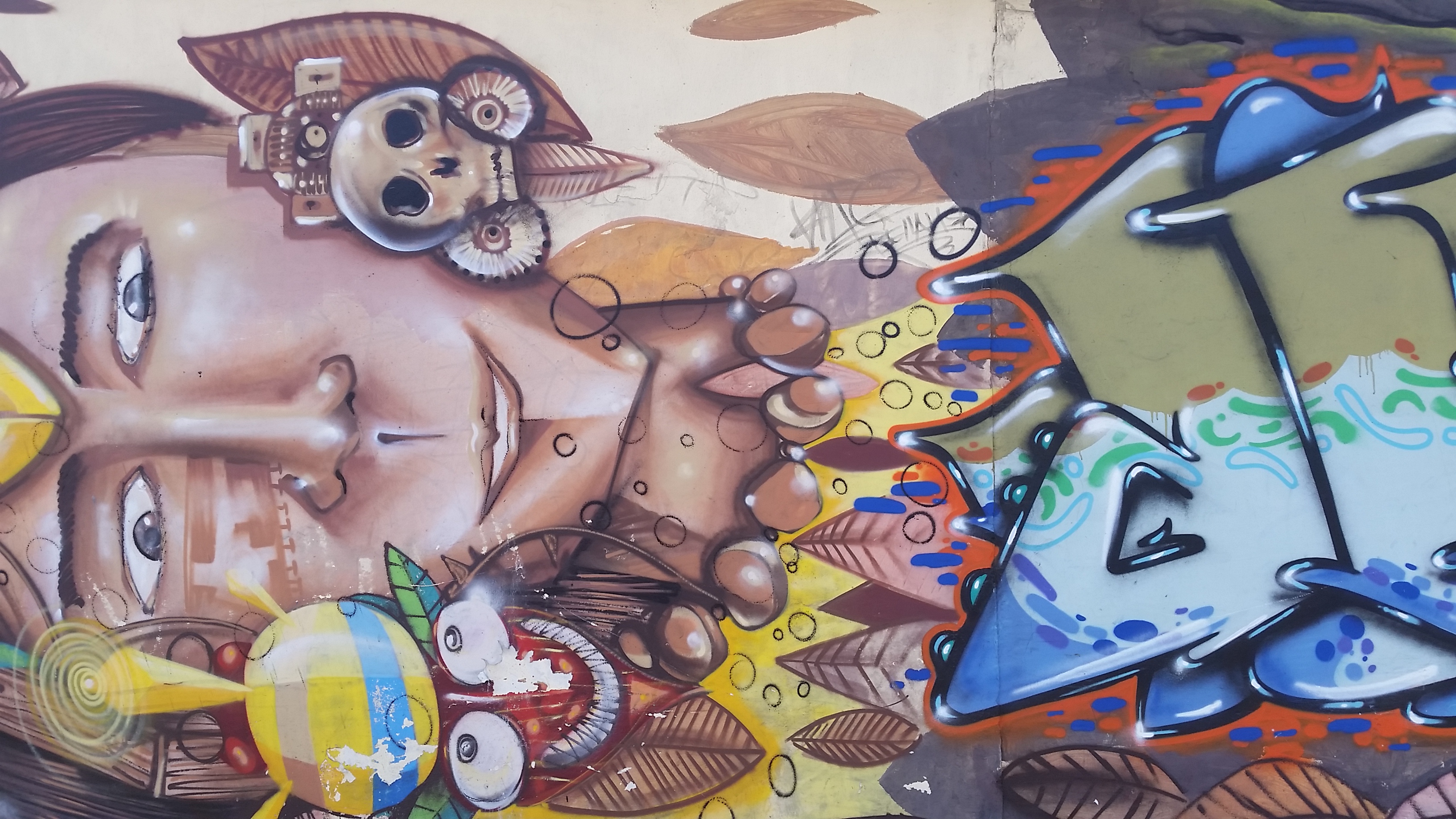
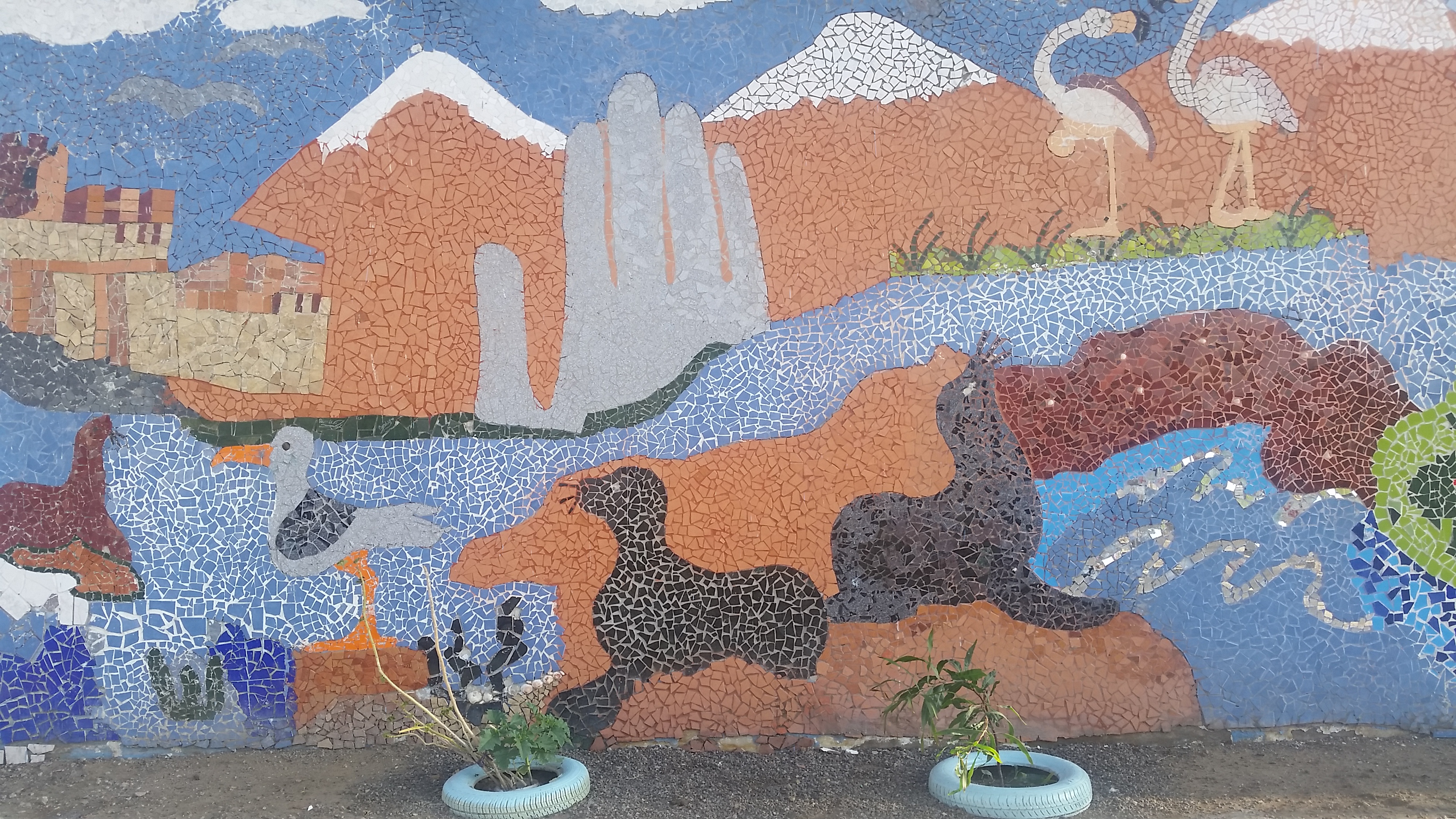
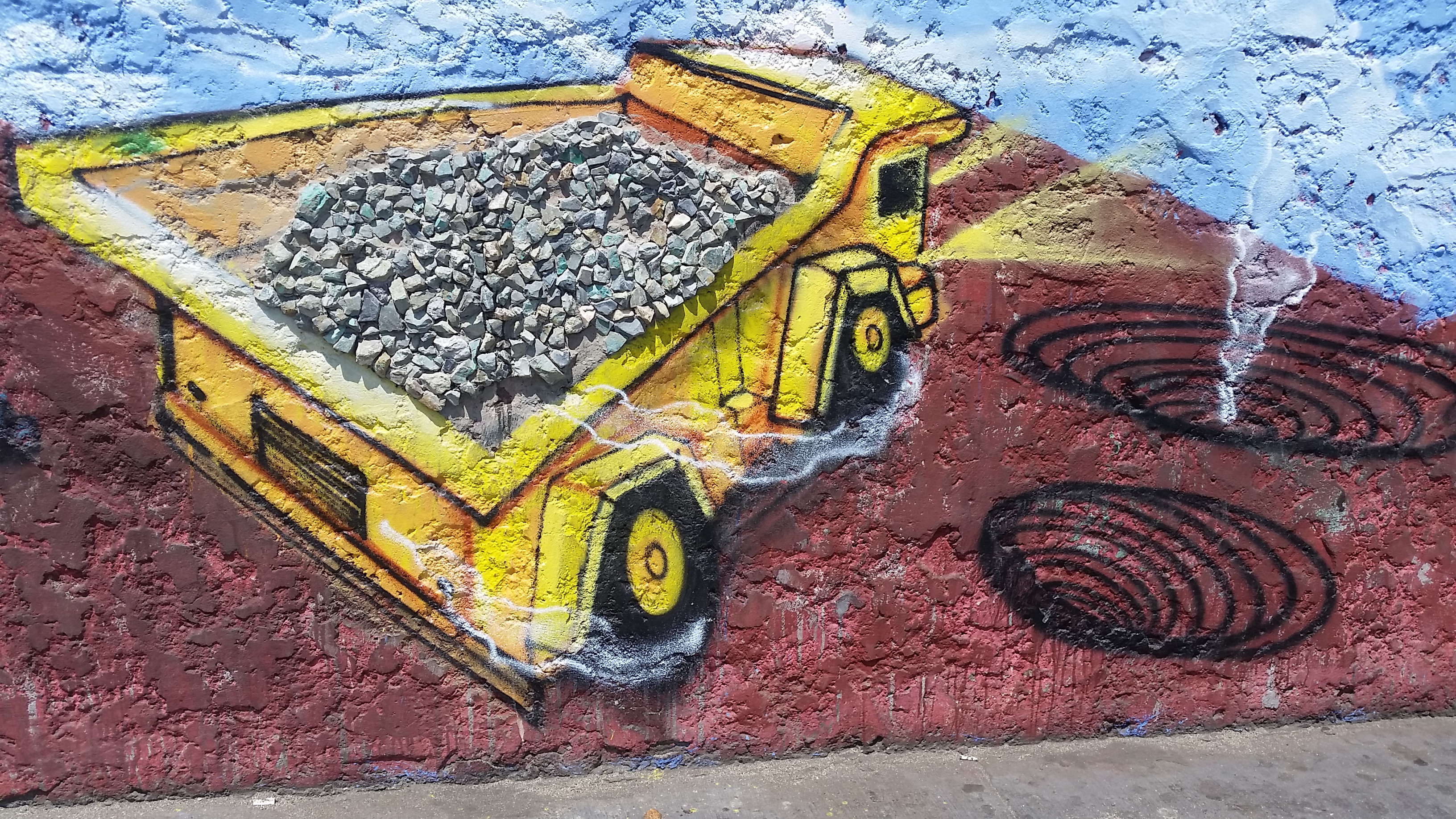
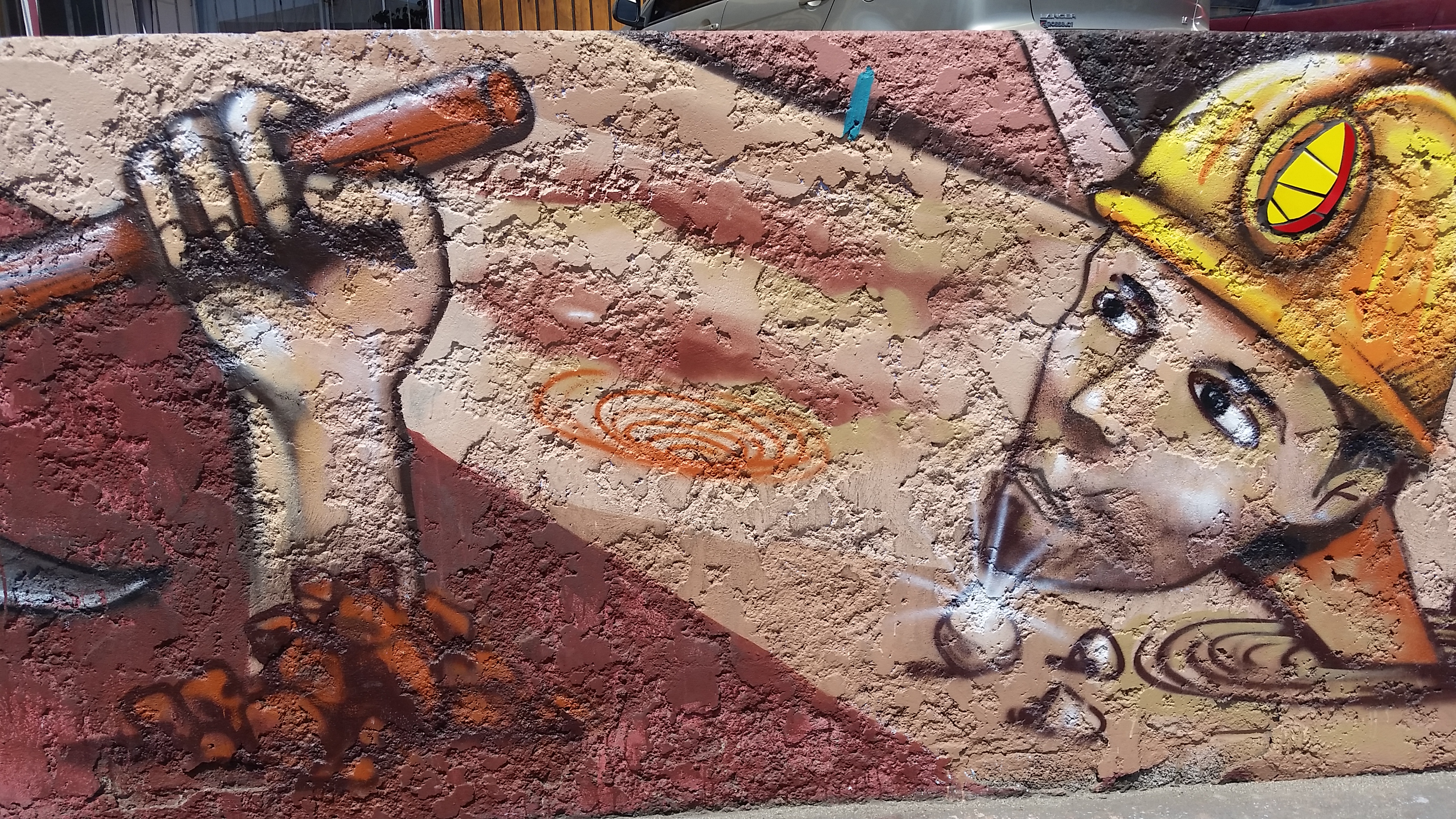
If you happen to be in this industrial city, it might be interesting to notice the amount and diversity of street art. Even though there are not many attractions in the city, I think that the street art here is quite intriguing.
La Mano del Desierto: The Giant Hand in the Desert
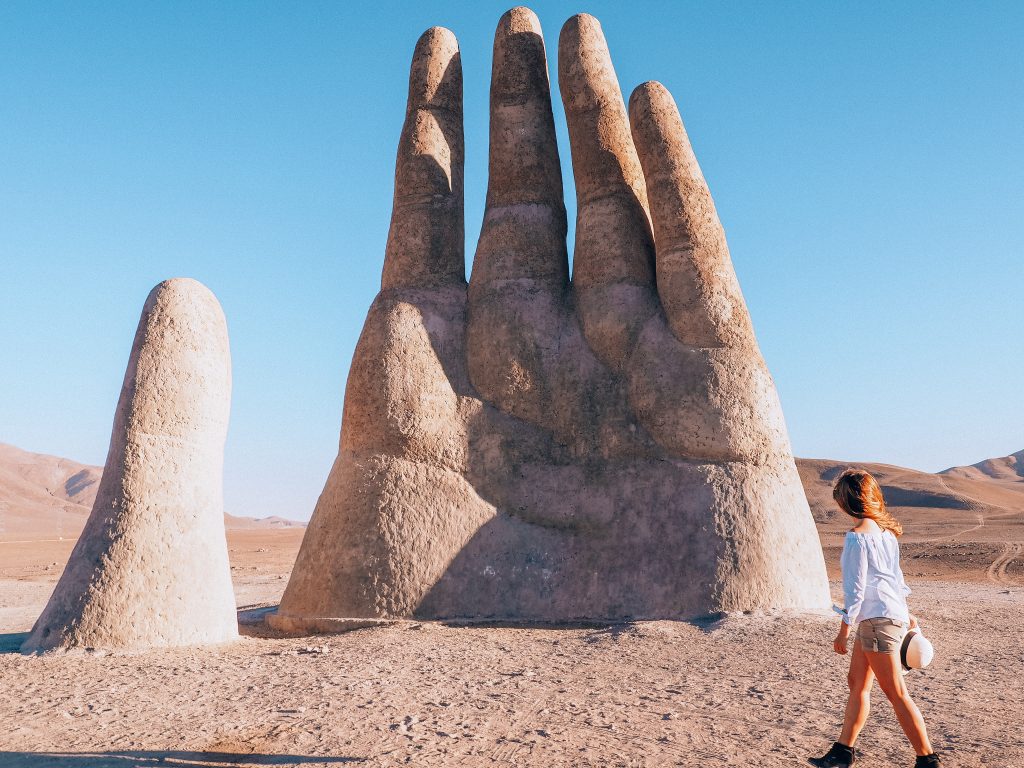
Strictly speaking this is not in Antofagasta itself (it sits 75 km south of the city along Ruta 5 Norte) but it makes a natural stop if you are driving in or out of the city along the Pan-American Highway. The sculpture is a giant human hand by Chilean artist Mario Irarrazabal, emerging from the desert floor and pointing at the sky with no explanation and no context. Just a giant hand in the middle of nowhere.
It is one of those things that sounds odd described and lands perfectly in person. Be prepared for wind and serious sun ( there is no shelter out there) and bring water. It takes about ten minutes to look around and photograph properly, and it is absolutely worth the stop.
Where to Eat in Antofagasta
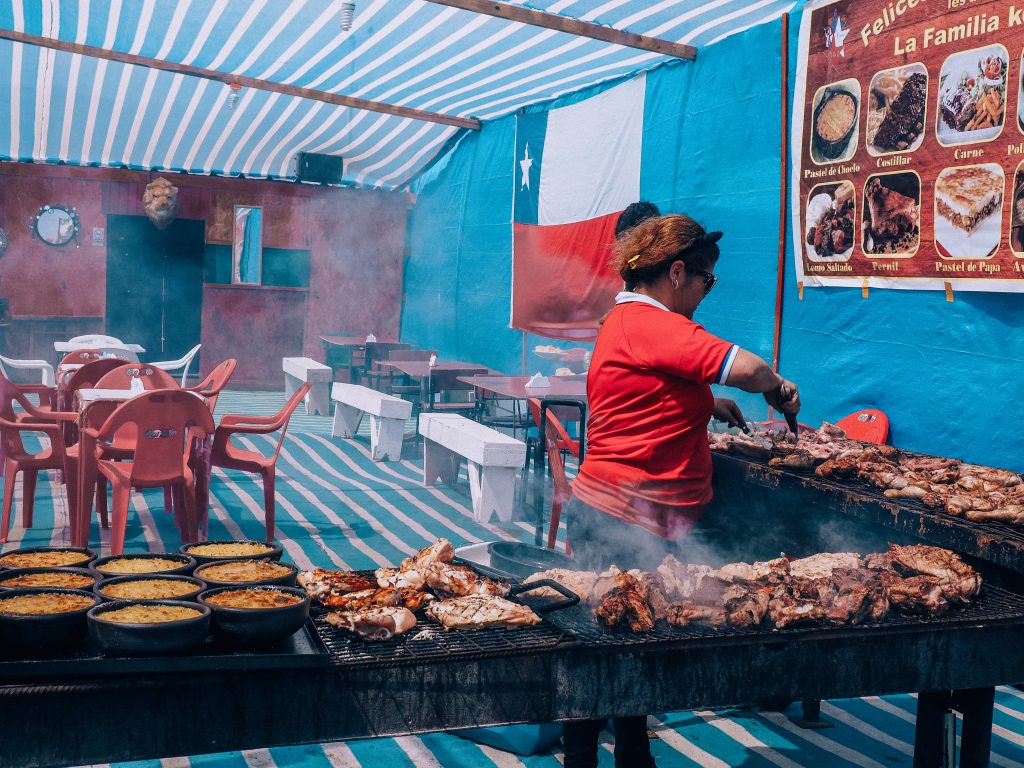
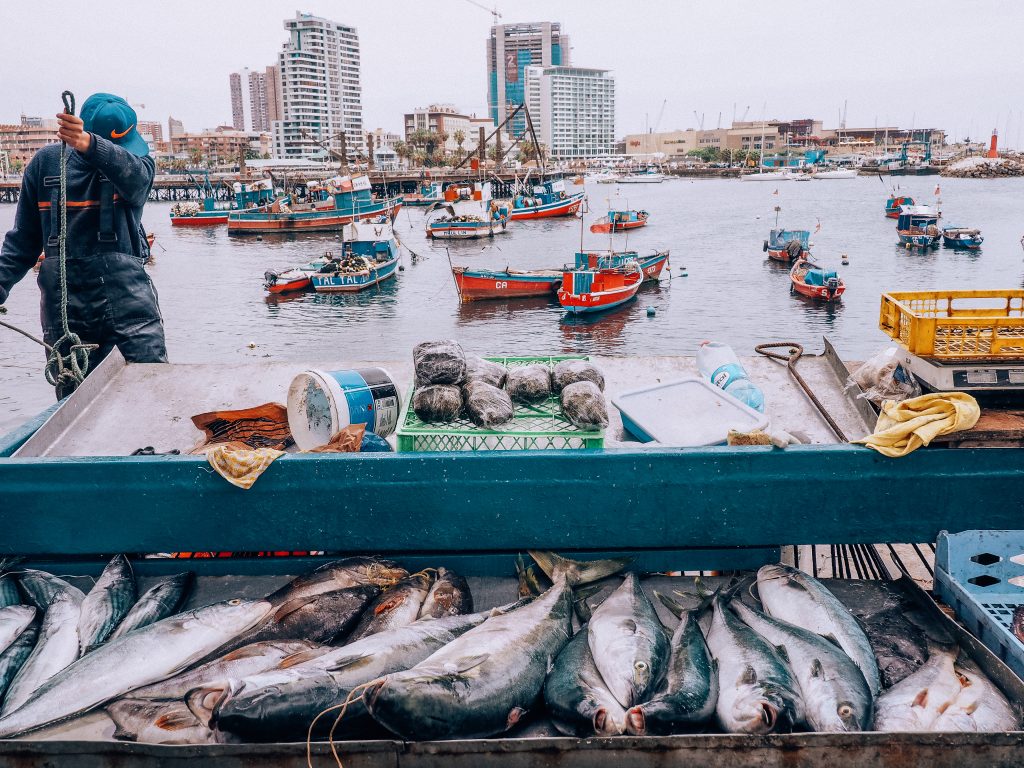
Antofagasta is not a food destination but it feeds itself well. Beyond the fish market, the city centre has a solid range of restaurants serving Chilean staples, cazuela, pastel de choclo, good grilled fish. The Costanera area has the most options concentrated in one place and is the easiest starting point if you are not sure where to go.
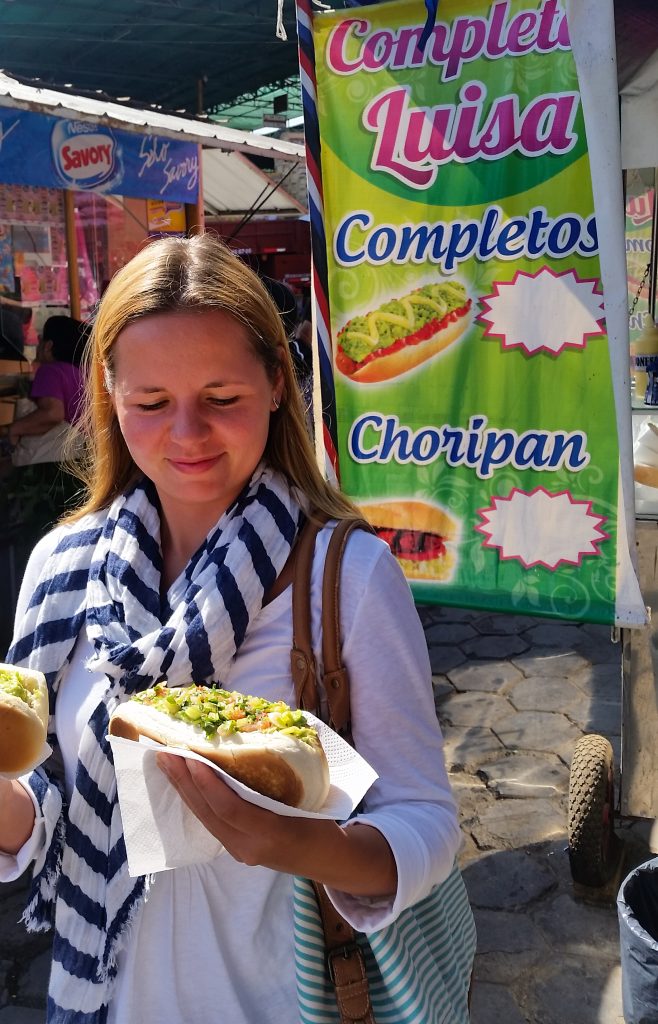
But don’t expect top class cuisine. Chilean dishes, especially in the north, are not very sophisticated and the dish the Chileans are most proud of is a hot dog. But you can find a few good restaurants in Antofagasta. Our favourite one was a Peruvian restaurant Cost Verde. You can also get some decent street food, everything is usually fresh, so no need to worry about that. In four years, we never had any issues.
Where to Stay in Antofagasta
Most people passing through spend one night, which is genuinely enough. The city has a good range of business hotels as it hosts a lot of mining industry travellers, so the standard is reasonable even if the character is limited.
The Costanera area is the nicest part of the city to be based in, with ocean views and easy access to the promenade. Look for options in that neighbourhood over the city centre if you have a choice.
Terrado Suites Antofagasta
Pool, spa, sea views, free breakfast.
Spacious rooms and a great location near Plaza Colón.
Holiday Inn
Rated 9.1 on Booking.com, it the highest-rated hotel in the city and the safest choice for a one-night stay.
Hotel antofagasta
The oldest and most characterful hotel in the city — historic Art Deco building directly on the seafront with an outdoor pool.
How to Get Around
Antofagasta is a large, spread-out city and the main attractions are not all walkable from each other. A car makes the day considerably easier, particularly for reaching La Portada and La Mano del Desierto. Taxis are available and reasonably affordable for getting between the city centre spots.
Colectivos — shared taxis that run fixed routes for a flat fare — are what most locals use for getting around day to day and are a good option if you are comfortable with basic Spanish and know roughly where you are going. Buses cover the main routes across the city and are the cheapest option of all, though they require a bit more patience and local knowledge.
If you are arriving by bus from San Pedro, Calama or further south, the terminal is centrally located and taxis are easy to find from there. But if you’d like to explore around, renting a car is your best option.
Practical Tips
Getting there: Antofagasta has an international airport with connections to Santiago and other Chilean cities. By bus it is well connected to San Pedro de Atacama, Calama, Iquique and further south.
When to go: The city is fine year-round. The Atacama coastal climate is mild and dry — cooler than inland and rarely extreme in either direction. Mornings can be overcast before the sun burns through, which is actually good news for La Portada photography.
Cash: Withdraw what you need in the city before heading out to La Portada or La Mano del Desierto — there is nothing out there.
Sun: Even on overcast days the UV radiation in this part of Chile is high. Sunscreen and a hat are necessary any time you are outside.
Use my favourite travel resources to plan your dream trips
- Booking.comfor searching best prices on accommodation.
- AirHelp helps to get compensation for cancelled or delayed flights.
- Travel Payouts is my favourite platform for monetizing the blog.
- Discover Cars is a great website as they search both local and international car hire services, so you can choose the best deal for yourself. Make sure though, that the company has a good reputation and reviews.
- Get Your Guide is my place to go for searching and booking tours and excursions, especially when I travel solo.
- World Nomads and EKTA travel insurance. I like them because they have quite extensive coverage of different activities.
- WeGoTrip sends you audio guides to your mobile, so you can visit places while learning history and interesting facts easily and for little money.
- Go City is a perfect site for booking bucket list experiences and attractions all in one to avoid paying for multiple tickets. Easy and saves money. You can even save 50%.
- Trip Advisor– amazing for good quality recommendations.
- Skyscanner is a perfect website for searching flight routes and comparing prices.
- Airalo is my eSim choice for alternative data abroad.
Did you like the post? Pin it for later:


Hola Anna!
Felicitaciones! Cómo supiste descubrir la VIDA en una ciudad que describen tan poco atractiva.
Tus fotos invitan a visitarla.Ese arte callejero es impactante.