
A Guide to Chilean Slang: The Words You Won’t Learn in a Classroom
Cachai, yapo, huevón. Don’t understand? It’s still Spanish, just not the kind they teach you in a classroom.
When I first moved to another country, the most important thing for me was learning the language. Little did I know I’d eventually need a guide to Chilean slang just to survive ordinary conversations.
What’s the worst thing for someone who loves talking as much as I do, if not being unable to communicate properly with locals? Even when I’m just travelling through a country, I try to learn some basic phrases and words that let me communicate a little better and make the experience richer. It’s genuinely fun, and I’m fairly sure it’s appreciated by the people you meet too, the fact that you’ve put in some effort to understand their language and culture rather than expecting them to meet you halfway.
I find the whole business of language learning fascinating. Sometimes, though, you think you can speak a language, Spanish, for example, and then you travel to Chile, and suddenly you feel like you’ve landed in an entirely different country. Nobody prepares you in a classroom to survive what Álvaro Taboada, author of How to Survive in the Chilean Jungle, rightly calls the Chilean jungle.
To make life a little easier for anyone planning a trip to Chile, I’ve put together a list of Chilenismos, Chilean Spanish slang words and phrases, that you’ll hear constantly once you’re there. Consider yourself a fluent Spanish speaker? As several of my native Spanish-speaking friends have admitted to me themselves, speaking in Chile is an entirely different story. Arm yourself with a few of these before you go.

Please note that this post included affiliate links, when you decide to purchase anything through these links I get a small commission at NO extra cost to you, it helps me to keep running this blog! I only promote products and services I use or would use myself. All images are the property of Postcards from the World and cannot be used without permission.
A guide to Chilean slang: the essentials
| Chilenismo | Literal translation | Real meaning |
|---|---|---|
| ¿A dónde la viste? | Where did you see that? | I don’t believe it! / No way! |
| Agarrar papa | To grab a potato | To take advantage of a situation |
| Arreglarse los bigotes | To sort out your moustache | To arrange something in secret |
| Al tiro | To pull | Right now |
| Andar con el dragón | To walk with the dragon | To have bad breath |
| Avíspate | Wasp yourself | Wake up! Pay attention! |
| Buena onda | A good wave | Great stuff; cool |
| ¿Cachai? | To catch | Do you understand? Got it? |
| Creerse la muerte | To think you are death itself | To be full of yourself |
| Curado | Cured | Drunk |
| Dedos crespos | Curly fingers | To be unhelpful |
| Dejar la escoba | To leave a broom | To make a mess |
| Echar al agua | To throw into the water | To let the cat out of the bag |
| Está peluda la prueba | The test is hairy | The test is really difficult |
| Estoy pato | I am a duck | I have no money |
| Huevón | Big egg | Idiot; also used affectionately between friends |
| Marca chancho | A piggy label | A no-name, generic brand |
| Mermelado/a | Jam | Stupid |
| Mina/o | Mine (as in minerals) | A good-looking woman or man |
| No estar ni ahí | To not even be there | To not care at all |
| Patas negras | Black feet | A secret lover |
| Pescame | Fish me | Listen to me |
| Picado/a | Chopped | Spiteful, holding a grudge |
| Plata | Silver | Money |
| Sacar la cresta | To pull the comb | I’m going to kill you |
| Sáltate pa’l lado | Jump to the side | I don’t believe it |
| Ser seco para algo | To be dry for something | To be the best at something |
| Ser pesado | To be heavy | To be annoying |
| Ir al chancho | To go to the pig | To be ludicrous, unrealistic |
| Tener cueva (mala/buena) | To have a cave (good/bad) | To have good or bad luck |
| Te voy a subir y bajar | I’m going to take you up and down | I’m really going to tell you off |
| ¡Qué papa! | What a potato! | That’s really easy! |
| ¡Qué plancha! | What an iron! | How embarrassing! |
A couple of grammar quirks worth knowing: “po” is a filler word tacked onto the end of phrases (“sí po,” “hola po”) that adds no real meaning at all, much like “innit” in British English. And “cachai” gets dropped at the end of almost every sentence, functioning less like a real question and more like a verbal full stop.
A few more you’ll hear constantly
| Chilenismo | Real meaning |
|---|---|
| ¡Bacán! | Cool! |
| Caña | Hangover |
| Carretear | To party |
| Chabela | Goodbye |
| Fome | Uncool, boring |
| La hueva | Stuff, things |
| La raja | Awesome |
| Pololo / Polola | Boyfriend / girlfriend |
| Pololear | To be in a relationship |
| Yo me rajo | I’ll pay; it’s on me |
| 1 luca | 1,000 pesos |
| Sí po / No po / Ya po | Yes, no, okay |
See also:
Understanding the Chilean accent
Beyond the slang itself, the accent is its own challenge. Chileans speak fast, faster than almost anywhere else in the Spanish-speaking world, and it can feel like people take one breath and try to fit as many words into it as physically possible.
Another thing that threw me early on: Chileans tend to “eat” certain consonants. Pescado (fish) becomes pescao. Helado (ice cream), already softened to elado in standard Spanish, becomes elao in Chile. Plural endings lose their final “s” too. For anyone who isn’t already fluent, this makes following a fast-moving conversation genuinely difficult at first. Hopefully this gives you a head start on decoding what’s actually being said to you.
Thank you for visiting. I hope this little guide helps, even just a bit, while you’re travelling through Chile. Enjoy, and have fun with it; getting a Chilenismo wrong in front of a local is half the fun anyway.
Use my favourite travel resources to plan your dream trips
- Booking.comfor searching best prices on accommodation.
- AirHelp helps to get compensation for cancelled or delayed flights.
- Travel Payouts is my favourite platform for monetizing the blog.
- Discover Cars is a great website as they search both local and international car hire services, so you can choose the best deal for yourself. Make sure though, that the company has a good reputation and reviews.
- Get Your Guide is my place to go for searching and booking tours and excursions, especially when I travel solo.
- World Nomads and EKTA travel insurance. I like them because they have quite extensive coverage of different activities.
- WeGoTrip sends you audio guides to your mobile, so you can visit places while learning history and interesting facts easily and for little money.
- Go City is a perfect site for booking bucket list experiences and attractions all in one to avoid paying for multiple tickets. Easy and saves money. You can even save 50%.
- Trip Advisor– amazing for good quality recommendations.
- Skyscanner is a perfect website for searching flight routes and comparing prices.
- Airalo is my eSim choice for alternative data abroad.
More from Chile







Super i bardzo pomocny post ! Poproszę więcej !!! 🙂
ja też proszę o więcej świetne 🙂
This is so cool! Thanks so much! My husband and I are learning Spanish and it is always hard to learn the slang stuff. Do you think that any of these carry over to other Latin American countries like Costa Rica?
Yes, slang can be tricky. I think every country has its own slang, so it is a neverending learning. I will focus on that in Costa Rica as I will be going there soon.
juajaujauaja so funny!!! just one correction! isn’t Mermelado is Amermelado! even worse xD haha
The word “po” is a mispronunciation of the word “pues”
“Ya pues”
“Si pues”
“No pues”
Word which is generally used as a conjunction in formal contexts. However, as you say it is a sort of filling word that we Chileans overuse.
Good blog
Thanks Marco. I have learned later what ‘po’ means, but still often in a sentence seems like is not adding anything. Thatk you for your clarification, much appreciated.
Great post! 🙂
I have something to add, “qué papa” is short for “qué papaya” (“what a pawpaw”), so it really is pawpaw (fruit), not potato, haha, we chileans love to shorten words!
I´m not sure this is true but I heard this saying means “extremely easy” because apparently papayas are quite hard to peel or to cook or whatever… so yes, ironies are another thing that we chileans love… :p
Hehe that’s a good one. Thank you, Mica, for that and for visiting us.
As a chilean, I really think you “cachaste” how we talk.
Great article.
Thanks 🙂
Muy bueno el artículo. “He cachado todo”. ¡¡¡Ja ja!!!
Great post. Thanks for sharing!
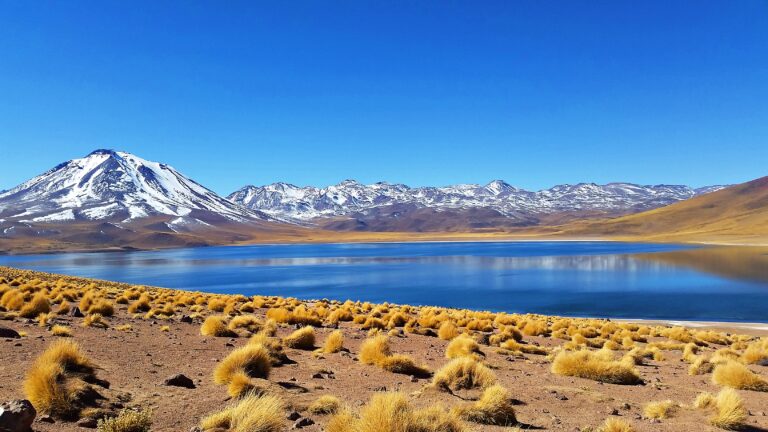
Wow! The mountain picture here looks surreal. It’s great to get some language lessons before going somewhere too:)